

Rosemary oil may support hair growth, but the clinical evidence remains limited. The most cited trial reported increased hair counts after six months in men with androgenetic alopecia, yet it did not prove that rosemary oil works as well as minoxidil.
This guide explains what the research shows, how to use rosemary oil safely, when results may appear, and how it compares with clinically validated hair-growth treatments.
Does Rosemary Oil Help Hair Growth?
Rosemary oil may support hair growth, but current evidence does not show that it treats every form of thinning or shedding. The strongest direct study focused on men with androgenetic alopecia, so its findings should not be extended to all causes of hair loss.
Genetics, nutritional deficiencies, thyroid conditions, autoimmune disease, medications, traction, and scalp disorders can all contribute to hair loss. Rosemary oil is therefore best considered a complementary option rather than a substitute for diagnosis or cause-specific treatment.
What Does the Research Show?
Research on rosemary oil for hair growth is promising but limited. Most claims still rely on one small clinical trial published in 2015, while later studies have examined reviews or products that combine rosemary with other ingredients.
What Did the 2015 Clinical Trial Find?
The 2015 trial included 100 men aged 18 to 49 with androgenetic alopecia. Researchers assigned 50 participants to a standardized rosemary lotion and 50 to 2% minoxidil. Both products were applied for six months.
The study reported:
-
No significant increase in hair count in either group after three months
-
A statistically significant increase from baseline in both groups after six months
-
No statistically significant difference in hair-count change between the groups
-
A greater increase in scalp itching among participants using 2% minoxidil
These findings suggest that the rosemary preparation may have influenced hair growth. However, they do not prove that rosemary oil is as effective as minoxidil. The trial was not designed to establish clinical equivalence between the treatments.
What Were the Study’s Limitations?
Several limitations affect how confidently the findings can be applied to commercially available products or homemade rosemary-oil mixtures.
|
Limitation |
Why It Matters |
|
100 participants |
A larger sample would provide more reliable estimates of effectiveness |
|
50 participants per group |
Smaller treatment differences may have been difficult to detect |
|
No placebo group |
The study could not separate treatment effects from natural changes over time |
|
Only men were included |
The results cannot automatically be applied to women |
|
2% minoxidil was used |
The study did not compare rosemary with the commonly used 5% formulation |
|
A standardized lotion was tested |
The findings do not validate every essential-oil blend or commercial serum |
|
No large independent replication |
One trial is not enough to confirm consistent results |
A finding of no statistically significant difference does not mean that two treatments have been proven equal. Establishing equivalence normally requires a study designed and powered specifically for that purpose.
What Has Later Research Added?
A 2024 review of natural options for androgenetic alopecia described rosemary as a promising botanical ingredient but also showed that the human evidence remains dependent on the 2015 trial and preliminary research. The authors called for larger and better-controlled clinical studies.
A separate 2025 trial followed 90 participants for 90 days. It compared rosemary-lavender oil, rosemary-castor oil, and coconut oil. The rosemary-containing products were associated with improvements in hair growth rate, density, thickness, length, and reported hair fall.
Hair growth rate increased by 57.73% from baseline in the rosemary-lavender group and 47.59% in the rosemary-castor group. However, the combination formulations prevent the effects from being attributed to rosemary alone.
What Is the Overall Evidence Verdict?
Current evidence suggests rosemary oil may have hair-growth potential, particularly in androgenetic alopecia. However, it has not been proven to produce reliable regrowth or to work as well as minoxidil.
Most direct human evidence still comes from one small comparative trial. Larger independent studies are needed to identify the most effective formulation, concentration, application schedule, and treatment duration.
How Might Rosemary Support Hair Growth?
Researchers have proposed several ways rosemary may influence scalp health and hair follicles. These mechanisms are biologically plausible, but most have not been confirmed in human scalp studies.
-
Possible circulation-related effects: Rosemary has been proposed to influence microcapillary perfusion, although human studies have not shown that this directly causes regrowth.
-
Antioxidant and anti-inflammatory activity: Rosmarinic acid, carnosic acid, and carnosol show relevant laboratory activity, but their effect on human hair growth remains uncertain.
-
Possible effects on androgen pathways: Preclinical research has examined rosemary extracts and 5-alpha-reductase activity.
This pathway is relevant because DHT contributes to follicle miniaturization in androgenetic alopecia, but topical rosemary oil has not been shown to reduce scalp DHT meaningfully in humans.
Rosemary oil should therefore not be described as a natural replacement for finasteride or other medically established treatments.
How Do You Use Rosemary Oil for Hair Growth?
The 2015 clinical trial used a standardized rosemary lotion. It did not test a homemade blend of rosemary essential oil and carrier oil. The steps below provide cautious home-use guidance rather than an exact reproduction of the study protocol.
1. Choose the Right Product
Rosemary products can differ considerably in strength and formulation.
Common options include:
-
Rosemary essential oil: A concentrated extract that must be diluted before scalp application
-
Rosemary-infused oil: A milder carrier oil infused with rosemary plant material
-
Premixed scalp serum: A ready-to-use formula that may contain rosemary with other ingredients
-
Standardized lotion: A professionally formulated product with a defined concentration
When choosing the best rosemary oil for hair growth, look for clear ingredients, concentration, dilution, and application instructions rather than the strongest-smelling formula.
2. Dilute Rosemary Essential Oil
Never apply undiluted rosemary essential oil directly to the scalp.
Follow the product’s dilution directions. When the label does not provide dilution instructions, choose a professionally formulated scalp product or ask a dermatologist for guidance.
Possible carrier oils include:
-
Jojoba oil
-
Coconut oil
-
Argan oil
-
Grapeseed oil
Castor oil may also be used, but its thick texture can make it harder to distribute and wash out. No carrier oil has been proven to make rosemary produce stronger hair-growth results.
3. Complete a Patch Test
Apply a small amount of the diluted mixture behind the ear or on the inner arm.
Wait at least 24 hours and check for:
-
Burning
-
Persistent redness
-
Swelling
-
Itching
-
A rash
Do not apply the mixture across the scalp if any reaction develops.
4. Apply It to the Scalp and Massage Gently
Section the hair and apply a small amount to the scalp rather than coating the hair lengths. Use the fingertips to distribute the product gently. More oil does not improve the chance of regrowth.
5. Leave It on Briefly
When using a rinse-out carrier-oil mixture, follow the product directions or begin with a short contact period before washing it out. Longer contact does not guarantee better results and may increase irritation or buildup.
Follow the product directions when using a premixed serum or lotion.
6. Use It Consistently and Track Progress
Begin with two or three applications per week unless the product label recommends otherwise. Continue at that frequency when the scalp remains comfortable, since more frequent use has not been shown to produce faster regrowth.
Take baseline photographs and repeat them every four to six weeks using the same lighting, angle, distance, hair part, and hairstyle.
How Long Does Rosemary Oil Take to Work?
Rosemary oil should be assessed over months rather than weeks. One month is too early to judge hair regrowth based on the available clinical evidence.
A realistic timeline should focus on scalp tolerance first and visible change later.
|
Timeline |
What the Evidence Supports |
|
First month |
Assess scalp tolerance, irritation, oiliness, and buildup |
|
Three months |
The 2015 trial found no significant hair-count increase |
|
Six months |
Both study groups showed an increase from baseline |
|
After six months |
Reassess the routine and diagnosis if thinning continues |
Hair growth is slow, and photographs taken under consistent conditions provide a more reliable comparison than daily mirror checks.
Continued recession, widening of the part, or increased shedding should not be ignored while waiting for rosemary oil to work. These changes may indicate that the underlying cause requires a different treatment approach.
What Side Effects Can Rosemary Oil Cause?
Rosemary oil can irritate the scalp, especially when it is used undiluted, applied too often, or left on for extended periods. Natural ingredients can still cause adverse skin reactions.
Possible side effects include:
-
Burning or stinging
-
Itching
-
Redness
-
Dryness or flaking
-
Allergic contact dermatitis
-
Eye irritation
-
Product buildup on the scalp and hair
-
Worsening eczema, psoriasis, or existing scalp inflammation
Stop using rosemary oil if you develop persistent burning, swelling, blistering, a spreading rash, or worsening scalp discomfort. Wash the product off and seek medical advice if the reaction is severe or does not improve.
Increased shedding is not an established or expected adjustment response to rosemary oil. If shedding begins or worsens after use, irritation or another underlying cause may be responsible. Stop the product and consult a dermatologist if the change continues.
Who Should Avoid Rosemary Oil or Ask a Doctor First?
Rosemary oil is not suitable for every scalp or hair-loss concern. Extra caution is needed when the skin barrier is already damaged or when the cause of shedding is unclear.
Speak with a healthcare professional before use if you:
-
Have broken, infected, or inflamed scalp skin
-
Have active eczema, psoriasis, or dermatitis
-
Have a known allergy to rosemary or other essential oils
-
Are pregnant or breastfeeding
-
Plan to use rosemary oil on a child
-
Already use several potentially irritating scalp treatments
-
Have sudden, patchy, painful, or rapidly worsening hair loss
Rosemary oil should not delay diagnosis when hair loss may be linked to a medical condition.
Is Rosemary Oil as Effective as Minoxidil?
Rosemary oil has not been proven to work as well as minoxidil. The 2015 trial found increased hair counts in both the standardized rosemary-lotion group and the 2% minoxidil group after six months, but it was not designed to establish clinical equivalence.
|
Factor |
Rosemary Oil |
Minoxidil |
|
Regulatory status |
Not FDA-approved for hair loss |
FDA-approved topical treatment for indicated pattern hair loss |
|
Evidence base |
Limited direct human evidence |
Multiple controlled studies and decades of use |
|
Main comparison |
One small trial against 2% minoxidil |
Studied across several formulations and concentrations |
|
Timeline |
Six months in the main rosemary trial |
Usually assessed after several months of consistent use |
|
Common concerns |
Irritation, allergy, and buildup |
Scalp irritation, temporary increased shedding in some users, and unwanted facial hair |
|
Proven equivalent? |
No |
Not applicable |
Rosemary oil should not be presented as a natural replacement for minoxidil.
Can You Use Rosemary Oil With Minoxidil?
Rosemary oil and minoxidil may be used within the same routine, but evidence on combined use is limited. Do not mix rosemary essential oil directly into minoxidil or alter the medication’s formulation.
Applying the products at separate times may reduce buildup and irritation. Introduce one product at a time and stop if burning, redness, itching, or flaking develops. People with a sensitive scalp or progressive hair loss should ask a dermatologist how to space the applications.
How Does Rosemary Oil Compare With FDA-Cleared LLLT?
Rosemary oil and low-level light therapy approach hair loss differently. Rosemary oil is a topical botanical option with limited clinical research. LLLT uses controlled red light to support cellular processes within active hair follicles and has a broader evidence base for androgenetic alopecia.
The two approaches also differ in regulatory status, application, and treatment consistency.
|
Factor |
Rosemary Oil |
iRESTORE LLLT |
|
Regulatory status |
Not FDA-approved or FDA-cleared for hair loss |
iRESTORE hair-growth systems are FDA-cleared for specified androgenetic alopecia indications |
|
Direct evidence |
Relies heavily on one small comparative trial |
Supported by product testing and broader clinical research on LLLT for pattern hair loss |
|
Proposed action |
Possible circulation-related, antioxidant, and anti-inflammatory effects |
Photobiomodulation associated with cellular energy production and hair-follicle activity |
|
Application |
Applied topically and may require dilution and washing |
Hands-free sessions completed according to the device instructions |
|
Routine |
Frequency varies by formulation and scalp tolerance |
Follows a defined treatment schedule for the selected device |
|
Cost structure |
Lower initial cost with repeat product purchases |
Higher initial cost for a reusable device |
|
Best considered for |
Complementary scalp care |
Eligible men and women with pattern hair loss |
|
Combination use |
May be added to a broader routine |
May be used with other approaches when instructions and scalp tolerance are considered |
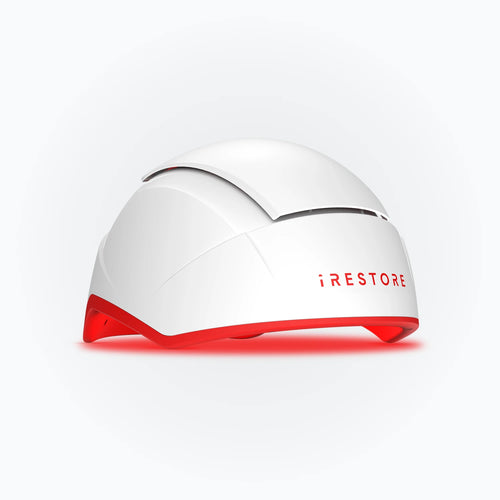
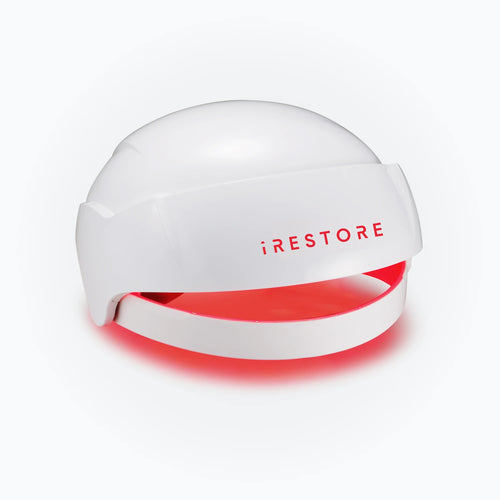
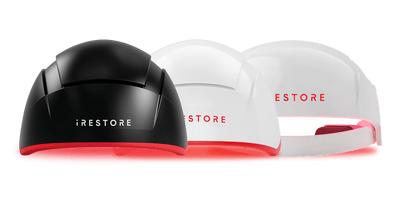
The FDA granted 510(k) clearance to the ID-510 iRESTORE Elite as a low-level laser and light system for indicated patterns of androgenetic alopecia. The device uses three wavelength ranges centered around 625, 655, and 680 nanometers.
The iRESTORE Elite uses 300 lasers and 200 LEDs, for 500 light sources in total. It is designed for 12-minute daily sessions. iRESTORE reports a 43.2% average increase in terminal hair count after 16 weeks in a placebo-controlled product study. The result applies to the studied iRESTORE system and does not guarantee individual outcomes.
Rosemary oil may suit someone who wants to begin with a low-cost botanical scalp product. People with androgenetic alopecia may consider FDA-cleared LLLT when they want a treatment supported by a broader clinical and regulatory evidence base.
iRESTORE offers several systems with different coverage and treatment specifications, including the iRESTORE Essential, iRESTORE Professional, and iRESTORE Elite.
Readers can compare iRESTORE devices based on diode count, coverage, treatment routine, and hair-growth goals.
Here’s What Verified iRESTORE Customers Have Reported
Verified iRESTORE customers have reported changes in hair density and coverage after consistent device use. Individual experiences vary and do not guarantee similar results.

Rosemary oil and LLLT may be included in the same routine, but use the device on a clean, dry scalp unless its instructions state otherwise.
The appropriate approach depends on the cause of hair loss, treatment goals, scalp tolerance, and the strength of evidence a person is seeking.
Can You Combine Rosemary Oil With LLLT?
Rosemary oil and LLLT may be included in the same routine, but use the device on a clean, dry scalp unless its instructions state otherwise. Apply rosemary oil after the session or at a separate time.
Heavy product buildup may interfere with scalp contact and make the routine harder to maintain. Combined use does not guarantee faster or greater hair growth.
When Should You See a Dermatologist?
Rosemary oil is not a substitute for diagnosis. Hair loss can have several causes, and the right treatment depends on what is affecting the follicles.
Arrange a professional assessment if you notice:
-
Patchy bald areas
-
Scalp pain, scaling, sores, or inflammation
-
Eyebrow or eyelash loss
-
Continued recession or part widening
-
Hair loss after a medication change
-
Progressive thinning despite treatment
A dermatologist can help distinguish androgenetic alopecia from telogen effluvium, alopecia areata, traction alopecia, and scarring hair loss. An early diagnosis can prevent months of using a treatment that does not address the cause.
Is Rosemary Oil Worth Trying for Hair Growth?
Rosemary oil may be worth trying as a complementary scalp-care option when expectations remain realistic. Use a properly formulated or diluted product, monitor scalp tolerance, and assess progress over several months rather than several weeks.
It should not replace diagnosis or evidence-based treatment when hair loss is progressing. People with androgenetic alopecia can also compare FDA-cleared iRESTORE hair-growth systems as part of a broader treatment plan.
Key Takeaways
|
Frequently Asked Questions
Q1. Can You Make Rosemary Oil for Hair Growth at Home?
A1. You can make a rosemary-infused carrier oil at home, but it is not the same as steam-distilled rosemary essential oil or the standardized lotion used in the 2015 trial. Homemade preparations may vary considerably in concentration.
Q2. Can You Mix Rosemary and Peppermint Oil for Hair Growth?
A2. Evidence for combining rosemary and peppermint oil is limited. Most peppermint oil hair-growth research is preclinical, and combining essential oils may increase the risk of irritation. Both oils should be diluted appropriately.
Q3. Is Castor Oil or Rosemary Oil Better for Hair Growth?
A3. Rosemary oil has limited direct human evidence for hair growth, while castor oil lacks comparable clinical evidence for regrowth. Castor oil is commonly used as a thick carrier oil, but clinical evidence that it regrows hair is lacking.
Q4. Can Rosemary Oil Help a Receding Hairline?
A4. Rosemary oil may support scalp care, but it is unlikely to restore hair in areas with long-standing or advanced follicle miniaturization. Continued hairline recession should be assessed for androgenetic alopecia.
Q5. Is Rosemary Water as Effective as Rosemary Oil?
A5. Rosemary water and rosemary oil differ in concentration and preparation. Rosemary water has not been shown to reproduce the findings of the standardized rosemary lotion used in the main clinical trial.
Disclaimer: The iRESTORE blog is for informational purposes only and is not intended to replace professional medical advice or treatment. Please do not ignore professional guidance because of information you’ve read here. If you have concerns about your hair, skin, pain, or overall health, we encourage you to consult a qualified healthcare professional.