

Menopause causes hair loss in the majority of women, yet it is one of the least talked about symptoms of the transition. If you have noticed your part getting wider, your ponytail feeling thinner, or your hair texture changing, your hormones are likely behind it.
The drop in estrogen and progesterone during menopause directly disrupts the hair growth cycle. The good news is that this is one of the most treatable forms of hair loss, especially when addressed early.
This article explains exactly why it happens, how to identify which stage you are in, and which treatments have the strongest evidence behind them in 2026.
Why Menopause Causes Hair Loss: The Hormonal Mechanism
Estrogen and progesterone do more than regulate your cycle. They also keep your hair in its active growth phase for longer. When these hormones are at healthy levels, your hair grows consistently and sheds at a normal, gradual rate.
During perimenopause and menopause, these levels fall significantly. As they drop, hair spends less time in the growth phase and more time in the shedding phase. This results in an increased daily shedding and slower regrowth with each cycle.
At the same time, androgens become relatively more dominant. In higher concentrations, they shrink hair follicles over time, producing finer and shorter strands- a process called follicle miniaturization. Research confirms it is the shifting ratio between androgens and estrogen, rather than elevated androgens alone, that drives this change.
The thinning tends to show up first at the crown and along the part line. Unlike male pattern baldness, menopausal hair loss is diffuse- spreading gradually across the top of the scalp rather than receding from the hairline.
What Stage Are You In? How It Affects Your Hair?
Not all menopausal hair loss looks or behaves the same. The stage you are in plays a significant role in how much thinning you are experiencing and how well your hair is likely to respond to treatment.
Perimenopause
Perimenopause is the transitional phase before menopause. Your cycles are still present but becoming irregular, and estrogen levels fluctuate rather than drop consistently. Early thinning often begins here, sometimes years before a woman realizes she is in perimenopause at all.
This is the most important window to act to prevent perimenopause hair loss. Follicles that are weakened but not yet miniaturized respond significantly better to treatment than those that have been dormant for years. If you are noticing early changes in density or texture, starting treatment now produces better outcomes than waiting.
Menopause
Menopause is defined as 12 or more consecutive months without a period. Estrogen reaches its lowest levels during this phase, and for many women this is when hair loss feels most pronounced. Shedding increases, regrowth slows, and the overall volume and texture of hair can change noticeably.
Postmenopause
In postmenopause, hormone levels stabilize at their new lower baseline. Shedding often slows during this phase, but density does not automatically return. Without active menopause hair loss treatment , the thinning that occurred during perimenopause and menopause tends to remain. The encouraging news is that follicles can still respond to treatment even at this stage, particularly with consistent, evidence-backed approaches.
What Menopausal Hair Loss Looks Like and What to Rule Out?
Menopausal hair loss has a fairly recognizable pattern. However, other conditions can cause similar symptoms, and starting menopause hair loss treatment without ruling those out first is one of the most common mistakes women make.
Typical signs of menopausal hair loss:
-
Diffuse thinning across the crown and top of the scalp
-
A widening center part
-
Temples that appear thinner or more transparent
-
Strands that feel finer, more brittle, or less dense overall
-
Increased shedding in the shower or on the pillow
Conditions worth ruling out before starting treatment:
-
Thyroid dysfunction: Both an overactive and underactive thyroid disrupt the hair growth cycle. Symptoms like fatigue, weight changes, and sensitivity to temperature often accompany thyroid-related hair loss.
-
Iron deficiency: Low ferritin is extremely common in women and is one of the most frequently missed causes of hair thinning. Standard iron tests often miss it, so ask your doctor specifically for a ferritin level.
-
Telogen effluvium: A temporary shedding phase triggered by stress, illness, or surgery. Unlike menopausal hair loss, this tends to resolve on its own once the trigger is removed.
-
Alopecia areata: An autoimmune condition causing patchy, asymmetric loss. Distinct from the diffuse thinning pattern of menopausal hair loss.
Before starting any treatment, ask your GP for a blood panel that includes ferritin, TSH, free T4, total and free testosterone, DHEA-S, and CBC. Knowing your numbers gives you and your doctor a clear starting point and ensures you are treating the right cause.
The Best Treatments for Menopausal Hair Loss in 2026
There is no single best treatment for menopausal hair loss. The right approach depends on your health profile, how far thinning has progressed, and whether you prefer hormonal or non-hormonal options. Here is an honest breakdown of what works and what the evidence actually says.
FDA-Cleared Red Light Therapy
Red light therapy, also called low-level laser therapy, works by delivering specific wavelengths of light to the scalp. This stimulates cellular energy in the follicle, improves scalp circulation, and extends the active growth phase of the hair cycle. It has no hormonal effects, no drugs, and no systemic side effects, which makes it particularly well suited for menopausal women who prefer to avoid medication.
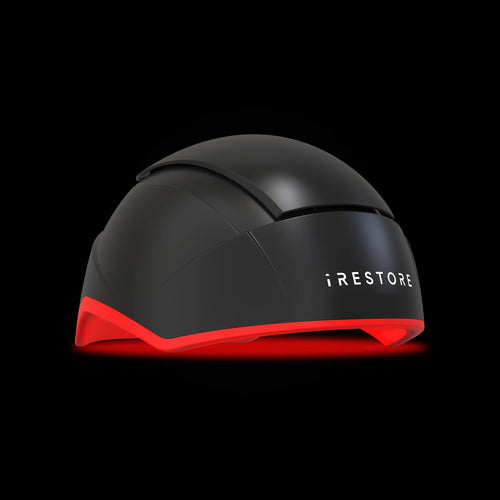
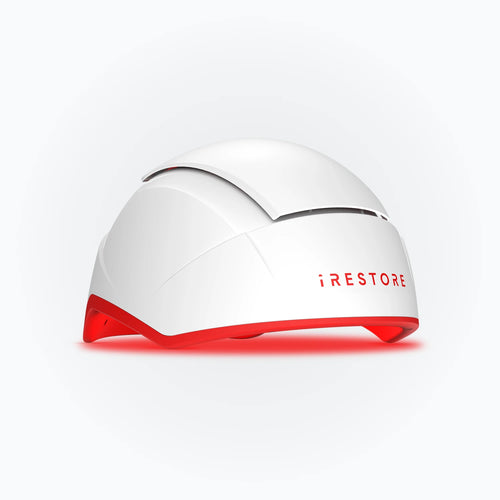
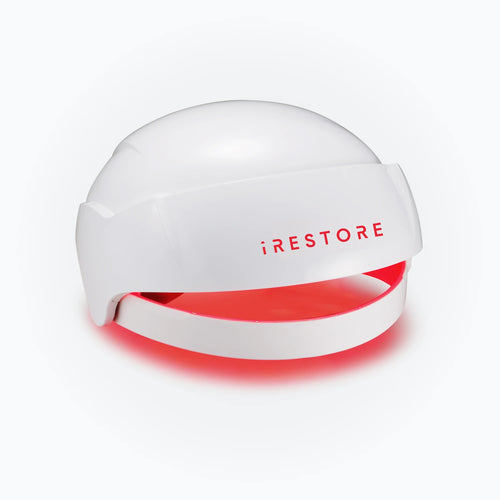
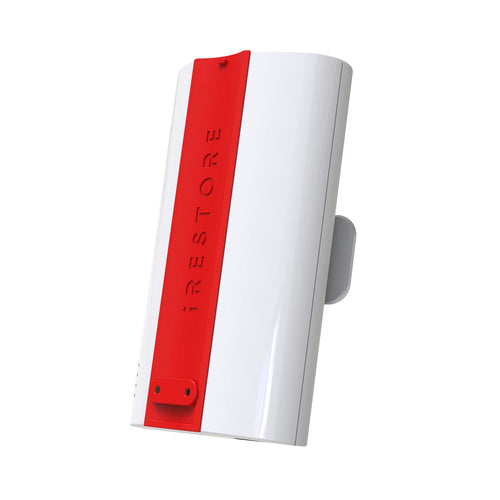
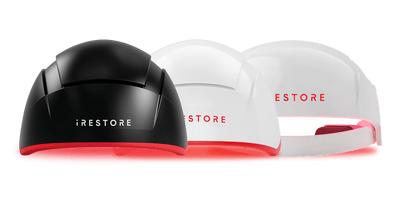
iRESTORE devices are FDA-cleared for hair growth and backed by a double-blind clinical study showing a 43% increase in hair count over 16 weeks. It can be used alongside any other treatment on this list without interference.
For women who want to understand exactly how the technology works, this guide on the best red light wavelength for hair growth explains the science clearly.
Topical Minoxidil
Minoxidil 2% is FDA-approved for female pattern hair loss and is one of the most widely used treatments for menopausal thinning. It works best on crown and vertex thinning and requires ongoing use to maintain results. Stopping minoxidil typically leads to a return of shedding within a few months. Side effects can include scalp irritation, an initial shedding phase when first starting, and in rare cases mild facial hair growth.
Hormone Replacement Therapy
HRT stabilizes estrogen and progesterone levels, which can benefit hair as a secondary effect of overall hormonal rebalancing. It is not prescribed primarily for hair loss, but women who take HRT for other menopausal symptoms often notice improvements in hair density and texture as well. Whether HRT is appropriate for you depends on your full health history and is a conversation to have with a gynecologist or endocrinologist.
Nutritional Support
Nutritional deficiencies are extremely common during menopause and directly affect hair growth. Prioritize iron if your ferritin is low, protein since hair is made almost entirely of keratin, vitamin D, and zinc. Biotin is worth adding only if a blood test confirms a genuine deficiency. Taking it without a deficiency offers no benefit and can interfere with certain lab results.
Supplements
Products like Nutrafol and Viviscal have grown in popularity as options for menopausal hair loss. Some of their ingredients have solid individual evidence behind them, but the overall clinical data on these formulas as complete products is still moderate. For a thorough and honest breakdown of whether supplements like these are worth it, this article on whether Nutrafol really works covers the evidence in detail.
What Does Not Work?
With so many products marketed at menopausal women experiencing hair loss, it is worth being direct about what the evidence does not support.
-
Thickening shampoos claiming to regrow hair: These can improve the appearance of volume temporarily but they do not stimulate follicle activity or reverse thinning. They are cosmetic, not therapeutic.
-
High-dose biotin without a confirmed deficiency: Biotin supplements are one of the most heavily marketed hair loss products available. However, research consistently shows they are only effective in people who are genuinely deficient. For most women, high-dose biotin simply passes through the body unused.
-
Collagen supplements for follicle regeneration: Collagen supports skin elasticity and joint health, but there is no direct clinical evidence that taking collagen orally regenerates hair follicles or reverses thinning.
-
Single-solution thinking: Menopausal hair loss is driven by multiple factors including hormonal shifts, nutritional gaps, and follicle sensitivity to androgens. Most women see the best results when they combine two or more evidence-backed approaches rather than relying on one product alone.
Conclusion
Menopause hair loss is real, it is common, and it is treatable. The hormonal shifts of perimenopause and menopause directly disrupt the hair growth cycle, but that does not mean the thinning is permanent or that your options are limited.
The most important thing to take away from this article is that timing matters. Perimenopause is the ideal window to act. Follicles that are weakened but still active respond far better to treatment than those that have been dormant for years. If you are noticing early changes in density or texture, now is the time to start, not after the thinning becomes more advanced.
The right treatment plan looks different for every woman. Some will benefit most from red light therapy. Others will need nutritional support, HRT, or a combination of approaches. What works best depends on your health profile, your stage, and how far thinning has progressed. Getting a blood panel first removes the guesswork and gives you a clear foundation to build from.
If you are ready to take the next step, iRESTORE's hair growth devices offer a clinically backed, drug-free option that fits into any treatment plan. The earlier you start, the more your hair has to work with.
FAQs
Does menopause always cause hair loss?
Not always, but it is very common. Studies suggest that a significant majority of women experience some degree of hair thinning during the menopausal transition. The severity varies widely depending on genetics, hormone levels, nutrition, and how early the changes are addressed.
What is the best treatment for menopausal hair loss in 2026?
There is no single best treatment. The most effective approach depends on your health profile and the underlying drivers of your thinning. Red light therapy, topical minoxidil, HRT, and nutritional support all have evidence behind them. Most women see the best results by combining two or more of these rather than relying on one alone.
Will hair grow back after menopause?
It can, but it depends on how long the follicles have been inactive and what treatment approach is used. Follicles that have miniaturized but not fully stopped producing hair can often be reactivated with consistent, targeted treatment. Starting earlier produces better outcomes, but postmenopausal women can and do see real improvement with the right plan.
What vitamins are best for hair loss during menopause?
Iron is the most critical nutrient to address if your ferritin levels are low. Protein, vitamin D, and zinc are also important for supporting the hair growth cycle. Biotin is worth considering only if a blood test confirms a genuine deficiency. A targeted postnatal or women's multivitamin can help cover the basics while you work on dietary adjustments.
Can red light therapy help with hair loss caused by menopause?
Yes. Red light therapy stimulates follicular cell energy, improves scalp circulation, and extends the active growth phase of the hair cycle. It is particularly well suited for menopausal women because it has no hormonal effects and no systemic side effects. iRESTORE devices are FDA-cleared and backed by clinical data showing meaningful increases in hair count with consistent use.
At what stage of menopause does hair loss typically start?
Hair loss most commonly begins during perimenopause, the transitional phase before menopause when estrogen levels start to fluctuate and decline. Many women notice early changes in density or texture during this stage, sometimes years before their periods stop entirely. This is also the most effective window to begin treatment, as follicles that are weakened but still active respond better to intervention than those that have been dormant longer.
Disclaimer: The iRESTORE blog is for informational purposes only and is not intended to replace professional medical advice or treatment. Please do not ignore professional guidance because of information you’ve read here. If you have concerns about your hair or skin health, we encourage you to consult a qualified healthcare professional.