

Redensyl may support hair growth, but the evidence for Redensyl alone is still limited. Most human studies have tested it as part of multi-ingredient formulas, so the results cannot be attributed to Redensyl independently.
Redensyl is also a cosmetic ingredient, not an FDA-approved hair-loss drug, which makes it important to separate promising research from established clinical evidence.
Does Redensyl Actually Work for Hair Growth?
Redensyl has shown encouraging results in human studies, but the evidence is not strong enough to confirm that Redensyl alone improves hair growth. Most published research has evaluated formulas that combine Redensyl with ingredients such as Capixyl, Procapil, rosemary, or other actives.
That matters because improvement from a multi-ingredient formula cannot be assigned to one ingredient with confidence. Current evidence therefore supports describing Redensyl as a promising cosmetic hair-care active, not a clinically proven standalone treatment for hair loss.
What Is Redensyl and How Is It Supposed to Work?
Redensyl is a trademarked cosmetic active developed for use in hair-care products. Givaudan, which now markets Redensyl, describes it as targeting cells involved in the hair follicle growth process, including stem cells in the follicle bulge and dermal papilla fibroblasts.
The Redensyl complex includes compounds such as dihydroquercetin-glucoside (DHQG), EGCG2, zinc, and glycine. DHQG is associated with larch-derived compounds, while EGCG2 is a stabilized derivative related to green tea polyphenols. These components are intended to act on biological pathways linked with follicle activity and hair-cycle regulation.
However, a proposed cellular mechanism does not confirm that Redensyl independently regrows hair in people. Laboratory findings can help explain why an ingredient is being studied, but human clinical evidence is needed to determine its actual effect on hair growth.
How Is Redensyl Different From Minoxidil and Finasteride?
Redensyl, minoxidil, and finasteride work through different pathways. Redensyl is a cosmetic ingredient with a proposed follicle-focused mechanism, while minoxidil is a drug used to promote hair growth through biological effects that are not explained by a single pathway.
Finasteride inhibits type II 5-alpha-reductase, reducing the conversion of testosterone to dihydrotestosterone (DHT). Finasteride therefore acts through an antiandrogen pathway that is distinct from Redensyl's proposed cosmetic mechanism.
What Does the Research on Redensyl Actually Show?
The human research on Redensyl is encouraging, but most studies tested it as part of a multi-ingredient formula. That makes the study design important when judging what the results actually prove.
|
Study |
What Was Tested |
Main Finding |
Main Limitation |
|
Redensyl, Capixyl, and Procapil (RCP) vs 5% topical minoxidil over 24 weeks |
RCP performed better on several researcher and photographic assessments |
Redensyl was not tested alone |
|
|
Serum containing Procapil, Redensyl, Capixyl, Bicapil, and AnaGain |
110 enrolled; 70 completed all follow-ups. Hair density increased significantly from baseline to week 16 (p=0.002) |
No control group, participant attrition, and several active ingredients |
|
|
Multi-ingredient serum containing Redensyl, rosemary, and other actives |
Improvements were reported in hair density, hair fall, and related measures |
Open-label, single-arm design and multiple ingredients |
The 2019 Karaca and Akpolat study is often cited in Redensyl-versus-minoxidil discussions. Researcher assessment found moderate or significant recovery in 64.7% of participants using the RCP formula compared with 25.5% using 5% minoxidil.
However, because RCP combined Redensyl, Capixyl, and Procapil, the study cannot show that Redensyl itself caused the difference.
What Is the Biggest Limitation in Redensyl Research?
The main limitation is that most studies evaluate finished formulas rather than Redensyl by itself. When several active ingredients are used together, researchers cannot determine how much each one contributed to the result.
Some studies also lack control groups, include participant attrition, use short follow-up periods, or have limited independent replication. The evidence therefore supports calling Redensyl promising, but not clinically proven as a standalone hair-loss treatment.
Redensyl vs Minoxidil: What Is the Difference?
Redensyl and minoxidil are often compared because both appear in hair-growth discussions, but they are not equivalent options. Redensyl is a cosmetic hair-care ingredient with limited standalone clinical evidence.
Topical minoxidil is a drug with a much larger body of clinical research and FDA-approved hair-regrowth formulations.
|
Factor |
Redensyl |
Topical Minoxidil |
|
Category |
Cosmetic hair-care ingredient |
Drug |
|
Evidence base |
Primarily studies of multi-ingredient formulas |
Multiple controlled studies and decades of clinical use |
|
Evidence for the active alone |
Limited |
Well established for approved formulations |
|
FDA status |
Not FDA-approved for hair loss |
FDA-approved topical hair-regrowth formulations are available |
|
Long-term evidence |
Limited |
Substantially broader |
|
General role |
Supportive cosmetic option |
Established treatment option for appropriate pattern hair loss |
Redensyl may still have a supportive role, but its claims should reflect its smaller evidence base.
Did Redensyl Perform Better Than Minoxidil in a Clinical Study?
No study has shown that Redensyl alone works better than minoxidil. The frequently cited 2019 study compared 5% minoxidil with an RCP formula containing Redensyl, Capixyl, and Procapil.
Because three active ingredient systems were combined, the study cannot determine whether Redensyl was responsible for the observed differences. It is therefore inaccurate to interpret the study as proof that Redensyl alone outperforms minoxidil.
How Long Might Redensyl Take to Show Results?
Redensyl-containing products are generally evaluated over months, not days or weeks. In published formulation studies, measurable changes were assessed at about 16 weeks in one multi-ingredient serum study and at 24 weeks in the Karaca and Akpolat RCP comparison.
Those timelines do not establish how quickly Redensyl works on its own. The studies used different formulas, active ingredients, and application protocols, so their results should not be treated as a universal timeline for every Redensyl product.
A more realistic expectation is to assess a Redensyl-containing product over several months while following its specific directions.
What Are the Possible Side Effects of Redensyl?
Redensyl-containing formulas have generally been reported as well tolerated in short-term studies, but that does not establish long-term safety for Redensyl used by itself. Most commercial products also contain multiple active and inactive ingredients, so any scalp reaction cannot automatically be attributed to Redensyl.
As with topical cosmetic products, a finished Redensyl-containing formula may cause redness, itching, dryness, burning, or irritation in some users. These reactions may result from Redensyl or another ingredient in the formulation. Follow the directions for the specific product and patch-test where the manufacturer recommends it.
If irritation is persistent, severe, or accompanied by worsening hair loss or scalp symptoms, stop using the product and seek advice from a dermatologist.
Where Does iRESTORE Fit Into a Hair Growth Routine?
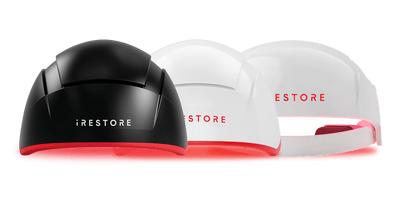
Redensyl-containing topicals and iRESTORE red light therapy devices can serve different roles within a hair-growth routine. However, high-quality research has not established that combining Redensyl specifically with red light therapy produces better results than either approach alone.
High-quality research has not established that combining Redensyl specifically with red light therapy produces better results than either approach alone.
If You Want a Redensyl-Containing Topical
iRESTORE REVIVE Growth Activator Serum contains Redensyl and Capixyl as part of its topical formula. This makes it the most direct iRESTORE product fit for someone specifically researching Redensyl.
The important distinction is that research on other Redensyl-containing formulas does not automatically prove the performance of every finished product. The serum should therefore be considered on the basis of its own formulation, directions, and approved product claims.
Real iRESTORE Customer Experiences
Trusted by 600,000+ customers, iRESTORE also features individual customer experiences from people using its hair-growth devices. Results vary, and testimonials should not be interpreted as clinical evidence.

If You Have Androgenetic Alopecia
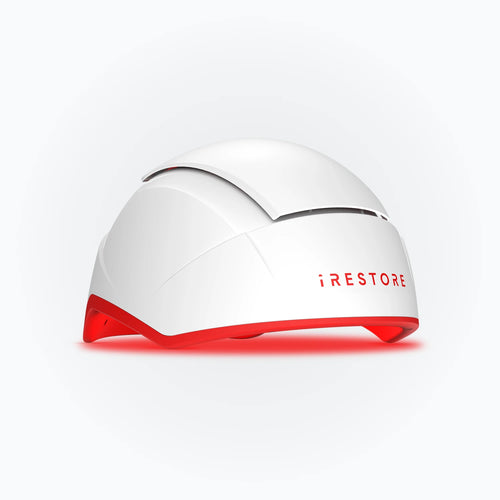
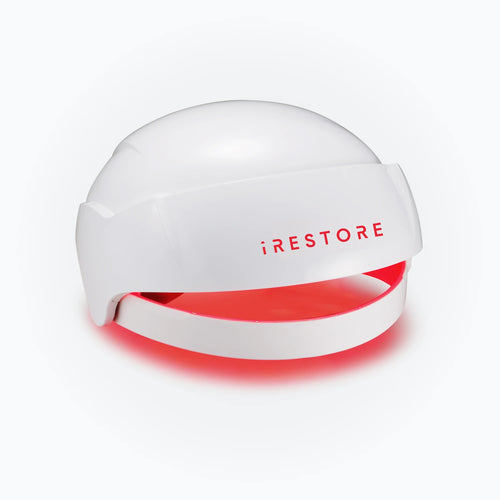
For eligible men and women with androgenetic alopecia, iRESTORE also offers FDA-cleared red light therapy devices designed to promote hair growth. These devices have a different regulatory and evidence profile from cosmetic ingredients such as Redensyl.
Red light therapy should not be presented as appropriate for every cause of hair loss. If thinning is sudden, patchy, rapidly progressing, or unexplained, a dermatologist can help determine the underlying cause before you choose a treatment approach.
Readers considering a higher-coverage device can also review the iRESTORE Elite.
Key Takeaways
|
Frequently Asked Questions
Q1. What percentage of Redensyl is best for hair growth?
A1. There is no independently established “best” Redensyl concentration supported by robust clinical trials. The overall formulation, supporting evidence, and product directions matter more than choosing a product based only on the highest listed percentage.
Q2. Does Redensyl block DHT?
A2. Redensyl is not an established DHT-blocking ingredient. This differs from finasteride, which inhibits 5-alpha-reductase and reduces the conversion of testosterone to dihydrotestosterone (DHT).
Q3. Can Redensyl cause initial hair shedding?
A3. Current clinical evidence does not establish an initial shedding phase as a predictable effect of Redensyl. New or increased shedding should not automatically be interpreted as a sign that the product is working.
Q4. Can Redensyl and minoxidil be used together?
A4. Redensyl and minoxidil are different types of hair-growth products, but combining topical products can affect scalp tolerance and application routines. If you already use minoxidil for diagnosed hair loss, ask a dermatologist before adding another active topical product.
Q5. What is the difference between Redensyl, Capixyl, and Procapil?
A5. Redensyl, Capixyl, and Procapil are separate cosmetic ingredient systems used in hair-care formulas. They are often combined, including in the RCP formulation studied against minoxidil, which makes it difficult to determine the effect of Redensyl independently.
Disclaimer: This article is for informational and educational purposes only and is not intended to provide medical advice, diagnosis, or treatment. Hair loss can have many causes, and individual needs may vary. Consult a qualified healthcare professional or dermatologist if you have concerns about hair loss, scalp symptoms, or treatment options.