

Yes, both hypothyroidism (an underactive thyroid) and hyperthyroidism (an overactive thyroid) can cause diffuse hair loss by disrupting the hair growth cycle. Thyroid hormones help control the growth phase of your hair. When those hormones fall out of balance, more follicles slip into the resting phase, and shedding goes up. The good news is that this hair loss is usually reversible once your thyroid levels return to normal with the right treatment.
But there is more to the story. Thyroid hair loss looks different from genetic pattern baldness. It can also hide a separate problem underneath. In this guide, we explain how thyroid disorders affect your hair, how to spot the signs, what to do next, and when a device like iRESTORE actually helps. If you are still figuring out the root cause, start with our overview of what causes hair loss.
How Thyroid Disorders Cause Hair Loss?
Your thyroid is a small gland in your neck. It makes two hormones, T3 and T4, that act like a thermostat for your body. They control how fast your cells work, including the cells that grow your hair. When these hormones run too low or too high, your hair follicles lose the steady signal they need.
To understand why, picture your hair growth cycle in three stages. First comes the growing phase, called anagen. Then a short in-between phase, called catagen. Last comes the resting and shedding phase, called telogen. Healthy thyroid hormones keep most of your follicles in the growing phase. When the balance breaks, too many follicles jump to the resting phase at once.
Doctors call this diffuse shedding telogen effluvium. It is the main way thyroid problems cause hair loss. The shift is dramatic too. During telogen effluvium, as many as 70% of scalp hairs can fall out within about two months.
Both types of thyroid trouble trigger this, but through opposite mechanics:
-
Hypothyroidism (too little hormone): Your follicle cycle slows down. Hairs get stuck in the resting phase and shed. This usually shows up two to three months after the imbalance begins.
-
Hyperthyroidism (too much hormone): Your follicle cycle speeds up too much. The growing phase gets cut short, so hair turns fine and thin all over.
Either way, the result is the same look. You get even thinning across the whole scalp, not the receding hairline of genetic hair loss.
Hypothyroidism vs. Hyperthyroidism Hair Loss Comparison
Both conditions thin your hair, but the clues around them differ. Your other symptoms often point to which one you have. The table below breaks down the key differences side by side.
|
Feature |
Hypothyroidism (Underactive) |
Hyperthyroidism (Overactive) |
|
Hair loss pattern |
Diffuse thinning across the scalp |
Diffuse thinning; hair may turn fine and silky |
|
Eyebrow loss |
Outer third of the eyebrows (classic sign) |
Possible diffuse eyebrow thinning |
|
Hair texture |
Dry, coarse, brittle |
Fine, soft, limp |
|
Other symptoms |
Weight gain, fatigue, feeling cold |
Weight loss, racing heart, anxiety, feeling hot |
|
Reversibility |
Yes, with levothyroxine |
Yes, with hyperthyroidism treatment |
|
Timeline to regrowth |
6 to 12 months after levels normalize |
Variable, usually within 6 months |
Notice the pattern here. Hypothyroidism tends to dry your hair out and make it brittle. Hyperthyroidism does the opposite and makes hair soft and limp. In both cases, though, treating the thyroid is what brings your hair back.
What Does Thyroid Hair Loss Look Like?
Thyroid hair loss has a signature look that sets it apart. The thinning is diffuse, which means it spreads evenly across your whole scalp. You will not see the receding temples or bald crown that come with genetic hair loss. Instead, you might notice:
-
Your ponytail feels thinner than it used to.
-
Your part line looks wider.
-
More scalp shows through under bright light.
There are usually no distinct bald patches either. If your thinning instead concentrates at the top of your head, that may point to a different pattern, which we cover in why hair thins at the crown. If you see round patches, that points to a condition called alopecia areata, which also has a thyroid link.
The most telling sign shows up on your face, not your scalp. Hypothyroidism often causes loss of the outer third of your eyebrows, the part that points toward your ears. Doctors call this the Hertoghe sign, and it is highly specific to thyroid trouble. If you spot scalp thinning and thinning brow tails together, that combination is a strong reason to get your thyroid checked.
One more thing to know is the timing. Thyroid hair loss does not start the moment your hormones shift. It shows up about two to three months later. This delay happens because follicles take time to move into the resting phase before they shed. So the cause and the shedding can feel disconnected, which is why many people miss the link.
Does Thyroid Medication Cause Hair Loss?
Yes, but only for a short while. This is one of the most common worries we hear, so let us be clear. Levothyroxine, the standard medicine for an underactive thyroid, can trigger a wave of extra shedding in the first few months. If you searched "does synthroid cause hair loss," this is your answer. Synthroid is just a brand name for levothyroxine.
Here is why it happens:
-
Before treatment, many of your follicles are stuck in an extended resting phase.
-
When the medicine restores your hormone levels, those resting follicles all wake up at once.
-
That mass changeover pushes out old hairs to make room for new ones.
So the shedding is actually a sign the medicine is working, not failing. It means your hair cycle is restarting. We know that feels backward when you are already stressed about hair loss, but this phase is temporary and expected.
This wave usually settles within six months as your levels stabilize. Keep two rules in mind:
-
Never stop or change your thyroid medicine on your own to save your hair. Your thyroid health comes first.
-
If the shedding lasts beyond six months, talk to your doctor, since your dose may need adjusting.
Will My Hair Grow Back After Thyroid Treatment?
For most people, the answer is yes. Once your thyroid levels return to normal, your follicles slowly restart their normal cycle. Regrowth usually begins three to six months after your thyroid levels stabilize. Getting back to full density can take a year or more, so patience matters here.
There is one important catch, though. Some people have two things going on at the same time:
-
Thyroid hair loss, which responds to thyroid treatment.
-
Underlying androgenetic alopecia, the genetic pattern hair loss, which does not respond to thyroid medicine and needs its own separate treatment.
Treating your thyroid fixes the thyroid part. But the genetic part stays put unless you treat it directly. This leads to a surprise many people face. The diffuse thyroid shedding can hide a pattern that was already forming underneath. Once your thyroid is treated and the even thinning clears, the genetic pattern becomes easier to see. It can feel like new hair loss, but it was there all along, just masked.
So if your hair keeps thinning in a specific pattern well after your thyroid is under control, that is your cue. It likely points to a second cause that needs its own plan. We will cover exactly what to do about that next.
Thyroid Hair Loss vs. Androgenetic Alopecia
We keep mentioning genetic pattern hair loss, so let us compare the two directly. Telling them apart matters because they need completely different treatments. Treating one when you actually have the other will not work.
The clearest difference is the pattern. Thyroid hair loss spreads evenly across your scalp. Androgenetic alopecia follows a set map instead. In men, it recedes at the temples and thins at the crown. In women, it widens the part and thins the crown. Here is a full side by side:
|
Feature |
Thyroid Hair Loss |
Androgenetic Alopecia |
|
Pattern |
Diffuse, all over the scalp |
Patterned: temple and crown recession (men); crown thinning (women) |
|
Reversibility |
Yes, with thyroid treatment |
Progressive without treatment |
|
Blood test |
Abnormal TSH, T3, or T4 |
Normal thyroid levels |
|
Treatment |
Thyroid medication |
Minoxidil, LLLT, finasteride (men) |
|
iRESTORE applicable? |
Not directly; only for a concurrent AGA component |
Yes, FDA 510(k) cleared |
The blood test is your deciding factor. If your thyroid numbers are off, thyroid treatment comes first. If your thyroid is normal but your hair still thins in a pattern, genetic hair loss is the likely cause. This is also where a device like iRESTORE fits in, since low-level laser therapy targets the genetic type, not the thyroid type.
What to Do If You Suspect Thyroid Hair Loss?
If you think your thyroid is behind your shedding, follow a clear order. Rushing to hair products before you know the cause wastes time and money. Here are your steps:
-
Get a thyroid blood test. Ask your doctor or an endocrinologist for a TSH, free T3, and free T4 test. This is the only way to confirm a thyroid problem. Symptoms alone cannot do it.
-
Do not self-treat. Never take iodine or thyroid supplements without a confirmed diagnosis. Over-supplementing can make things worse, and it is risky for your overall health.
-
Treat the thyroid first. Thyroid medication is the main fix. Once your levels normalize, your hair loss usually resolves on its own.
-
Watch the timeline. If your hair still thins 12 months after your levels are normal, check for a second cause. This is often where genetic hair loss shows up. Not sure if your shedding is even abnormal? Our guide on how much hair loss is normal and when to worry helps you tell the difference.
-
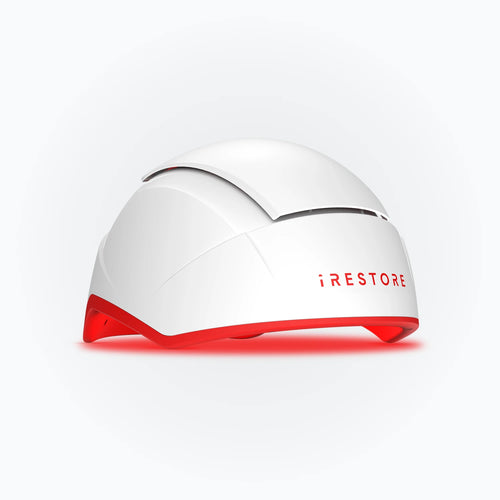
Consider iRESTORE for the genetic component. If pattern hair loss runs in your family, LLLT can support that component on its own, separate from your thyroid treatment.
To be completely honest with you: if your hair loss is purely from your thyroid, iRESTORE is not the answer. Treating your thyroid is. iRESTORE only helps when you also have genetic pattern hair loss underneath. We would rather tell you that plainly than sell you something you do not need. If genetic thinning is part of your picture, explore the iRESTORE Hair Hub to see how laser therapy fits.
While you recover, some people also look into gentle natural support like rosemary oil for hair growth. Just remember it supports the process and does not replace treating your thyroid.
Key Takeaways
Here is everything above boiled down to the essentials:
-
Both hypothyroidism and hyperthyroidism cause diffuse hair loss by disrupting the hair growth cycle. This is not the same as pattern hair loss.
-
Thyroid hair loss is usually reversible. Regrowth begins three to six months after effective treatment.
-
Levothyroxine can cause temporary shedding in the first few months. This is normal and fades as your levels stabilize.
-
The classic hypothyroidism sign is loss of the outer third of your eyebrows. Paired with scalp thinning, it strongly points to a thyroid test.
-
Some people have both thyroid hair loss AND genetic hair loss. Treating the thyroid fixes one; iRESTORE LLLT addresses the genetic part.
-
Get a thyroid blood test before starting any hair loss treatment. Treating genetic hair loss when the real cause is your thyroid will not work.
Frequently Asked Questions
What does thyroid hair loss look like?
Thyroid hair loss looks like even, all-over thinning rather than a receding hairline or bald spots. Your ponytail may feel thinner, your part may look wider, and more scalp may show through under bright light. A classic extra sign of hypothyroidism is loss of the outer third of your eyebrows, known as the Hertoghe sign.
Can hypothyroidism cause hair loss?
Yes. Hypothyroidism is the more common thyroid cause of hair loss. When your T3 and T4 hormone levels drop, your follicle cycle slows down and hairs get stuck in the resting phase, then shed. This shedding usually appears two to three months after the imbalance begins and improves once you treat the thyroid.
Will my hair grow back after thyroid treatment?
For most people, yes. Once your thyroid levels stabilize, regrowth usually starts within three to six months, and full density can take a year or more. One exception: if you also have genetic pattern hair loss, treating your thyroid fixes only the thyroid part. The genetic part needs its own separate treatment.
How do I know if my hair loss is from thyroid?
The only sure way is a thyroid blood test. Ask your doctor for TSH, free T3, and free T4. Abnormal results point to thyroid-related hair loss, while normal results suggest another cause like genetic hair loss. Clues that support a thyroid cause include even scalp thinning, thinning outer eyebrows, and symptoms like fatigue, weight changes, or temperature sensitivity.
What is the difference between thyroid hair loss and pattern hair loss?
The main difference is the pattern and the cause. Thyroid hair loss is diffuse, spreads across the whole scalp, and reverses with thyroid treatment. Pattern hair loss (androgenetic alopecia) follows a set map, such as temple and crown recession in men or a widening part in women, and gets worse over time without treatment. A blood test tells them apart.
What thyroid levels cause hair loss?
Hair loss is linked to abnormal thyroid levels rather than one exact number. High TSH usually signals hypothyroidism, while low TSH signals hyperthyroidism, and both can trigger shedding. Free T3 and free T4 outside the normal range also point to a problem. Only your doctor can interpret your results, since the pattern of all three tests matters more than any single value.
What Real Customers Say
Thousands of users have shared their iRESTORE results. Here are a few verified reviews.


iRESTORE is loved by 600,000+ customers worldwide.
Disclaimer: This article is for educational purposes only and is not medical advice. Thyroid conditions require diagnosis and treatment by a qualified physician. Always consult your doctor before starting, stopping, or changing any medication or treatment. iRESTORE devices are FDA 510(k) cleared for the treatment of androgenetic alopecia and are not a treatment for thyroid-related hair loss.