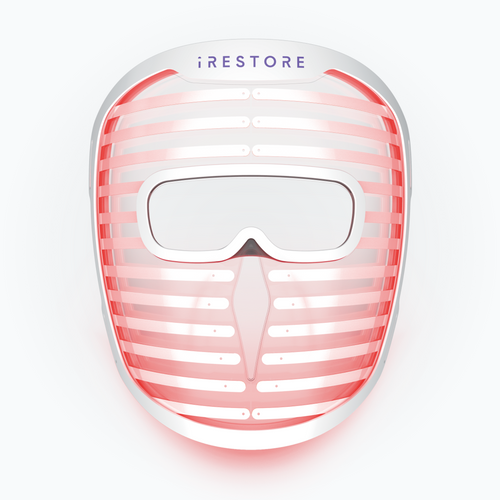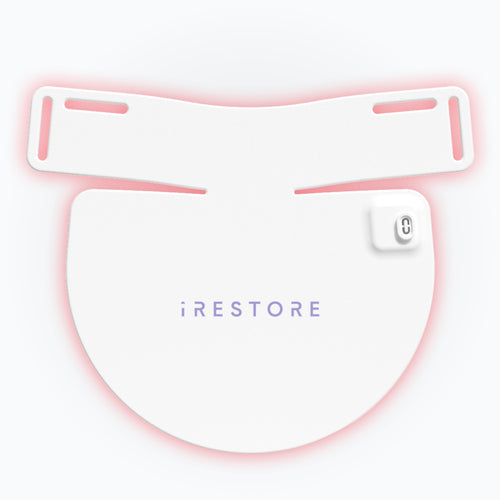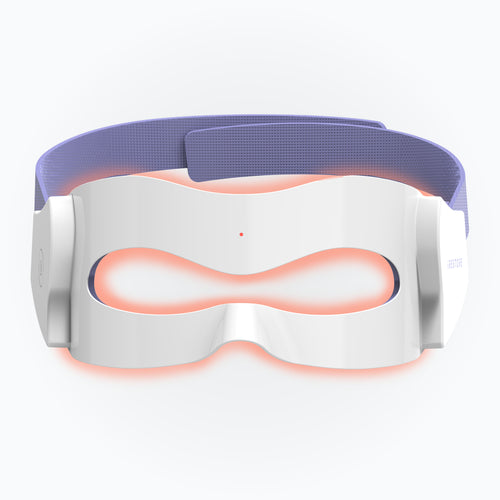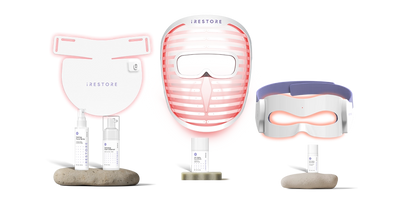


If you've invested in red light therapy for better skin, you're probably wondering how it fits with your existing skincare routine, especially your vitamin C serum. You're not alone. This is one of the most common questions we hear from people using at-home LED devices like iRESTORE.
The internet doesn't make it easy to find a clear answer. Some sources claim vitamin C enhances red light therapy results, while others warn it might interfere with light penetration. With so much conflicting information, it's understandable to feel uncertain about what to do.
The key here is to combine these two powerful skincare tools safely and effectively, so you can get the healthiest, brightest skin possible.
Can I Use Vitamin C with Red Light Therapy?
The short answer is yes. You can use vitamin C with red light therapy, and many skin experts support this pairing. The key is using them in the right order and form.
-
Research shows vitamin C plays a direct role in collagen synthesis and skin repair, which makes it a useful partner when skin activity increases.
-
Red light therapy works at specific wavelengths, usually between 630 and 850 nanometers.
These wavelengths reach deeper skin layers to stimulate cells without damaging the surface. Because vitamin C works differently, the two methods do not cancel each other out. Instead, they support different parts of the same process.
iRESTORE devices use clinically studied red light wavelengths designed to fit into regular skincare routines. When paired correctly with vitamin C, they allow users to get benefits from both without interference.
Why People Pair Vitamin C and Red Light Therapy
People often combine vitamin C and red light therapy because each supports skin health in a different but complementary way.
- Stronger collagen support
Red light therapy activates collagen-producing cells deep in the skin. Vitamin C supports proper collagen formation, helping skin build firmness more effectively.
- Better antioxidant balance
Red light therapy increases cellular activity, which can raise short-term oxidative stress. Vitamin C neutralizes free radicals and supports healthier skin recovery.
- Brighter, more even skin tone
Vitamin C helps reduce excess pigment, while red light therapy improves circulation and calms inflammation. Together, they support clearer and more balanced skin tone.
- Faster healing and repair
Red light therapy boosts circulation and tissue repair. Vitamin C strengthens the skin barrier and supports healing, which helps fade marks and damage over time.
Vitamin C Before or After Red Light Therapy?
If you search online, you will see two opinions. Some say use vitamin C before red light therapy. Others say use it after. The difference comes down to how light interacts with products on your skin.
Red light needs a clear path to reach skin cells. Thick serums or creams can reflect or absorb light before it reaches its target. That is why timing matters when you ask, can I use vitamin C with red light therapy and still get full results.
The Case for Vitamin C After Red Light Therapy (Recommended)
Using vitamin C after red light therapy is the safest and most effective approach for most people. Clean, product-free skin allows red light to penetrate without barriers.
Here is how this works in practice. You cleanse your skin and complete your red light session. Right after, you apply vitamin C to skin that is warm and active. Increased blood flow helps your skin absorb ingredients better. Clinical skin studies show that post-treatment skin absorbs topical antioxidants more efficiently during active repair phases.
The Case for Vitamin C Before Red Light Therapy (Alternative Approach)
Some professionals suggest applying a very thin layer of vitamin C before red light therapy. The idea is that antioxidants may support skin during treatment.
This approach only works with lightweight formulas. Thick or oily products can reduce light exposure. There is also a risk of residue building up on LED surfaces over time.
For most users, this method adds complexity without clear benefits. That is why clean skin first, vitamin C after remains the recommended option.
Which Vitamin C Formula Works Best With LED Therapy
Not all vitamin C products behave the same way. Choosing the right type helps you avoid irritation and get better results.
L-Ascorbic Acid (Pure Vitamin C)
L-ascorbic acid is the most researched form of vitamin C. Studies show that concentrations between 10 and 20 percent offer strong collagen and brightening benefits.
This form works best when applied after red light therapy. It absorbs quickly and supports skin repair during active recovery. However, it can oxidize easily. If the product turns dark yellow or brown, it has lost effectiveness and should be replaced.
Vitamin C Derivatives (Gentler Options)
Vitamin C derivatives are more stable and less irritating. Common examples include magnesium ascorbyl phosphate and sodium ascorbyl phosphate.
These options suit sensitive skin or beginners. Because they are lighter and more stable, they are more flexible in timing. Still, applying them after red light therapy remains the safest choice for consistent results.
What to Avoid
Some formulas work against your routine. Avoid heavy or opaque products that block light. Skip formulas with high oil content before treatment. Also avoid oxidized vitamin C, which can irritate skin instead of helping it.
The Simple iRESTORE Routine With Vitamin C
Keeping your routine simple makes it easier to stay consistent. This matters because both vitamin C and red light therapy show results over time, not overnight.
Morning Routine
-
Cleanse your face with a gentle cleanser
-
Complete your red light therapy session on clean, dry skin
-
Apply a small amount of vitamin C serum
-
Follow with moisturizer
-
Finish with SPF 30 or higher
Vitamin C helps strengthen sun protection when paired with sunscreen.
Evening Routine
-
Double cleanse to remove sunscreen and buildup
-
Use red light therapy on clean skin
-
Apply vitamin C serum
-
Add other treatment products if needed
-
Seal with a night cream
Frequency and Progress
Most people use red light therapy three to five times per week. Vitamin C can be used once daily, usually in the morning. Beginners may start slower to avoid irritation.
A gradual approach works best. Many iRESTORE uses notice and report texture changes within weeks, with clearer improvements over two to three months of steady use.

Common Mistakes When Mixing Vitamin C and Red Light Therapy
Even when people know they can use vitamin C with red light therapy, small mistakes can limit results.
-
Applying product before treatment
Serums can block light. Always use red light therapy on clean, dry skin, then apply vitamin C afterward. -
Using oxidized vitamin C
Dark yellow or brown serum has lost potency and may irritate skin. Replace it immediately. -
Skipping sunscreen
Vitamin C does not replace SPF. Always apply broad-spectrum SPF 30 or higher in the morning. -
Layering too many actives
Mixing vitamin C, acids, retinol, and LED therapy can overwhelm skin. Keep routines simple and rotate strong actives. -
Not cleaning the device
Product residue reduces light output and hygiene. Wipe the device after each use and deep clean weekly. -
Expecting instant results
Visible changes take time. Most improvements appear after 8 to 12 weeks of consistent use.
Conclusion
Vitamin C and red light therapy work better together when used correctly. They support skin repair through different but complementary pathways. Clean skin allows red light to do its job. Vitamin C then supports recovery, brightness, and collagen formation.
If you have ever wondered, can I use vitamin C with red light therapy, the answer is yes with the right timing. Applying vitamin C after your session gives you the benefits of both without interference.
With consistent use and a simple routine, this pairing fits easily into everyday skincare. Over time, it helps support healthier looking skin with fewer mistakes and less guesswork.
FAQs
Will vitamin C serum block red light from penetrating my skin?
Thick layers can reduce light exposure. Using red light therapy on clean skin avoids this issue.
Can I use vitamin C every day with red light therapy?
Yes. Daily use is safe for most people. Start once daily and increase slowly if needed.
What percentage of vitamin C works best with LED therapy?
Dermatology research supports 10 to 20 percent L-ascorbic acid for visible benefits. Sensitive skin may prefer lower strengths.
How long should I wait after red light therapy to apply vitamin C?
You can apply it immediately. Increased blood flow helps absorption after treatment.
Can I use vitamin C with red light therapy for sensitive skin?
Yes, but choose gentle formulas and introduce products slowly. This approach aligns with guidance shared in Is Red Light Therapy Safe for Sensitive Skin?.
Should I layer other serums with vitamin C?
Yes, but keep it simple. Apply vitamin C first, then lighter hydrators, and finish with moisturizer.
Does this combination increase sun sensitivity?
Vitamin C helps protect skin, but sunscreen is still required every morning.
When will I see results?
Many people notice smoother texture within four to six weeks. Stronger improvements appear after two to three months of steady use.
Disclaimer: The iRESTORE blog is for informational purposes only and is not intended to replace professional medical advice or treatment. Please do not ignore professional guidance because of information you’ve read here. If you have concerns about your hair or skin health, we encourage you to consult a qualified healthcare professional.