

Androgenetic alopecia, commonly known as male or female pattern hair loss, is a genetic and hormonal condition in which dihydrotestosterone (DHT) progressively shrinks hair follicles. It is the specific type of hair loss that FDA-cleared laser and LED devices, including iRESTORE’s hair growth systems, are indicated to treat within their labeled user classifications.
Also called male pattern baldness when it occurs in men, androgenetic alopecia is the most common form of nonscarring hair loss and affects both men and women, according to a 2023 review in JAAD International. It usually develops as a receding hairline, crown thinning, or a widening part. It cannot currently be cured, but treatment may slow its progression, preserve existing hair, and improve density for some people.
This guide covers its causes, common patterns, diagnosis, and evidence-based treatment options.
What Causes Androgenetic Alopecia?
Androgenetic alopecia develops through a combination of inherited susceptibility and the effects of androgens on hair follicles. These factors gradually alter the hair-growth cycle, causing affected follicles to produce thinner and shorter strands.
How Does DHT Affect Hair Follicles?
Dihydrotestosterone, or DHT, is an androgen produced when the enzyme 5-alpha-reductase converts testosterone into DHT. In genetically susceptible follicles, DHT binds to androgen receptors and contributes to follicular miniaturization.
As miniaturization progresses, the active growth phase becomes shorter. Each new strand may emerge finer than the last. DHT has a well-established role in male pattern hair loss, but the hormonal pathways involved in female pattern hair loss are more complex. Women can develop the condition even when their circulating androgen levels are within the expected range, according to a 2023 review in JAAD International.
Is Androgenetic Alopecia Genetic?
Androgenetic alopecia has a complex inheritance pattern involving multiple genetic and environmental factors. Susceptibility can come from either side of the family, not just the mother or father.
A family history may increase a person’s likelihood of developing pattern hair loss, but it cannot determine precisely when the condition will begin or how far it will progress. Some people develop AGA without knowing of an affected close relative, according to MedlinePlus Genetics.
Routine washing, brushing, and hat use do not cause androgenetic alopecia. Tight hairstyles, illness, major physical stress, nutritional deficiencies, and certain medications can cause other forms of hair loss. These conditions may also occur alongside AGA.
How Androgenetic Alopecia Shows Up
Androgenetic alopecia usually develops gradually rather than causing sudden bald patches. Its appearance often differs between men and women, but these patterns can overlap. The condition also becomes more common with age, although it can begin after puberty.
Male Pattern Hair Loss
In men, androgenetic alopecia often begins with recession at the temples or changes along the frontal hairline. Thinning may also develop at the crown. These areas can expand and eventually meet as the condition progresses.
Clinicians may use the Hamilton-Norwood scale to describe the extent of male pattern hair loss. It ranges from limited recession to advanced loss across the front and top of the scalp.
Female Pattern Hair Loss
Women more often notice a widening central part or reduced density across the top of the scalp. The frontal hairline is usually relatively preserved, although some women develop recession near the temples or a pattern resembling male hair loss. The American Academy of Dermatology’s overview of female pattern hair loss describes these common changes.
The Ludwig scale groups female pattern hair loss into three levels based on the degree of thinning over the crown. However, individual patterns do not always fit neatly within this system. The Hamilton-Norwood and Ludwig scales describe visible severity, but neither scale can confirm the cause of hair loss on its own.
A review of pattern-hair-loss classification systems discusses the uses and limitations of the Hamilton-Norwood and Ludwig scales.
Does AGA Always Cause Noticeable Shedding?
Androgenetic alopecia does not always cause dramatic shedding. Some people notice more hair in the shower or on a brush, while others mainly notice a thinner ponytail, a wider part, or greater scalp visibility.
Sudden or heavy shedding is less typical of AGA alone. It may point to telogen effluvium or another condition occurring at the same time. A dermatologist can assess the pattern, rate of change, and scalp findings to determine the likely cause.
Androgenetic Alopecia vs. Alopecia Areata: Why the Distinction Matters
Androgenetic alopecia and alopecia areata can both cause visible hair loss, but they develop through different biological processes. Androgenetic alopecia involves progressive follicular miniaturization. Alopecia areata is an autoimmune condition in which the immune system attacks hair follicles.
|
Feature |
Androgenetic alopecia |
Alopecia areata |
|
Main process |
Genetic susceptibility and androgen-related follicular miniaturization |
Autoimmune activity involving hair follicles |
|
Typical onset |
Gradual |
Often sudden |
|
Common pattern |
Hairline recession, crown thinning, or diffuse patterned thinning |
One or more smooth, defined patches, although other patterns can occur |
|
Course |
Usually progresses over time without management |
Unpredictable, with possible loss, regrowth, and recurrence |
|
Treatment approach |
May include minoxidil, finasteride for eligible men, and light-based therapy |
May include corticosteroids, immune-targeting treatments, or other dermatologist-directed options |
The distinction matters because treatments supported for one condition may not be appropriate for the other. The FDA-cleared indications for iRESTORE hair systems cover androgenetic alopecia within their labeled user classifications, not alopecia areata.
Round or oval patches are commonly associated with alopecia areata, but appearance alone does not always establish the cause. More than one form of hair loss can also occur at the same time.
A dermatologist can distinguish between these conditions and recommend an appropriate treatment plan.
How Is Androgenetic Alopecia Diagnosed?
A dermatologist usually diagnoses androgenetic alopecia by examining the distribution of thinning and reviewing how the hair loss developed. The assessment may cover family history, recent illness, medications, hormonal symptoms, nutrition, and hair-care practices.
A magnified scalp examination called trichoscopy can reveal variation in hair-shaft diameter and follicular miniaturization. A hair-pull test may help identify active shedding occurring alongside the patterned loss. These diagnostic features are described in a 2023 clinical review published in JAAD International.
Blood tests are not routinely needed for a typical presentation. A clinician may order them when iron deficiency, thyroid disease, a nutritional deficiency, or an androgen-related disorder is suspected. Scalp biopsy is usually reserved for uncertain cases or when a scarring condition must be excluded.
Is Androgenetic Alopecia Reversible?
Androgenetic alopecia is manageable, but treatment does not permanently remove the underlying susceptibility. It may slow further loss, preserve existing hair, and improve density as long as affected follicles can still respond.
Results depend partly on the extent and duration of follicular miniaturization. Treatment started earlier may have a better chance of preserving hair, but regrowth is not guaranteed.
Most nonsurgical treatments require continued use to maintain their benefits. The American Academy of Dermatology notes that the benefits of treatments such as minoxidil and finasteride generally diminish after treatment is discontinued.
What Treatments Are Available?
Androgenetic alopecia treatment may include medication, light-based therapy, in-office procedures, or hair transplantation. The appropriate option depends on your age, sex, health history, pattern of hair loss, and pregnancy considerations.
A dermatologist can also assess which treatments can be used together safely.
Topical Minoxidil
Topical minoxidil is FDA-approved in labeled formulations for male or female pattern hair loss. It does not block DHT. Instead, it affects the hair-growth cycle and may increase hair count or density in some users.
Results usually require several months of consistent use. Some people notice temporary shedding during the first several weeks of treatment. Topical minoxidil can also cause scalp irritation, dryness, or itching. Improvements generally diminish after treatment stops. Product strength, application frequency, and eligibility differ, so follow the label or your clinician’s instructions.
Dermatologists may also prescribe low-dose oral minoxidil off-label for selected patients. “Off-label” means that an approved drug is being prescribed for an indication or in a form not included in its FDA-approved labeling, as explained by the FDA.
Oral Finasteride
Oral finasteride is FDA-approved for male pattern hair loss. It inhibits type II 5-alpha-reductase, reducing the conversion of testosterone to DHT. In a dose-ranging study of men with androgenetic alopecia, 1 mg of finasteride daily reduced scalp DHT by 64% and serum DHT by 68% after 42 days.
These figures should not be generalized automatically to women or other populations. View the study in the Journal of the American Academy of Dermatology.
FDA prescribing information for Propecia states that finasteride 1 mg is indicated for male pattern hair loss in men. The label also describes sexual adverse reactions and warns that women who are or may potentially be pregnant should not handle crushed or broken tablets because of the potential risk to a male fetus.
Compounded topical finasteride is also not FDA-approved. In 2025, the FDA warned about reported adverse effects and potential exposure risks associated with these products.
Can Treatments Be Combined?
A 2015 randomized comparative study assigned 450 Chinese men with androgenetic alopecia to oral finasteride, 5% topical minoxidil, or both treatments for 12 months. Improvement was reported in 80.5% of the finasteride group, 59% of the minoxidil group, and 94.1% of the combination group.
These findings apply to the population and outcome assessment used in that study. They do not establish that the same results will occur in women, other populations, or with different treatment combinations.
Which Treatments Are Still Being Studied?
Researchers are evaluating topical anti-androgens and other treatments that target follicle biology. Clascoterone 5% topical solution has completed phase 3 trials for male androgenetic alopecia, but it remains investigational and is not FDA-approved for this condition as of September 2026. The registered studies are available through ClinicalTrials.gov.
Trial completion does not establish regulatory approval or routine clinical use. Peer-reviewed findings, longer-term safety data, and regulatory review are still relevant when assessing an investigational treatment.
Where Does Red Light Therapy Fit?
Red light therapy is a noninvasive treatment option for androgenetic alopecia. It is also called low-level light therapy (LLLT) or photobiomodulation (PBM). The treatment exposes the scalp to specific wavelengths of light without producing the heat used to cut or damage tissue.
Researchers propose that this light influences cellular activity within functioning hair follicles. Proposed mechanisms include changes in mitochondrial signaling and hair-cycle activity. However, the precise mechanism and its clinical importance remain under investigation.
What Does the Research Show?
A 2022 systematic review and meta-analysis included 36 studies involving 966 patients across several hair-loss conditions and light-based interventions. Its condition-specific analysis found that red light treatment produced statistically better outcomes than controls in androgenetic alopecia. The 966-patient total applies to the entire review, not only to participants with AGA who received red light therapy.
The American Academy of Dermatology describes the results of at-home laser-device studies as promising, while emphasizing that not every user experiences regrowth and that more research is needed. Results vary based on the device, treatment schedule, extent of hair loss, and consistency of use.
Red light therapy does not cure androgenetic alopecia or guarantee complete regrowth. It is intended to support follicles that remain capable of producing hair. Starting treatment before extensive follicle miniaturization may provide a better opportunity for visible improvement.
Red light therapy may be used alone or alongside treatments such as minoxidil or finasteride. Because these options work through different pathways and have different risks, combination therapy should be selected with professional guidance.
Users should follow the device’s specified schedule because longer or more frequent sessions do not necessarily produce better results.
Which iRESTORE Hair Growth Systems Are Available?
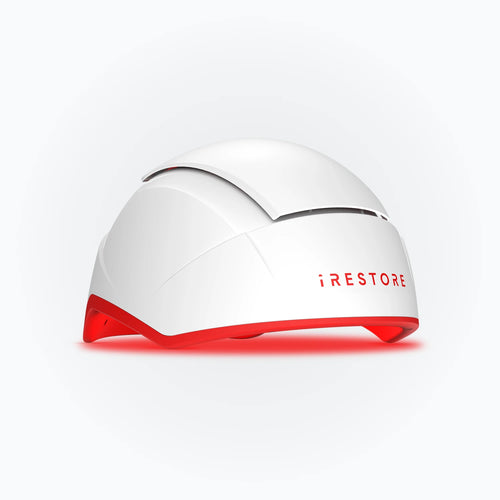
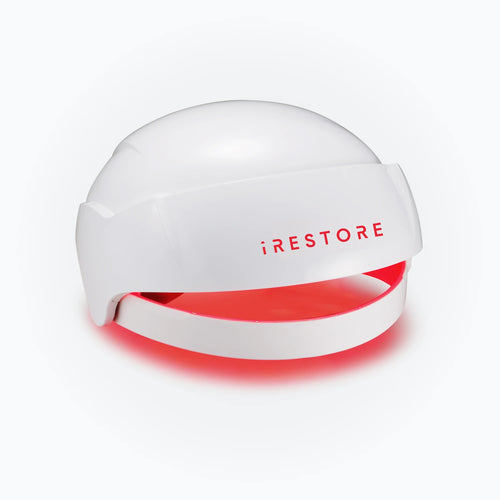
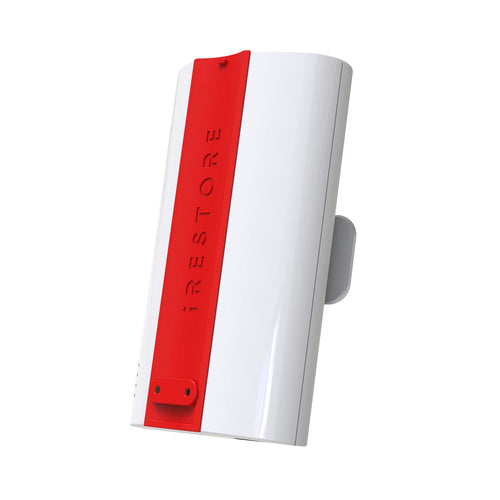
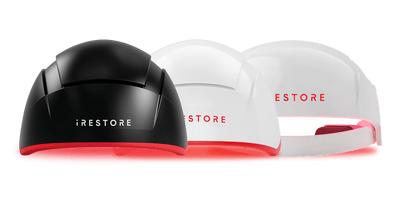
iRESTORE offers three FDA-cleared hair growth systems. Each uses Lumitech™, which combines medical-grade lasers and LEDs rather than relying on an LED-only or laser-only design.
|
System |
Light sources |
Wavelengths |
Schedule |
FDA regulatory status |
|
120 Medical-Grade Lasers & LEDs |
655 nm |
25 minutes every other day |
||
|
282 Medical-Grade Lasers & LEDs |
655 nm |
25 minutes every other day |
||
|
500 Medical-Grade Lasers & LEDs |
625, 655, and 680 nm |
12 minutes daily |
FDA records identify the Essential as the ID-500 system under K213094, the Professional under K183417, and the Elite as the ID-510 system under K222081. Their labeled users include men with Norwood-Hamilton classifications IIa through V and women with Ludwig-Savin classifications I through II. The indications apply to Fitzpatrick skin phototypes I through IV.
FDA 510(k) clearance means that the FDA determined each device to be substantially equivalent to a legally marketed predicate device for its stated use. Clearance is not FDA approval, and it does not guarantee results for an individual user.
iRESTORE hair systems are FDA-cleared, clinically studied, and backed by a money-back guarantee. Most users see visible results in 3 to 6 months of consistent use. The 12-month money-back guarantee applies to eligible direct US purchases and remains subject to the current guarantee terms.
Temporary shedding may occur as hair follicles move through the growth cycle. In iRESTORE’s approved wording, “Shedding means the growth cycle is restarting.” However, sudden, heavy, or persistent shedding should not automatically be attributed to treatment and warrants professional evaluation.
None of iRESTORE’s current hair systems uses an 850 nm wavelength.
When to See a Dermatologist?
Seek a professional evaluation if your hair loss:
-
Begins suddenly or progresses rapidly
-
Appears in distinct patches
-
Affects your eyebrows, eyelashes, or other body areas
-
Occurs with scalp pain, itching, redness, scaling, or scarring
-
Follows a new medication, illness, major weight change, or hormonal symptoms
-
Causes substantially more shedding than usual
These features may indicate alopecia areata, excessive shedding, a scalp disorder, or another medical cause. Sudden, patchy, or otherwise unexplained hair loss warrants professional evaluation, particularly when it is accompanied by scalp symptoms or loss of eyebrow, eyelash, or body hair.
Build Your Next Step Around an Accurate Diagnosis
A clear diagnosis can help you choose treatments suited to the cause and extent of your hair loss.
Visit the iRESTORE Hair Hub for additional information about pattern hair loss, red light therapy, and at-home hair growth systems.
Key Takeaways
|
Frequently Asked Questions
Q1. Is androgenetic alopecia the same as male pattern baldness?
A1. Androgenetic alopecia is the clinical term for male and female pattern hair loss. Male pattern baldness refers specifically to how the condition commonly presents in men.
Q2. Can women get androgenetic alopecia?
A2. Yes. Female pattern hair loss is a form of androgenetic alopecia. It typically causes diffuse thinning across the crown rather than the receding hairline pattern commonly seen in men.
Q3. Is androgenetic alopecia curable?
A3. No, but it is manageable. Treatments such as minoxidil, finasteride for eligible men, and red light therapy may slow progression or improve density for some people.
Q4. What is the difference between androgenetic alopecia and alopecia areata?
A4. Androgenetic alopecia is a genetic and hormone-influenced condition that usually progresses gradually. Alopecia areata is an autoimmune condition that often causes sudden, patchy hair loss and requires a different treatment approach.
Q5. Does red light therapy help with androgenetic alopecia specifically?
A5. Research suggests that red light therapy can improve treatment outcomes for some people with androgenetic alopecia. Results vary, and red light therapy does not cure the condition or guarantee complete regrowth.
Disclaimer: This article is for informational purposes only and is not a substitute for professional medical advice, diagnosis, or treatment. Consult a qualified healthcare professional about your hair loss and treatment options. Individual results may vary. Results are not guaranteed.