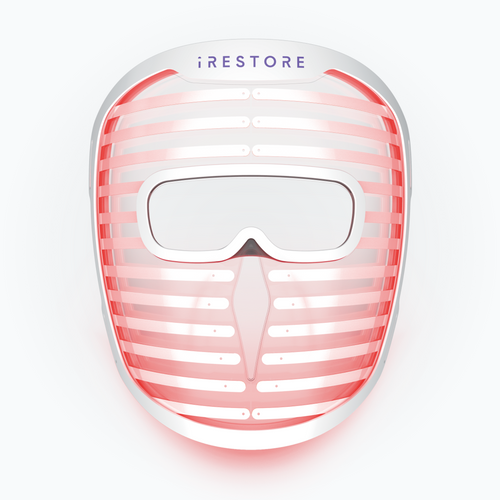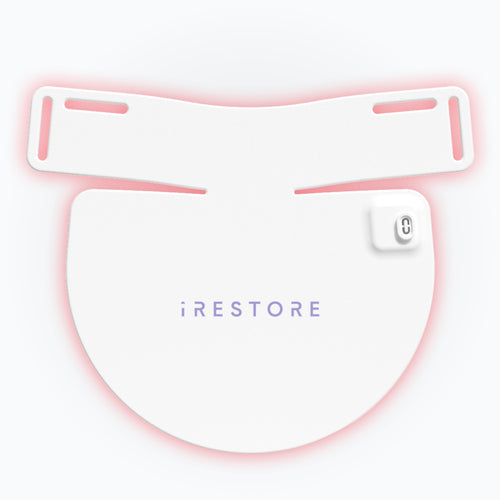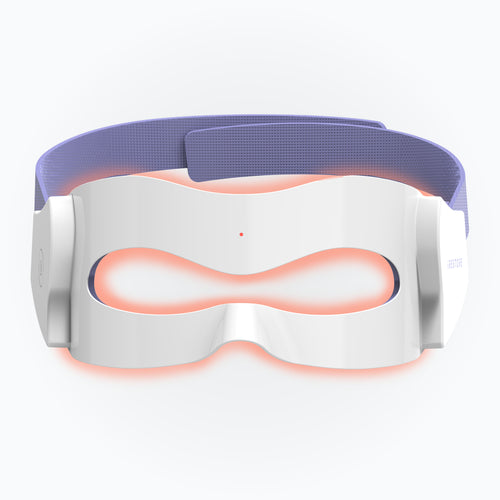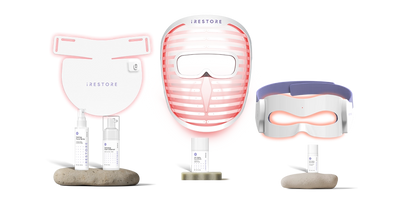


The best LED face masks combine verified FDA regulatory status, clinically studied wavelengths, and enough LED density for consistent full-face coverage. Commonly studied ranges include red light around 630–660 nm, near-infrared light around 800–850 nm, and blue light around 415 nm. LED count alone does not determine effectiveness.
The best option for your skin also depends on irradiance, treatment time, facial coverage, device-specific evidence, comfort, and safety instructions. Price and LED count can help you compare products, but neither one proves that a mask will provide better results.
What Actually Makes an LED Face Mask Effective?
After identifying the wavelengths relevant to your goal, examine how the device delivers them. Dose, coverage, study quality, and fit can help distinguish a supported product from one based mainly on marketing language.
Irradiance, Dose, and Session Length
Irradiance describes how much light power reaches a given area of skin. It is commonly reported in milliwatts per square centimeter, or mW/cm². A higher number does not automatically mean that a mask will produce better results.
Irradiance works together with exposure time to determine the light dose, also called fluence. When irradiance is reported in milliwatts per square centimeter, the relationship is:
Dose (J/cm²) = Irradiance (mW/cm²) × Treatment time (seconds) ÷ 1,000
This is why two masks with different output levels and session lengths may deliver similar doses. Treatment distance also matters. An irradiance measurement taken directly at the light source cannot be compared fairly with one taken where the skin sits during use.
Photobiomodulation can follow a dose-response pattern in which more exposure does not always produce a greater effect. Follow the tested schedule for the specific device instead of extending sessions or increasing frequency on your own.
Our guide explains how often you should use an LED face mask based on the device and treatment protocol.
Coverage and Light Placement
A large LED count can sound impressive, but the number does not show how evenly the mask treats the face. Check how the lights are positioned around curved or recessed areas, including the nose, temples, mouth, and jaw.
Mask shape and the distance between the lights and skin can influence coverage. A mask with fewer, carefully positioned lights could provide more consistent exposure than a higher-count mask with uneven spacing. Buyers should therefore assess LED count alongside layout, fit, irradiance, and dose.
Evidence for the Exact Device
Research on red, blue, or near-infrared light can support the rationale for using those wavelengths. However, it does not prove that every mask emitting a similar color will perform the same way.
The most useful evidence tests the exact device using its intended treatment schedule. When reviewing a study, check the number of participants, study duration, comparison group, measured outcomes, and reported side effects. Also note whether the research was randomized, blinded, independently conducted, or funded by the manufacturer.
Give greater weight to objective measurements than to participant satisfaction alone. Customer testimonials can describe usability or individual experiences, but they do not replace controlled research.
Fit, Comfort, and Eye Protection
A mask must be comfortable enough to use according to its recommended schedule. Consider its weight, flexibility, strap design, nose pressure, heat, eye openings, and visibility during treatment.
Eye-safety directions can differ by mask design and light output. Check whether the manufacturer supplies eye protection, instructs users to keep their eyes closed, and identifies anyone who should not use the device.
Match the LED Mask to Your Main Skin Concern
Potential LED face mask benefits depend partly on the wavelengths used and the concern being addressed. Start with the result you want, then check whether the device provides a relevant wavelength and treatment mode.
More light colors do not automatically make one mask better than another.
Fine Lines, Wrinkles, and Skin Texture
Red light within the 630 to 660 nm range has been studied for visible signs of skin aging. Some devices pair it with near-infrared light, which penetrates more deeply into the skin than visible red light.
Research suggests that these wavelengths may support changes in skin texture and wrinkle appearance, but results vary with the device, dose, and treatment schedule.
A prospective, randomized, controlled trial involving 136 volunteers evaluated 30 sessions of either 611–650 nm light or broader 570–850 nm polychromatic light. Compared with controls, treated participants showed improvements in skin complexion, skin feeling, skin roughness, and collagen-density measurements.
The researchers used large-area and full-body light sources, so the findings should not be treated as proof that every home-use face mask produces the same results.
Mild to Moderate Acne
Blue light near 415 nm is commonly used in devices designed for acne-prone skin. It can activate porphyrins produced by Cutibacterium acnes, generating reactive molecules that can damage the bacteria. Red light is sometimes paired with blue light to address inflammatory pathways alongside bacterial activity.
A 2025 open-label study of a wearable 415 nm and 633 nm LED mask evaluated adolescents and adults with mild to moderate acne over seven weeks. The findings provide a device-relevant clinical example, but the study had no randomized control group and should not be generalized to every LED mask.
A systematic review and meta-analysis of 31 LED studies reported statistically significant findings for red and blue LED treatment in its acne analysis. However, devices, treatment settings, and study designs varied. A separate systematic review of blue-light therapy for acne concluded that methodological and reporting limitations prevented firm conclusions about effectiveness.
At-home LED therapy should not replace dermatologist-directed care for painful, cystic, scarring, or persistent acne.
More Than One Skin Concern
A multiwavelength mask may suit someone addressing both breakouts and visible signs of aging. Check whether the device offers separate modes so you can use the wavelengths intended for each concern. Extra colors add value only when they address a relevant concern and can be used through clearly defined modes.
Our guide to LED light therapy colors provides a closer comparison of the wavelengths used in skincare devices.
FDA-Cleared vs. FDA-Approved vs. FDA-Registered
FDA clearance, approval, registration, and facility listing describe different regulatory concepts. They should not be used interchangeably.
FDA 510(k) clearance generally means that the FDA determined a device to be substantially equivalent to a legally marketed predicate device for a specified intended use. Clearance does not mean that the FDA guarantees the device’s results. “FDA-approved” normally refers to a different regulatory process and should not be used for either iRESTORE face mask.
FDA registration identifies an establishment or device in the FDA registration and listing system. Registration does not mean that the FDA has cleared or approved the device. Similarly, manufacture in an FDA-listed facility describes the manufacturing establishment, not the clearance status of the finished product.
The Illumina Face Mask is FDA-registered and manufactured in a GMP-certified, FDA-listed facility. Its 510(k) clearance is pending. The Laser Face Mask Pro also has 510(k) clearance pending. Neither product currently has a clearance number.
If a seller claims that a mask is FDA-cleared, verify the clearance number, manufacturer, device name, and intended use in the FDA 510(k) database.
Is a More Expensive LED Face Mask Actually Better?
A more expensive LED face mask is not automatically more effective. Price alone does not confirm accurate wavelengths, consistent coverage, or device-specific clinical evidence.
A premium may be reasonable when it reflects documented differences, such as additional relevant treatment modes, verified output, stronger clinical testing, better fit, or more protective warranty and return terms. App controls, luxury packaging, celebrity promotion, and a high light count do not independently establish better results.
Compare the features you will use and the evidence supporting them. The best value is the device that addresses your concern and fits a routine you can follow consistently.
What to Check Before You Buy (Comparison Table)
No single specification identifies the best LED face mask. Use the following checklist to compare devices on factors that affect suitability, usability, and the strength of their claims.
|
Buying factor |
What to verify |
Warning sign |
|
Skin concern |
The device is intended for acne, visible aging, or your specific goal |
Broad claims that one mode addresses every skin concern |
|
Wavelengths |
Exact nanometer values for each light mode |
Color names without wavelength specifications |
|
Irradiance and dose |
Output at the treatment distance, session length, and dose when reported |
High output promoted without measurement details |
|
Coverage |
Light placement across the forehead, cheeks, nose, mouth, temples, and jaw |
A high light count without information about distribution |
|
Clinical evidence |
Testing performed on the exact device using its recommended schedule |
General wavelength research presented as proof of product performance |
|
FDA status |
If the seller claims FDA clearance, verify the clearance number, manufacturer, device name, and intended use in the FDA 510(k) database |
Registration or device listing presented as equivalent to device clearance or approval |
|
Fit and eye protection |
Mask weight, straps, eye openings, visibility, and safety directions |
No clear instructions for protecting the eyes |
|
Treatment schedule |
Recommended session length and weekly frequency |
Claims that longer or more frequent use always works better |
|
Warranty and returns |
Coverage period, return window, fees, and exclusions |
Vague terms or no option to return an unsuitable device |
|
Customer reviews |
Reviews describing treatment duration, routine, comfort, skin concern, and verified purchase status |
Testimonials presented as clinical proof or reviews based on only a few uses |
|
Price |
Evidence, features, accessories, support, and protections included |
Cost used as the main proof of quality |
Compare technical specifications only when they were measured under similar conditions. Check when, where, and at what distance irradiance was measured.
If a brand omits an important figure, request documentation instead of assuming that the value is high or low.
Where iRESTORE Fits: Illumina Face Mask vs. Laser Face Mask Pro
iRESTORE offers two face-mask tiers for different skin concerns and feature preferences. The Illumina Face Mask is the core LED-only option, while the Laser Face Mask Pro combines laser and LED technology in the premium tier. Compare their wavelengths, output, treatment modes, fit, session schedule, and supporting evidence before choosing between them.
|
Feature |
Illumina Face Mask |
Laser Face Mask Pro |
|
Light sources |
360 Medical-Grade LEDs |
800 Medical-Grade Lasers & LEDs, including 150 lasers and 650 LEDs |
|
Wavelengths |
415 nm blue, 635 nm red, and 830 nm near-infrared |
Lasers: 660 nm red and 850 nm near-infrared. LEDs: 415 nm blue, 532 nm green, 590 nm amber, 633 nm red, and 830 nm and 1,072 nm near-infrared |
|
Treatment modes |
Three modes: Red & Infrared; Red, Infrared & Blue; and Blue only |
Five modes: Anti-Aging, Clear, Brighten, Restore, and All Wavelengths |
|
Irradiance |
Red & Infrared: 35 mW/cm²; Red, Infrared & Blue: 60 mW/cm²; Blue only: 25 mW/cm² |
Anti-Aging: 70 mW/cm²; Clear: 97 mW/cm²; Brighten: 93 mW/cm²; Restore: 99 mW/cm²; All Wavelengths: 126 mW/cm² |
|
FDA status |
FDA-registered; 510(k) pending; no clearance number. Made in a GMP-certified, FDA-listed facility |
FDA 510(k) pending; no clearance number |
|
Session schedule |
10 minutes, three to five days per week |
10 minutes, three to five days per week |
|
Results window |
6 to 12 weeks |
No client-approved results window provided |
|
Fit and eye protection |
Adjustable straps and integrated eye shields |
Expanded unisex fit, adjustable strap, minimal facial contact, and silicone eye protection |
|
Testing and quality claims |
IEC safety tested and ISO quality assured |
IEC safety tested and ISO quality assured |
|
Warranty |
One year |
Two years |
|
Money-back period |
100 days for qualifying direct US purchases |
100 days for qualifying direct US purchases; return authorization window applies from days 70 to 100 |
|
Price tier |
Core |
Premium |
Illumina Face Mask
The Illumina Face Mask uses 360 Medical-Grade LEDs across three wavelengths: 415 nm blue, 635 nm red, and 830 nm near-infrared. Its approved benefit language is that it “helps fight against acne and blemishes.” Its red and near-infrared wavelengths provide additional options for readers concerned about visible signs of skin aging.
The mask offers three modes. Red & Infrared delivers an irradiance of 35 mW/cm². Red, Infrared & Blue delivers 60 mW/cm². Blue only delivers 25 mW/cm². The recommended schedule is 10 minutes per session, three to five days per week. The client-approved results window is 6 to 12 weeks.
The Illumina Face Mask is FDA-registered, and its 510(k) clearance is pending. It does not currently have a clearance number. It is manufactured in a GMP-certified, FDA-listed facility, but facility listing is not equivalent to device clearance.
The product has a one-year warranty and a 100-day money-back period for qualifying direct US purchases. Its LED count should still be considered alongside irradiance, dose, coverage, fit, treatment consistency, and device-specific evidence.
Laser Face Mask Pro
The Laser Face Mask Pro uses 800 Medical-Grade Lasers & LEDs across eight wavelengths and five treatment modes. Its lasers emit 660 nm red light and 850 nm near-infrared light. Its LEDs emit 415 nm blue, 532 nm green, 590 nm amber, 633 nm red, 830 nm near-infrared, and 1,072 nm near-infrared light.
The five modes are labeled Anti-Aging, Clear, Brighten, Restore, and All Wavelengths. Irradiance varies by mode:
-
Anti-Aging: 70 mW/cm²
-
Clear: 97 mW/cm²
-
Brighten: 93 mW/cm²
-
Restore: 99 mW/cm²
-
All Wavelengths: 126 mW/cm²
The recommended schedule is 10 minutes per session, three to five days per week. The mask is cordless and includes an adjustable strap, expanded unisex fit, silicone eye protection, controller and battery, USB-C charging cable, storage pouch, and microfiber cloth. It is listed as IEC safety-tested and ISO quality-assured.
The Laser Face Mask Pro has a two-year warranty and a 100-day money-back period for qualifying direct US purchases. Its return authorization window applies from days 70 to 100.
The device’s FDA 510(k) clearance is pending. It does not currently have a clearance number and should not be described as FDA-cleared or FDA-approved.
The Laser Face Mask Pro was named Best LED Facial Mask in the 2026 SHAPE Beauty Awards. SHAPE reported that its tester noticed less under-eye puffiness and more even-looking tone and texture after four weeks with a prelaunch model. This represents the outlet’s editorial opinion and should not be presented as a clinical finding or a guarantee of results.
Which iRESTORE Face Mask Should You Choose?
The Illumina Face Mask may suit readers seeking a core LED mask with blue, red, and near-infrared wavelengths. It offers three modes, irradiance ranging from 25 to 60 mW/cm², and a recommended schedule of 10 minutes per session, three to five days per week.
The Laser Face Mask Pro may suit readers who want combined laser and LED delivery, eight wavelengths, five modes, and irradiance ranging from 70 to 126 mW/cm². It also provides an expanded fit and a two-year warranty.
Do not choose between them based solely on 360 versus 800 light sources. Compare the wavelengths, modes, irradiance, fit, treatment schedule, warranty, price, evidence, and regulatory status. The Illumina Face Mask is FDA-registered with 510(k) clearance pending. The Laser Face Mask Pro also has 510(k) clearance pending.
How Long Does an LED Face Mask Take to Work?
LED face mask results generally require repeated treatment. The timeframe depends on the skin concern, wavelengths, dose, treatment schedule, and outcome being measured. No single results timeline applies to every mask.
In a controlled trial involving 136 participants, researchers administered 30 sessions of red or near-infrared light and reported improvements in several measured skin outcomes. However, the study did not test every wavelength, face-mask design, or current home-use protocol. Broader reviews also report substantial variation in devices and treatment schedules. View the controlled trial and the systematic review.
Temporary brightness, warmth, or flushing after one session should not be interpreted as lasting skin improvement. When a manufacturer gives a results timeframe, check whether evidence for the exact device and recommended schedule supports it.
If you plan to track changes, take baseline photographs using the same lighting, camera, distance, angle, and facial position each time. You can also review realistic LED face mask before-and-after expectations before starting a routine.
LED Face Mask Side Effects and Safety Considerations
Non-UV LED therapy is generally considered low risk in the short term when an appropriate device is used as directed, but long-term safety data remain limited.
Possible short-term effects include mild redness, warmth, dryness, or irritation. The likelihood of a reaction can depend on the device, light dose, treatment duration, medication use, and individual sensitivity.
Follow the manufacturer’s instructions for session length, frequency, and eye protection. Stop using the device if you develop pain, persistent redness, worsening irritation, eye discomfort, or an unexpected skin reaction.
Ask a dermatologist or other qualified healthcare professional before using an LED face mask if you:
-
Have a condition that causes sensitivity to light
-
Take a medication or supplement labeled as photosensitizing or associated with light sensitivity
-
Have an active or undiagnosed skin condition
-
Are receiving prescription treatment for acne or another skin concern
-
Have experienced light-triggered rashes or pigment changes
-
Have an eye condition that may require additional protection
If irritation occurs, pause treatment and seek professional guidance rather than changing the exposure time on your own.
Key Takeaways
|
Frequently Asked Questions
Q1. Can I Use an LED Face Mask With Retinol or Other Skincare Actives?
A1. Follow the instructions for both the mask and the skincare product, since some products can increase irritation or light sensitivity. Some manufacturers recommend using the mask on clean, dry skin and applying skincare afterward.
Ask a dermatologist how to schedule prescription retinoids or other products that have caused irritation, and review our guide to using retinol with an LED face mask.
Q2. How Often Should I Use an LED Face Mask?
A2. Use the session length and frequency specified for your device because output and treatment dose vary between masks. Some protocols use several short sessions per week, but longer or more frequent treatment does not necessarily provide better results. Review our guide to how often you should use an LED face mask for more details.
Q3. Is Redness or a Warm Feeling After Use Normal?
A3. Mild, temporary warmth or redness can occur after LED treatment. Stop using the mask and seek professional advice if redness persists or you experience pain, worsening irritation, eye discomfort, or another unexpected reaction.
Q4. Do LED Face Masks Work for All Skin Tones?
A4. Non-UV LED therapy does not use the same pigment-targeting mechanism as some lasers and intense pulsed light treatments. However, evidence across skin tones varies by device and intended use. Ask a dermatologist for guidance if you have melasma, a history of hyperpigmentation, or a photosensitive condition.
Disclaimer: The iRESTORE blog is for informational purposes only and is not intended to replace professional medical advice or treatment.