

You've decided to try a red light therapy device for hair growth, and now you need to choose between four FDA 510(k) cleared low-level laser therapy brands: iRESTORE, HairMax, Capillus, and iGrow. They all claim to be the best. That makes the decision harder, not easier.
This comparison cuts through the noise. We looked at specs, clinical data, pricing, and real user experience for all four devices. No marketing spin. Just the facts.
If you're in a hurry: iRESTORE offers the strongest combination of clinical evidence and full scalp coverage at a mid-range price. But the right device depends on your budget and hair loss pattern. Read on to find out which one fits you best.
Quick Verdict
If you are looking for the best LLLT device in 2026, iRESTORE Elite is the strongest overall option based on clinical evidence and buyer protection. It backs its claims with a published clinical study showing over 43% increase in hair count. It also covers the full scalp, which most competitors don't do at the same price point.
HairMax wins for brand credibility. It holds seven FDA 510(k) clearances, more than any other brand in this category. However, its most affordable models require you to move the device manually across your scalp, which adds time and effort to every session.
Capillus is the most discreet option. It looks like a regular baseball cap. But you pay a premium for that design, and the clinical evidence is thinner than iRESTORE's.
iGrow is the most affordable of the four. It used to be a strong contender, but its availability has dropped and its technology hasn't kept pace with the others.
How Red Light Therapy (LLLT) for Hair Growth Works?

Red light therapy for hair growth works through a process called photobiomodulation. Here's the simple version: light energy at a specific wavelength, usually 650 to 670 nanometers, reaches your hair follicles and wakes them up. It boosts cellular energy production, which helps follicles shift from a resting phase back into an active growth phase.
Think of it like sunlight helping a plant grow. The right wavelength gives follicle cells the energy boost they need to do their job again.
Not all devices deliver this energy equally well. A quality red light therapy hair growth device needs to deliver the right wavelength at sufficient power to actually reach your follicles. The number of lasers or LEDs, their placement, and the wavelength they emit all affect how much light actually reaches your scalp. This is why comparing specs matters, not just brand names.
FDA 510(k) clearance is also worth understanding. It does not mean the FDA has approved the device as a treatment. It means the device has been reviewed and found to be safe for use, similar to already approved devices. For hair growth devices, this clearance is still a meaningful benchmark because it requires clinical safety data.
Device-by-Device Breakdown
Each device below is evaluated on the same criteria: specs, clinical evidence, pricing, and real-world usability. Here is how they stack up.
iRESTORE

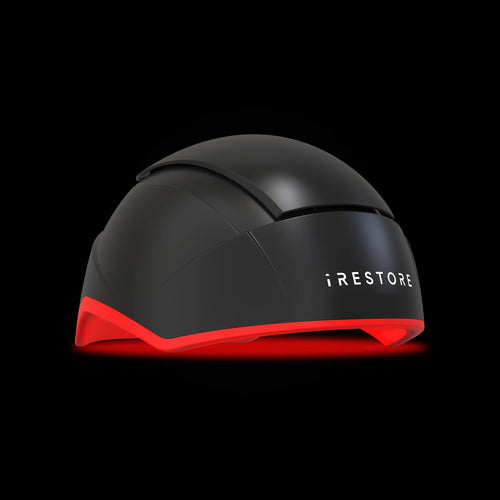
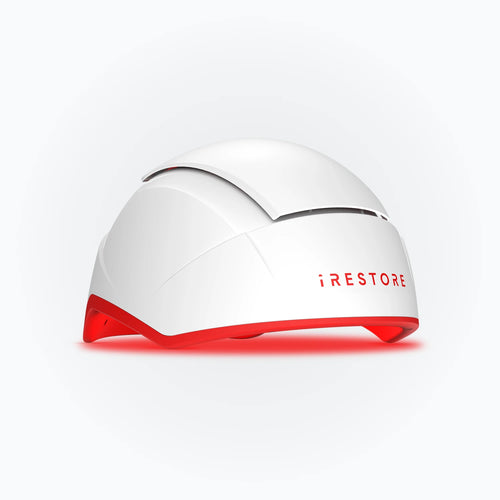
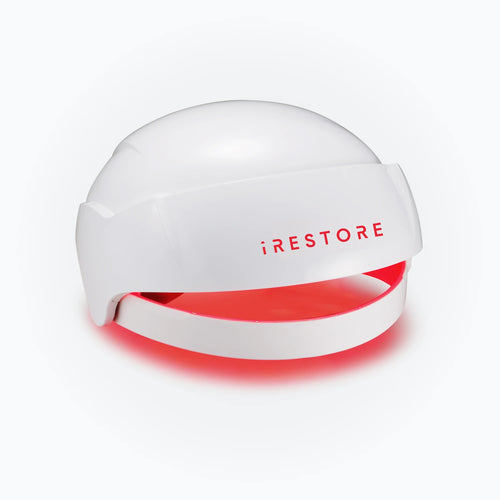
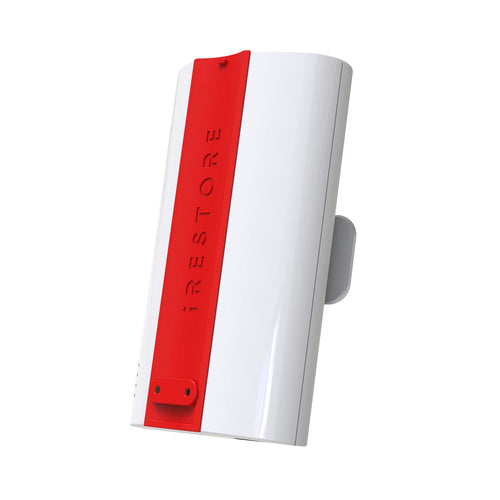
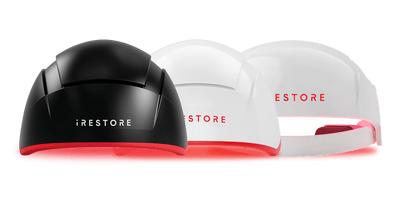
iRESTORE offers three models to suit different budgets and goals. This iRESTORE review covers all three models so you can compare them side by side. However, the Elite is the flagship, and the one most worth comparing against competitors.
Models and specs:
-
Essential: 120 diodes (51 lasers + 69 LEDs), 600mW, 25 min every other day, $499
-
Professional: 282 diodes (82 lasers + 200 LEDs), 1,410mW, 25 min every other day, $799
-
Elite: 500 diodes (300 lasers + 200 LEDs), 2,500mW, triple wavelength (625/655/680nm), 12 min daily, $1,799
Clinical evidence: A double-blind, placebo-controlled study showed 100% of users experienced hair growth, with an average increase of 43.2% in hair count after 16 weeks.
Buyer protection: Every model comes with a 12-month money-back guarantee, the longest in this comparison, plus a 3-year warranty on the Elite.
One limitation: The helmet design is bulkier than a cap. If discretion is a priority, that is worth factoring in.
HairMax
HairMax has been in the LLLT space longer than any brand here and holds seven FDA 510(k) clearances, more than any competitor in this category.
Key models:
-
LaserBand 41: Entry-level, manual movement required, $599
-
LaserBand 82: 82 medical-grade lasers, 655nm, 90-second sections, 3x per week, no LEDs
-
PowerFlex 272: 272 lasers, fully hands-free cap, 7 min daily, $1,699
Clinical evidence: Seven clinical studies back HairMax's technology, with users seeing an average of 129 new hairs per square inch after six months. However, most studies were conducted on comb and band models, not the PowerFlex cap specifically.
One limitation: The LaserBand requires manual repositioning across three scalp sections per session. If you want fully hands-free from the start, go straight to the PowerFlex. HairMax also offers a 6-month money-back guarantee, half of iRESTORE's window.
Capillus
Capillus devices sit inside a regular-looking baseball cap, making them the most discreet option in this group. All models use laser-only technology with no LEDs, and all run for just 6 minutes per day with auto-shutoff.
Key models:
-
CapillusPro: 272 laser diodes, 650nm, 6 min daily, $2,999
-
Capillus Spectrum: 312 diodes, dual wavelength (650nm + 808nm), 6 min daily
-
Capillus TriSpectrum: 312 diodes, triple wavelength (650/780/808nm), 6 min daily, $3,299
Clinical evidence: A double-blind clinical trial showed the CapillusPro improved hair counts by 51% after 17 weeks. Capillus is clear that this study applies only to the Pro model. No equivalent trials exist yet for the Spectrum or TriSpectrum.
One limitation: Capillus offers only a 60-day money-back guarantee across all models, far shorter than iRESTORE's 12-month window. At $2,999 and above, that is a meaningful risk to weigh before buying.
iGrow
iGrow was one of the first FDA-cleared helmet-style LLLT devices on the market, made by Apira Science. It uses a combination of lasers and LEDs with 25-minute sessions every other day.
Clinical evidence: Two peer-reviewed studies published in Lasers in Surgery and Medicine found average hair growth of 35% in men and 37% in women with androgenic alopecia. Both studies are over a decade old.
Current status:
-
No active official website found
-
Still available through Amazon and third-party retailers
-
Limited direct brand support compared to the other three options
-
Technology has not been meaningfully updated since launch
iGrow's science is legitimate but dated. For most buyers in 2026, the lack of updates and thin support infrastructure make it a risky choice unless found at a steep discount.
Head-to-Head Comparison Table
Every device in this comparison is an FDA cleared laser hair growth system, but clearance alone does not tell the whole story.
|
Feature |
iRESTORE Elite |
HairMax PowerFlex 272 |
Capillus Pro |
iGrow |
|
Laser/LED Count |
500 (300 lasers + 200 LEDs) |
272 lasers |
272 lasers |
Lasers + LEDs (undisclosed count) |
|
Wavelength |
625/655/680nm (triple) |
655nm |
650nm |
655nm |
|
Session Time |
12 min daily |
7 min daily |
6 min daily |
25 min every other day |
|
Coverage |
Full scalp (helmet) |
Full scalp (cap) |
Full scalp (cap) |
Full scalp (helmet) |
|
FDA Cleared |
Yes |
Yes (7 clearances) |
Yes |
Yes |
|
Clinical Study |
43.2% hair count increase, 16 weeks |
129 new hairs/sq inch, 6 months |
51% hair count increase, 17 weeks |
~35% increase, 16 weeks |
|
Price |
$1,799 |
$1,699 |
$2,999 |
~$500 (third-party only) |
|
Warranty |
3 years |
1 year |
3 years |
Limited/unclear |
|
Money-Back Guarantee |
12 months |
6 months |
60 days |
6 months (retailer varies) |
|
Design |
Helmet |
Cap |
Cap |
Helmet |
|
LEDs Included |
Yes |
No |
No |
Yes |
Which Device Is Best for You?
Finding the best laser hair growth device means weighing clinical evidence, coverage, session time, and price. Not everyone has the same budget, lifestyle, or stage of hair loss. Here is an honest breakdown of who each device suits best.
Best overall: iRESTORE Elite, because it combines the highest diode count (500), the longest money-back guarantee (12 months), triple wavelength technology, and a published double-blind clinical study, all at a price that sits below Capillus's top models. For most buyers, this is the strongest all-around package.
Best for short sessions: Capillus Pro, because its 6-minute daily session is the fastest hands-free treatment in this comparison. If your schedule is tight and you want something you can use while getting ready in the morning, Capillus is built around that routine. Just know that the 60-day return window leaves less room to test results before committing.
Best for brand credibility and regulatory track record: HairMax, because its seven FDA 510(k) clearances are unmatched in this category. If third-party regulatory validation matters most to you, HairMax has the longest history of it. The PowerFlex 272 is HairMax's most advanced laser cap that gives you a hands-free experience at $1,699, though the clinical studies behind it were mostly conducted on band and comb models, not the cap itself.
Best budget option: iGrow, because it is the most affordable device still available, often found below $500 through third-party retailers. However, there is no active official website, no updated technology, and limited customer support. It works on dated but legitimate science. Only consider it if price is the deciding factor and you are comfortable with the tradeoffs.
Best for advanced thinning: Capillus TriSpectrum, because its three-wavelength design at 650nm, 780nm, and 808nm targets scalp layers no other device in this group reaches. At $3,299, it is the most expensive option here, and the newer wavelengths do not yet have their own clinical trial data. But for someone dealing with moderate to advanced thinning who wants the most technologically advanced cap available, it is worth knowing about.
Do Laser Hair Devices Actually Work?

The short answer is yes, for the right person and with consistent use. Low-level laser therapy for hair loss is backed by multiple randomized controlled trials and has been studied for over two decades. It is not a miracle cure, but it is one of the few non-drug options with real clinical evidence behind it.
That said, results depend heavily on your stage of hair loss. These devices work best for people in the earlier to middle stages, specifically Norwood-Hamilton classifications IIa to V for men and Ludwig-Savin classifications I to II for women. If follicles are completely inactive or the scalp is fully bald in an area, light therapy cannot reactivate them. Think of it like trying to water a dead plant versus a dormant one. LLLT can wake up a follicle that is slowing down, but it cannot rebuild one that is gone.
Realistic expectations also matter. Most users start seeing a reduction in shedding around the 3 to 6 month mark. Visible new growth typically takes 6 to 12 months of consistent use. Everyone's results will vary, and combining these devices with other treatments such as minoxidil or finasteride can improve outcomes further. If you stop using the device, the benefits tend to fade over time. Like exercise, it works while you keep doing it.
Conclusion
All four devices in this comparison are backed by real science. The right one depends on your budget, lifestyle, and how much risk you are willing to take on a purchase.
iRESTORE is the strongest overall pick in 2026 because it combines a double-blind clinical study showing a 43.2% increase in hair count with the longest money-back guarantee in this group. HairMax is the most credentialed brand by regulatory standards. Capillus wins on discretion and session speed, if you can absorb the price. iGrow works on legitimate science, but it is showing its age.
Whichever device you choose, consistency is what drives results. These devices work over months, not weeks. The best one is the device you will actually stick with. If you are ready to start, explore the iRESTORE lineup and take advantage of the 12-month guarantee to give it a proper trial.
Men can find additional guidance in our article on tips for balding men, and women dealing with hormonal hair loss can read more in our piece on menopause and hair loss.
FAQs
Is iRESTORE better than HairMax for hair growth?
For most buyers, iRESTORE has the edge because of its stronger buyer protection and broader scalp coverage at a comparable price. The Elite's 12-month money-back guarantee gives you nearly double the trial window of HairMax's 6-month policy. HairMax does win on regulatory history, with seven FDA clearances compared to iRESTORE's one. If you want the most hands-free, full-coverage experience with the longest return window, iRESTORE is the stronger pick. If regulatory track record matters most, HairMax is worth considering.
Is Capillus worth the price compared to iRESTORE?
When comparing Capillus vs iRESTORE, it comes down to what you value. Capillus offers shorter sessions (6 minutes vs 12 minutes) and a more discreet cap design. However, the CapillusPro starts at $2,999 compared to iRESTORE Elite's $1,799, and Capillus only gives you 60 days to return the device versus iRESTORE's 12 months. The clinical evidence for the CapillusPro shows a 51% hair count increase, but that study applies only to the Pro model, not the newer Spectrum or TriSpectrum. For most buyers, iRESTORE delivers comparable or better value at a lower price with significantly more buyer protection.
Does iGrow still work or is it outdated?
The underlying science behind iGrow is legitimate. Its peer-reviewed studies showed meaningful hair growth results. However, the technology has not been updated in years, there is no active official website, and direct customer support is limited. It can still work for someone in the early stages of hair thinning who finds it at a steep discount. For most buyers in 2026, the other three options offer better technology, support, and buyer protection.
How long do you have to use a laser cap to see results?
Most users notice reduced shedding within 3 to 6 months. Visible new growth typically takes 6 to 12 months of consistent use. Results continue to improve with ongoing use up to 24 months. Stopping treatment will gradually reverse the gains over time, so long-term commitment matters as much as the device itself.
Are laser hair growth devices FDA approved?
These devices are FDA cleared, not FDA approved. There is an important difference. FDA clearance means the device has been reviewed and found to be safe, similar to an already approved device. FDA approval requires a higher bar of clinical evidence showing the treatment works for a specific condition. All four devices in this comparison hold FDA 510(k) clearance for safety.
Can you use a laser cap with minoxidil or finasteride?
Yes. All four brands allow use alongside topical treatments like minoxidil or oral medications like finasteride. Many users report better results when combining red light therapy with other hair loss treatments. Always consult your doctor before combining treatments, especially if you are on medications that increase light sensitivity.
What is the difference between laser diodes and LEDs?
Laser diodes produce focused, coherent light that penetrates deeper into the scalp with more precision. LEDs emit broader, less focused light that covers more surface area but with less penetration depth. Capillus and HairMax use lasers only. iRESTORE uses a combination of both, arguing that lasers provide deep spot stimulation while LEDs fill the gaps between them for more even coverage. To learn more about which wavelength works best, read our guide on the best red light wavelengths for hair growth.
Is red light therapy for hair loss permanent?
No. Red light therapy supports hair growth while you use it consistently. If you stop treatment, the benefits gradually fade because the underlying cause of hereditary hair loss, which is the sensitivity of follicles to DHT, does not go away. Think of it like going to the gym. The results are real, but they require ongoing effort to maintain.
Disclaimer: The iRESTORE blog is for informational purposes only and is not intended to replace professional medical advice or treatment. Please do not ignore professional guidance because of information you’ve read here. If you have concerns about your hair or skin health, we encourage you to consult a qualified healthcare professional.