

Resveratrol is a plant-derived polyphenol antioxidant studied for its potential to protect skin from oxidative stress and support processes linked to visible aging.
Human evidence is still developing, but a 2025 randomized, placebo-controlled trial found that participants using both oral and topical trans-resveratrol had significantly lower wrinkle scores after eight weeks than those receiving placebo.
The findings strengthen the human evidence for resveratrol, but they also show that not every measured skin outcome improves with treatment.
What Is Resveratrol and Where Does It Come From?
Resveratrol is a naturally occurring polyphenol produced by certain plants in response to stress, including UV exposure and infection. It is found in foods such as grapes, berries, and peanuts. In skincare research, most attention centers on trans-resveratrol, the form used in the 2025 Rao et al. clinical trial.
How resveratrol is delivered also matters. Oral resveratrol is absorbed relatively well, but it is rapidly metabolized in the intestine and liver. Human pharmacokinetic research has reported oral absorption of about 75%, while the bioavailability of unchanged resveratrol is considerably below 1%. This makes topical resveratrol particularly relevant to skincare because it is applied directly to the skin.
Topical delivery has its own challenges, however. Resveratrol's performance depends on factors such as the formulation, concentration, stability, and ability to reach the intended layers of the skin. Its presence on an ingredient list alone therefore does not indicate how well a product will perform.
How Resveratrol Works on Skin: The Four Key Mechanisms
The main resveratrol skin benefits are linked to its antioxidant activity and its effects on pathways involved in collagen breakdown, inflammation, and photoaging. Much of the evidence for these mechanisms comes from laboratory and animal research, so a biological effect should not automatically be interpreted as a visible cosmetic benefit in people.
1. Antioxidant Defence (Direct and Indirect)
UV exposure, pollution, and normal cellular activity can generate reactive oxygen species, which contribute to oxidative stress in the skin. Over time, this process can damage proteins, lipids, and structural components involved in skin appearance.
Resveratrol can act as an antioxidant and has also been studied for its effects on the Nrf2 pathway. Nrf2 helps regulate genes involved in the body's own antioxidant defense system. This means resveratrol may support antioxidant defenses in more than one way. However, clinical skincare studies have not established how much Nrf2 activity contributes to visible results.
2. Collagen Protection and Synthesis
Collagen breakdown is partly driven by matrix metalloproteinases, or MMPs, a group of enzymes that can become more active after UV exposure. Experimental research suggests resveratrol may influence the expression or activity of MMPs involved in collagen breakdown.
Earlier human research using a combination of resveratrol, baicalin, and vitamin E also reported changes linked to COL3A1, a gene involved in type III collagen production. However, because multiple active ingredients were used, the effect cannot be attributed to resveratrol alone. The 2025 Rao et al. trial did not directly measure collagen synthesis or turnover.
Collagen breakdown is one of several factors involved in the development of wrinkles and fine lines.
3. Anti-Inflammatory Effects
Chronic inflammatory signaling can contribute to processes associated with skin aging. Laboratory research suggests resveratrol may influence pathways such as NF-κB and reduce signaling from certain pro-inflammatory mediators. These findings may help explain its role in skin-aging research, but they do not establish resveratrol as a treatment for inflammatory skin conditions.
4. Photoprotection
Photoaging refers to long-term skin changes caused by repeated UV exposure. Experimental studies suggest resveratrol may help reduce some UV-related effects, including oxidative stress, inflammatory signaling, MMP activity, and structural changes in the skin.
A 2025 scoping review by Muralitharan et al. included nine eligible studies and found evidence supporting a potential protective role for resveratrol in skin photoaging across preclinical models. The authors also emphasized the need for human clinical trials to confirm these effects.
Resveratrol should therefore be viewed as a possible complementary antioxidant in a broader skincare routine. It does not replace broad-spectrum sunscreen, which remains the primary form of daily UV protection.
What Does the Clinical Evidence Actually Show?
Resveratrol has a substantial body of laboratory and animal research behind it, but human studies on visible skin aging are much fewer. Earlier clinical research also often tested resveratrol alongside other antioxidants, which made it difficult to determine how much of the observed effect came from resveratrol itself.
The available studies are therefore useful, but they need to be interpreted according to their design.
|
Study |
Design |
Main Finding |
Important Limitation |
|
55 women used a topical formula containing 1% resveratrol, 0.5% baicalin, and 1% vitamin E for 12 weeks |
Improvements were reported in fine lines, firmness, elasticity, pigmentation, radiance, and skin texture |
The formula contained three active antioxidants, so the effects cannot be attributed to resveratrol alone |
|
|
Double-blind, randomized, placebo-controlled trial in women aged 40 and older; 134 enrolled and 122 completed eight weeks of treatment |
The group using both oral and topical trans-resveratrol had significantly lower wrinkle scores than the double-placebo group. Topical resveratrol also increased U-zone sebum |
Topical resveratrol alone did not significantly improve most of the other measured skin parameters |
|
|
Scoping review of research on resveratrol and pterostilbene for skin photoaging |
The reviewed evidence supports potential protective effects against processes involved in photoaging |
The evidence is primarily preclinical, and human trials are still needed to confirm efficacy. |
The Rao trial is particularly useful because trans-resveratrol was the only active ingredient under investigation, unlike earlier combination-formula studies. However, its results were selective rather than universal.
The clearest wrinkle improvement occurred with combined oral and topical treatment, while topical resveratrol alone did not significantly improve most measured outcomes.
Taken together, the evidence is stronger for resveratrol's biological activity than for predictable visible results in people. Human research is improving, but it is still too limited to assume that every resveratrol product will reduce wrinkles, increase collagen, or produce comparable results.
Formulation also matters. The concentration, form of resveratrol, stability, delivery system, and other ingredients may all affect how a topical product performs.
Topical vs Oral Resveratrol: Which Is Better for Skin?
Topical and oral resveratrol deliver the compound in different ways, and current research does not establish one route as universally better for visible skin aging. For skincare-specific goals, topical use is more direct, while oral resveratrol is limited by rapid metabolism after absorption.
|
Factor |
Topical Resveratrol |
Oral Resveratrol |
|
Delivery |
Applied directly to the skin |
Absorbed through the gastrointestinal tract |
|
Main challenge |
Stability and skin penetration depend on the formulation |
Resveratrol is rapidly metabolized, leaving low levels of unchanged compound in circulation |
|
Skincare relevance |
Targets the area where it is applied |
Produces systemic exposure rather than targeted skin delivery |
|
Example from the 2025 trial |
1.5% trans-resveratrol |
75 mg trans-resveratrol twice daily |
|
Evidence interpretation |
Promising, but human evidence remains limited |
Not established as superior for cosmetic skin outcomes |
There is also no universally accepted “best” percentage of topical resveratrol for skincare. The 2025 Rao et al. trial used a 1.5% trans-resveratrol cream, but a concentration used in one clinical study should not be treated as the ideal strength for every formulation or skin type.
Oral supplementation requires additional caution because resveratrol may affect platelet activity and may interact with some medications. Anyone considering a supplement should discuss it with a healthcare professional, particularly if they use anticoagulant or antiplatelet medication.
For skincare-specific goals, topical use provides direct application to the target area, but current evidence does not establish it as clinically superior to oral resveratrol for visible skin aging.
How to Use Resveratrol in Your Skincare Routine
Resveratrol is usually used as a serum, cream, or lotion, and the exact application order depends on the formulation. In most routines, lighter products are applied before heavier moisturizers, but the product instructions should take priority over a fixed layering rule.
When and How to Apply Resveratrol
If you use a resveratrol serum, apply it according to the product directions. Serums are generally used after cleansing and before heavier moisturizers, although the formulation instructions should take priority. Daytime use should always be paired with broad-spectrum sunscreen because resveratrol does not provide sufficient UV protection on its own.
There is no strong evidence that resveratrol must be used at night to work effectively. Unless the product directs otherwise, consistent use matters more than choosing a specific time of day.
Can You Use Resveratrol With Vitamin C, Niacinamide, or Retinoids?
Resveratrol can be used within routines that also contain vitamin C, niacinamide, peptides, or retinoids. Resveratrol is also used in multi-antioxidant formulations, but combining active ingredients does not automatically create a clinically proven synergistic effect.
If your routine already contains several active ingredients, introduce new products gradually so you can identify any irritation or sensitivity. This is especially useful when using retinoids or stronger exfoliating products. The full formulation, product strength, and your skin tolerance matter more than following a universal ingredient-layering sequence.
Using Resveratrol with Red Light Therapy
Resveratrol and red light therapy can be part of the same skincare routine, but current human research has not established that combining them produces better anti-aging results than either approach alone. Resveratrol is an antioxidant compound, while red light therapy uses specific wavelengths to influence cellular activity through photobiomodulation. Some biological pathways may overlap, but this does not prove a synergistic effect.
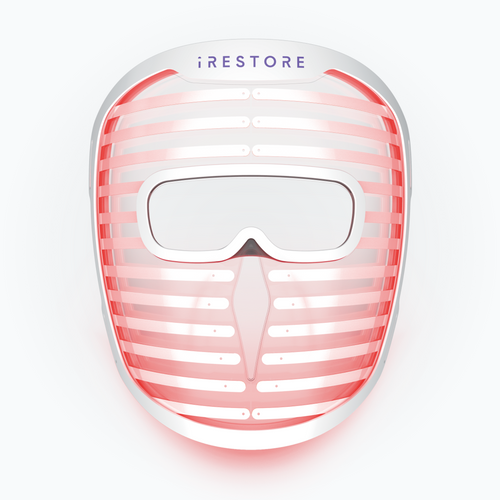
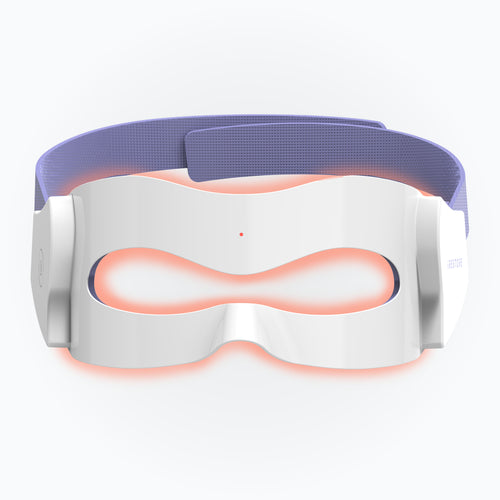
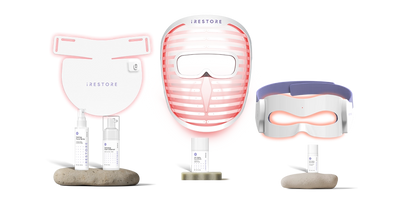
For readers who also use LED skincare, the iRESTORE Illumina Face Mask provides a device-based option alongside a topical routine. The current Illumina system uses 360 LEDs with 635 nm red light, 830 nm infrared light, and 415 nm blue light, with 10-minute sessions recommended three to five times per week.
There is also no human evidence that red light therapy improves resveratrol absorption or creates an optimal post-treatment application window. Follow the Illumina instructions for skin preparation and use topical products according to their own directions.
What Actual Users Say About the Illumina Face Mask
Customer reviews can provide practical context for how the iRESTORE Illumina Face Mask fits into a regular skincare routine. Verified users have described changes in areas such as skin texture, tone, and overall appearance with consistent use, although experiences and timelines differ.

These reviews reflect individual experiences with the Illumina Face Mask itself. They do not show that red light therapy improves resveratrol absorption or makes a resveratrol serum more effective, since that combination has not been established in human clinical research.
Individual results vary, and customer testimonials should be viewed as personal experiences rather than guaranteed outcomes.
Key Takeaways
|
Frequently Asked Questions
Q1. How long does resveratrol take to work on skin?
A1. Human studies have evaluated resveratrol-containing treatments over periods such as eight to 12 weeks, but these study durations are not guaranteed timelines for results. Visible changes can vary with the formulation, concentration, skin concern, and consistency of use.
Q2. Can you use resveratrol every day?
A2. Many topical resveratrol products are designed for regular use, but frequency should follow the specific product instructions. If you have sensitive skin or already use several active ingredients, introduce it gradually and watch for irritation.
Q3. Is resveratrol suitable for sensitive skin?
A3. Whether a resveratrol product suits sensitive skin depends on the complete formulation and individual tolerance. Fragrances, preservatives, solvents, and other active ingredients may affect irritation risk, so introducing a new product gradually or patch testing it first may be helpful.
Q4. Can resveratrol replace retinol?
A4. No. Resveratrol and retinoids work through different biological pathways, and retinoids have a much larger clinical evidence base for improving signs of photoaging. Resveratrol is better viewed as a complementary antioxidant rather than a direct substitute for a retinoid.
Disclaimer: The iRESTORE blog is for informational and educational purposes only and is not intended to replace professional medical advice, diagnosis, or treatment. Please do not disregard professional medical guidance because of information you have read here. Consult a qualified healthcare professional or dermatologist if you have questions about your skin, skincare routine, or the use of supplements. Individual results may vary. Results are not guaranteed.