

Wrinkles cannot always be removed completely, but many can become less visible with the right approach.
Fine lines and early static wrinkles may respond to sun protection, retinoids, moisturizers, and red light therapy. Dynamic lines caused mainly by facial movement often respond better to botulinum toxin, while deeper folds linked to volume loss or skin laxity may require professional procedures.
The most suitable option depends on the wrinkle’s type, cause, depth, and location.
What Causes Wrinkles?
Wrinkles develop as the skin and its supporting tissues change with age. Sun exposure, repeated facial movement, smoking, and changes beneath the skin can influence when wrinkles appear and how visible they become.
-
Age-related skin changes: Collagen levels, skin elasticity, moisture retention, facial fat, bone, and connective tissue change over time.
-
UV exposure: Sunlight and indoor tanning accelerate damage to collagen and elastin.
-
Facial movement: Repeated smiling, squinting, frowning, and eyebrow movement can create lines that later remain visible at rest.
-
Smoking: Smoking affects blood flow and exposes the skin to chemicals associated with premature aging.
-
Volume loss: Changes beneath the skin can make hollows, folds, and shadows more noticeable.
-
Sleep compression: Repeated pressure may contribute to some facial and chest lines, although it is a secondary factor.
What Type of Wrinkle Do You Have?
Wrinkles are often grouped by how they appear and what contributes to them. These categories can overlap. A forehead line, for example, may begin with muscle movement and later remain visible because of collagen loss and sun damage.
Identifying the dominant cause can help narrow down which treatments are more likely to help.
|
Wrinkle type |
How it appears |
Common contributors |
Common examples |
|
Dynamic wrinkles |
Appear or deepen during facial movement |
Repeated muscle contraction |
Forehead lines, crow’s feet, frown lines |
|
Static wrinkles |
Remain visible when the face is relaxed |
Collagen loss, reduced elasticity, UV exposure, repeated movement |
Established forehead and eye lines |
|
Fine lines |
Shallow creases on the skin’s surface |
Surface dryness, early skin changes and sun exposure |
Fine lines around the eyes and mouth |
|
Deep creases and folds |
Pronounced lines or folds that remain visible |
Structural aging, repeated movement, laxity, sun damage, and reduced support |
Established forehead lines, nasolabial folds, and marionette lines |
|
Volume-loss wrinkles |
Appear with hollows, shadows, or reduced facial support |
Changes in fat, bone, and connective tissue |
Tear troughs, nasolabial folds, marionette lines |
How to Reduce Wrinkles at Home
At-home treatments may help prevent further damage and reduce some fine lines and static wrinkles. Deep folds, strong movement-related lines, and volume-loss concerns are less likely to respond to skincare alone.
a) Use Broad-Spectrum Sunscreen
Daily broad-spectrum sunscreen helps limit further UV-related collagen and elastin damage. Choose a water-resistant SPF 30 or higher and apply it to exposed areas, including the face, neck, chest, and hands.
Sunscreen does not remove established wrinkles. Its role is to reduce further photoaging and support other treatments.
b) Add a Suitable Retinoid
Retinoids may improve mild fine lines, uneven pigmentation, and skin texture. Retinol is available over the counter, while tretinoin and some stronger retinoids require a prescription.
Retinoids can cause redness, dryness, and peeling, so begin with a lower frequency and increase use gradually. Topical retinoids are generally avoided during pregnancy. Ask a healthcare professional about suitability if you are pregnant, planning pregnancy, breastfeeding, or managing a skin condition.
c) Support Skin Hydration
Moisturizers can make fine lines appear less noticeable by increasing water content in the outer layer of the skin. Ingredients such as hyaluronic acid attract and retain moisture, which can make the skin appear smoother and temporarily soften fine lines.
This effect is mainly temporary. Topical hyaluronic acid does not replace lost facial fat, restore bone support, or correct deeper folds caused by structural volume loss.
d) Consider Red Light Therapy
Red light therapy is a non-invasive option that may support gradual improvement in fine lines, static wrinkles, and skin texture. Results vary by device and treatment schedule. The next section reviews the evidence, limitations, and relevant iRESTORE devices.
Must Read: Red Light Therapy For Collagen Production: A Gentle Way To Improve Skin Firmness And Elasticity
Does Red Light Therapy Work for Wrinkles?
Red light therapy may help reduce the appearance of fine lines, static wrinkles, and uneven skin texture when used consistently. It works by supporting the skin's natural repair processes rather than removing wrinkles immediately.
Results vary depending on the device, treatment schedule, and the type of wrinkles being treated.
What Does the Research Show?
In a 2014 controlled trial involving 136 participants, Wunsch and Matuschka assessed skin changes after 30 red or near-infrared light sessions. Treated participants showed significant improvements in skin complexion, skin roughness, and ultrasonographically measured intradermal collagen density.
A 2023 clinical study followed 20 women who used a 630 ± 10 nm LED mask for 12 minutes, twice weekly, over three months. Researchers measured changes in crow’s-feet depth, skin firmness, elasticity, dermal density, cheek roughness, complexion, and pore appearance. The study reported improvement across several measured signs of facial aging.
These findings support red light therapy as a non-invasive option for skin rejuvenation. They do not prove that every device or treatment schedule will produce the same results.
Which Wrinkles May Respond?
Red light therapy may be most suitable for:
-
Fine lines
-
Static wrinkles
-
Uneven skin texture
-
Visible signs of photoaging
It is less likely to improve deep folds caused by significant volume loss or advanced skin laxity, and it does not work like botulinum toxin by relaxing facial muscles.
iRESTORE Options by Treatment Area
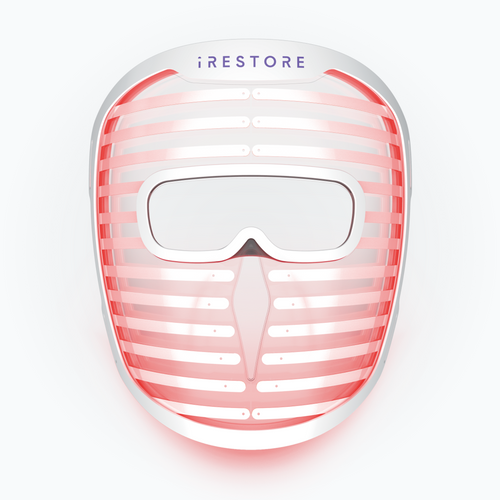
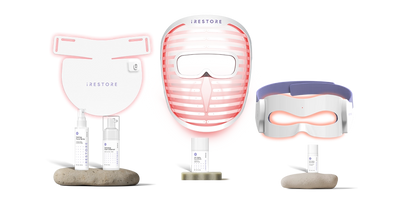
The iRESTORE Illumina Face Mask is designed for facial wrinkles, including the forehead, cheeks, eye area, and skin around the mouth. A clinical study on this LED technology found that over 90% of participants showed a measurable reduction in rhytid depth and surface roughness (via Rz and Ra PRIMOS profilometry) after 12 LED treatments, with clinical improvement in wrinkles observed in 87% of participants. The trial involved 36 subjects who received 9 treatments over 5 weeks, with final evaluation 12 weeks post-treatment (J Invest Dermatol. 2009 Dec;129(12):2751-9).
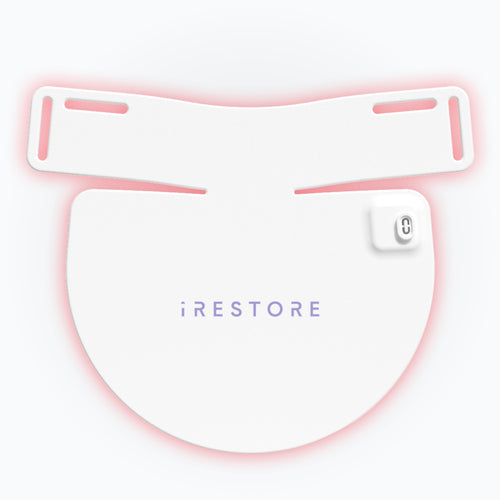
For the neck and chest, the Illumina LED Neck & Chest Mask provides targeted coverage across both areas.
If you want broader treatment beyond the face, neck, and chest, the Apex Pro 1500 and Apex Elite 2160 panels are designed to cover larger body areas.

How to Reduce Wrinkles by Area
Wrinkles in the same area may have different causes, so treatment should match the underlying concern rather than location alone.
a) Forehead Wrinkles and Frown Lines
Forehead lines often develop through repeated eyebrow movement, while lines between the eyebrows are strongly influenced by frowning and squinting. At-home care may soften fine lines that remain visible at rest, but it does not relax the underlying muscles.
Botulinum toxin is commonly used when muscle movement is the main cause.
b) Under-Eye Wrinkles and Crow’s Feet
Several concerns can affect the eye area:
-
Fine under-eye lines may be associated with thin skin, surface dryness, sun exposure, and age-related structural changes.
-
Crow’s feet are mainly associated with smiling and squinting.
-
Hollowing usually involves reduced volume and structural support.
-
Puffiness may be linked to fluid retention or changes in under-eye fat.
-
Dark circles may result from pigmentation, visible blood vessels, shadows, or a combination of factors.
A treatment for wrinkles will not necessarily correct hollowing, puffiness, or dark circles. Each concern may require a different approach.
c) Mouth and Lip Wrinkles
Wrinkles around the mouth can include:
-
Vertical lines above or around the lips
-
Nasolabial folds, often called smile lines
-
Marionette lines extending from the mouth toward the chin
Fine surface lines may respond to skincare, red light therapy, or professional resurfacing. Deeper folds often involve volume loss and structural changes, which limits what topical products can achieve.
d) Neck and Chest Wrinkles
Common concerns in these areas include:
-
Horizontal neck lines
-
Vertical platysmal bands
-
Loose or sagging skin
-
Sun-related fine lines and texture changes
-
Chest lines associated with repeated skin compression
At-home care may help with fine lines and uneven texture. Pronounced muscle bands, deep creases, or advanced skin laxity usually require professional assessment.
How to Reduce Forehead Wrinkles Without Botox
Sunscreen, retinoids, red light therapy, professional microneedling, and laser resurfacing may soften static forehead wrinkles without Botox. These options may address sun damage, uneven texture, or collagen-related skin changes, but they do not relax the muscles that create dynamic expression lines.
Non-Botox treatments are therefore more likely to help lines visible at rest. Movement-led forehead lines may improve less because repeated eyebrow activity continues.
When Do Professional Wrinkle Treatments Work Better?
Professional treatments may be appropriate when wrinkles are deep, caused by repeated muscle movement, associated with facial volume loss, or linked to significant skin laxity. The most suitable option depends on the underlying cause of the wrinkle.
-
Botulinum toxin (Botox®): Best for dynamic wrinkles such as forehead lines, frown lines, and crow's feet. It relaxes targeted facial muscles but does not restore lost volume or tighten loose skin.
-
Dermal fillers: Best for wrinkles and folds caused by facial volume loss, including nasolabial folds, marionette lines, and under-eye hollows. Results are temporary and require maintenance treatments.
-
Professional microneedling: May improve fine lines, mild wrinkles, and uneven skin texture by stimulating collagen production. Multiple sessions are usually recommended.
-
Chemical peels: May improve mild wrinkles, uneven pigmentation, and skin texture by removing damaged surface layers. Recovery varies depending on the depth of the peel.
-
Laser resurfacing: May improve fine lines, wrinkles, pigmentation, and skin texture by stimulating collagen remodeling. Recovery depends on whether an ablative or non-ablative laser is used.
-
Facelift or neck lift: May be considered for advanced skin laxity and deeper structural changes. Surgery can reposition facial tissues but does not stop the natural aging process or eliminate every surface wrinkle.
Safety note: All cosmetic procedures carry risks and should be performed by an appropriately qualified professional with experience in the selected treatment.
Wrinkle Treatments Compared
No single treatment works for every type of wrinkle. The best option depends on whether the concern is linked to sun damage, muscle movement, volume loss, skin texture, or advanced laxity.
|
Treatment |
Best suited to |
What it may improve |
Setting |
Typical timing |
Main limitation |
|
Broad-spectrum sunscreen |
Preventing further UV-related damage |
Helps limit further UV-related skin aging |
At home |
Ongoing |
Does not remove established wrinkles |
|
Retinoids |
Fine lines and early static wrinkles |
Skin texture, pigmentation, and visible fine lines |
At home, with prescription guidance when required |
Several weeks to months |
May cause dryness, redness, and irritation |
|
Red light therapy |
Fine lines, static wrinkles, and uneven texture |
Gradual improvement in visible signs of skin aging |
At home or clinic |
Several weeks to months |
Does not relax muscles or replace lost volume |
|
Botulinum toxin |
Dynamic forehead lines, frown lines, and crow’s feet |
Wrinkles caused mainly by muscle movement |
Clinic |
Changes often begin within days |
Temporary and does not improve volume loss |
|
Dermal fillers |
Hollows and volume-related folds |
Selected creases, shadows, and reduced facial support |
Clinic |
Often visible immediately, with fuller assessment after swelling settles |
Temporary and not suitable for every wrinkle |
|
Professional microneedling |
Fine lines and rough or uneven texture |
Surface smoothness and visible fine wrinkles |
Clinic |
Gradual, often across several sessions |
May involve redness and recovery time |
|
Chemical peels |
Mild fine lines and sun-related surface changes |
Texture, pigmentation, and selected fine wrinkles |
Clinic |
Depends on peel depth |
Irritation and pigmentation risks vary |
|
Laser resurfacing |
Established wrinkles and texture changes |
Fine lines, deeper wrinkles, pigmentation, and texture |
Clinic |
Several weeks to months |
Downtime, cost, and suitability vary |
|
Surgery |
Advanced laxity and structural aging |
Sagging and deeper structural changes |
Surgical setting |
Results become clearer as swelling resolves |
Invasive and does not correct every surface line |
A dermatologist or qualified medical professional can help determine which option fits your skin type, wrinkle pattern, and medical history.
How to Keep Wrinkles From Becoming More Visible
You cannot stop natural skin aging, but you can reduce avoidable damage:
-
Apply broad-spectrum SPF 30 or higher to exposed skin, including the neck, chest, and hands.
-
Avoid tanning beds and prolonged unprotected sun exposure.
-
Do not smoke.
-
Use skincare products and devices according to their instructions.
-
Introduce active ingredients gradually to limit irritation.
Key Takeaways
|
FAQs
Q1. Can you combine different wrinkle treatments?
A1. Yes. Wrinkles may involve muscle movement, sun damage, uneven texture, and volume loss at the same time. A dermatologist may combine treatments that address different causes. Professional guidance is important when combining prescription products, injectable treatments, or procedures.
Q2. Can too many anti-aging products make wrinkles look worse?
A2. Yes. Combining several retinoids, acids, scrubs, or exfoliants can damage the skin barrier and cause dryness or irritation. This may make fine lines appear more noticeable. Introduce active ingredients gradually and stop using products that cause persistent burning, redness, or peeling.
Q3. Should red light therapy be used before or after skincare?
A3. Follow the instructions provided with your device. iRESTORE recommends using the Illumina Face Mask on clean, dry skin before applying serums or moisturizers. Remove makeup, sunscreen, skincare products, dirt, and oil before each session.
Q4. Are wrinkle treatments suitable for every skin tone?
A4. Not every procedure carries the same risks for every skin tone. Some lasers and chemical peels can cause pigmentation changes when unsuitable settings or treatment depths are used. Choose a qualified professional with experience treating your skin tone and assessing pigmentation risk.
Q5. What happens when you stop using a wrinkle treatment?
A5. The benefits usually fade according to how the treatment works. Hydration effects decline after moisturizer use stops, and muscle movement returns when botulinum toxin wears off. Improvements from skincare or red light therapy may also diminish as natural skin aging continues.
Disclaimer: The iRESTORE blog is for informational purposes only and is not intended to replace professional medical advice or treatment. Please do not ignore professional guidance because of information you’ve read here. If you have concerns about your hair, skin, pain, or overall health, we encourage you to consult a qualified healthcare professional.