

Low testosterone does not directly cause hair loss. The primary driver of androgenetic alopecia is the genetic sensitivity of hair follicles to DHT (dihydrotestosterone), a hormone produced when 5-alpha reductase converts testosterone into DHT.
This means a man with low testosterone can still experience significant hair loss if his follicles are genetically sensitive to DHT, while a man with high testosterone may not lose hair if his follicles lack that sensitivity.
Low testosterone can affect facial or body hair in some men, but that is different from androgenetic alopecia of the scalp. The relationship becomes especially relevant for men using or considering testosterone replacement therapy because changes in androgen exposure may affect existing AGA in susceptible individuals.
The Short Answer: It Is Not About Testosterone Levels
A low testosterone result does not by itself explain male pattern hair loss. AGA results from androgen activity in genetically susceptible scalp follicles, so a single testosterone measurement cannot determine who will develop the condition.
Low testosterone and patterned hair loss can therefore occur at the same time without one directly causing the other. Recession at the temples or progressive thinning at the crown may still reflect AGA even when testosterone levels are below the normal range.
Low testosterone can also affect facial or body hair in some men, which is different from androgenetic alopecia of the scalp.
How the Testosterone-DHT-Hair Loss Mechanism Actually Works
Testosterone does not act on scalp hair in isolation. Part of it is converted into dihydrotestosterone (DHT), a more potent androgen that plays a central role in androgenetic alopecia. The effect depends on how individual hair follicles respond to androgen signaling.
How Is Testosterone Converted Into DHT?
The enzyme 5-alpha reductase converts some circulating testosterone into DHT in androgen-responsive tissues, including the skin and hair follicles. DHT then binds to androgen receptors within susceptible follicles.
This is why a testosterone blood test alone cannot predict who will develop male pattern hair loss. Two men with similar testosterone levels can have very different hair outcomes because their follicles may differ in androgen sensitivity.
How Does DHT Contribute to Hair Follicle Miniaturization?
In AGA-prone scalp follicles, androgen signaling gradually changes the hair-growth cycle. The active growth phase becomes shorter, and each new hair can emerge finer and shorter than the one before it.
Over repeated cycles, thick terminal hairs may become progressively miniaturized. This process typically affects androgen-sensitive areas such as the temples, frontal scalp, and crown.
The key issue is not simply whether DHT is “high.” This distinction is also important when evaluating other DHT-related concerns, including whether creatine causes hair loss.
Androgenetic alopecia develops through the interaction between androgen signaling and genetically susceptible scalp follicles.
Why Can DHT Promote Beard Growth but Contribute to Scalp Hair Loss?
Hair follicles do not all respond to androgens in the same way. Androgen activity helps stimulate beard growth after puberty, while follicles in AGA-prone areas of the scalp can respond with progressive miniaturization.
This opposite response is sometimes described as the androgen paradox. The hormone is the same, but the biological response differs depending on the follicle type and its sensitivity to androgen signaling.
Does Low Testosterone Cause Hair Loss: Direct Answer
Low testosterone itself is not considered a primary cause of androgenetic alopecia. AGA can develop even when circulating testosterone is not unusually high because follicular susceptibility to androgen signaling matters more than a single hormone measurement.
Normalizing medically low testosterone should not be expected to reverse established AGA. If hair loss is sudden, diffuse, patchy, painful, unusually rapid, or accompanied by scalp irritation, another hair loss cause may be involved and a dermatologist can help determine the pattern.
Serum testosterone levels alone do not reliably explain who develops AGA or how severe it becomes. Clinical reviews emphasize that normal androgen levels can be sufficient to cause hair loss in genetically susceptible individuals.
The TRT Paradox: Why Fixing Low Testosterone Can Accelerate Hair Loss
Testosterone replacement therapy (TRT) is used to treat appropriately diagnosed testosterone deficiency. Hair loss is not an inevitable effect of TRT, but increasing androgen exposure may affect androgenetic alopecia in people whose scalp follicles are already susceptible.
Because some testosterone is converted into DHT, testosterone therapy may increase androgen signaling relevant to AGA. In susceptible individuals, this may contribute to faster or more noticeable patterned thinning. The response varies considerably between people, so TRT should not be presented as a direct or universal cause of hair loss.
A 2026 scoping review of dermatologic effects associated with testosterone replacement therapy reported androgenic alopecia among the hair-related changes described in the literature, although hair outcomes were inconsistently studied and the evidence remains limited.
However, the available evidence does not establish that medically indicated TRT will cause hair loss in every man.
Will TRT Cause Hair Loss in Everyone?
No. Individual follicular susceptibility influences how scalp hair responds to androgen exposure. Some men may notice new or faster patterned thinning after starting TRT, while others may experience little or no visible change.
Hair loss should therefore not be treated as an inevitable side effect of testosterone therapy. AGA may also have been developing before TRT began, which can make the timing of hair changes difficult to interpret without clinical assessment.
Should You Stop TRT If You Notice Hair Loss?
Do not stop, reduce, or change prescribed testosterone therapy on your own because you notice thinning hair. TRT may be treating a diagnosed hormonal condition, so any changes should be discussed with the clinician managing your treatment.
If you notice a receding hairline, increasing crown thinning, or another change after starting TRT, a dermatologist can assess whether it is consistent with androgenetic alopecia. Hair-loss management can then be considered separately while your prescribing clinician determines the appropriate approach to testosterone treatment.
Treatment Options for AGA Regardless of Testosterone Status
AGA treatments work through different pathways. Some reduce DHT activity, while others support hair growth without lowering testosterone. Treatment choice depends on the diagnosis, medical history, and individual goals.
5-Alpha Reductase Inhibitors: Targeting DHT at the Source
Finasteride and dutasteride inhibit 5-alpha reductase, reducing the conversion of testosterone into DHT. Finasteride 1 mg is FDA-approved in the United States for male pattern hair loss.
Dutasteride also inhibits 5-alpha reductase, but its use for androgenetic alopecia is off-label in the United States. Men considering either medication, particularly those receiving hormone therapy, should discuss potential benefits and risks with their healthcare provider.
Minoxidil: Vasodilation, DHT-Independent
Minoxidil works through a different pathway from 5-alpha-reductase inhibitors and does not treat AGA by lowering testosterone or suppressing DHT production.
Topical minoxidil has an established role in pattern hair loss, while oral minoxidil is used off-label for this purpose. Its hair-growth mechanism is more complex than vasodilation alone and is not fully understood.
LLLT: Photobiomodulation, DHT-Independent
Low-level light therapy (LLLT), also called photobiomodulation, uses specific wavelengths of light to support hair follicle activity without blocking the conversion of testosterone into DHT. Proposed mechanisms include effects on mitochondrial activity and cellular signaling involved in follicle function.
A 2025 systematic review and meta-analysis included 38 studies and 3,098 patients, including 2,930 with androgenetic alopecia. Hair-density improvement was significantly greater with LLLT than placebo in the AGA studies analyzed, although protocols and devices varied across studies.
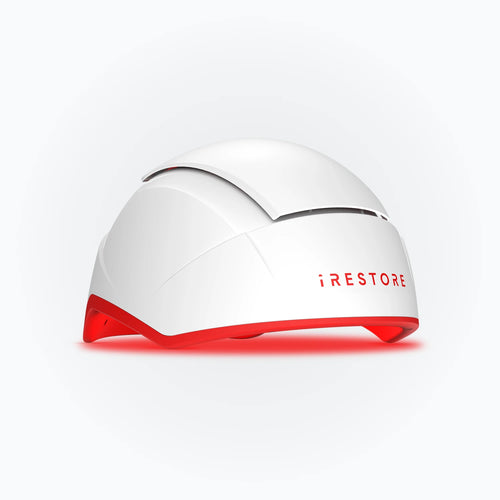
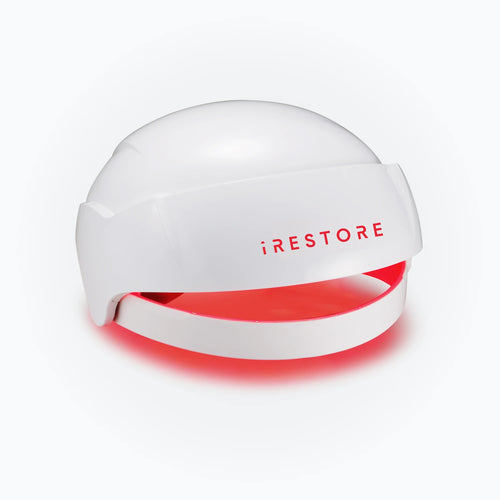
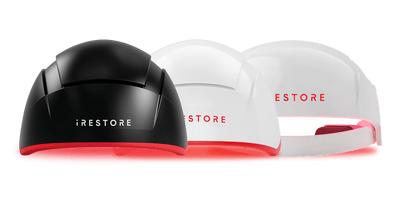
iRESTORE Essential, Professional, and Elite use low-level light and laser technology designed for hair-growth applications. Unlike 5-alpha-reductase inhibitors, LLLT does not work by lowering testosterone or blocking DHT production, giving it a different treatment pathway from DHT-reducing medications.
How iRESTORE Customers Describe Their Hair-Growth Experience
Verified iRESTORE customers have shared how the devices fit into their long-term hair-growth routines and the changes they noticed with consistent use. These experiences provide real-world context alongside the clinical evidence for LLLT, although individual results and timelines vary.

Customer testimonials reflect individual experiences and should not be interpreted as guaranteed outcomes. They also do not establish that LLLT prevents or reverses hair changes specifically related to testosterone replacement therapy.
What Should You Do If You Have Low Testosterone and Hair Loss?
Low testosterone and hair loss can occur together, but one should not automatically be treated as the cause of the other. The next step is to identify the type of hair loss and address each issue appropriately.
-
Look at the pattern of hair loss: Recession at the temples, a receding hairline, and progressive crown thinning are more typical of androgenetic alopecia than sudden or diffuse shedding.
-
Have suspected low testosterone properly evaluated: Testosterone deficiency is diagnosed using compatible symptoms and consistently low testosterone measurements, not hair loss alone. The Endocrine Society recommends confirming a low result with repeat morning testosterone testing.
-
Mention hair concerns before or during TRT: If you are considering or already receiving testosterone therapy, tell your prescribing clinician if hair preservation is important to you.
-
Treat confirmed AGA separately: Normalizing testosterone should not be expected to reverse genetically driven male pattern hair loss. A dermatologist can help determine which evidence-based treatments are appropriate.
Seek medical evaluation sooner if hair loss is sudden, patchy, unusually rapid, painful, or accompanied by scalp redness or inflammation.
A Clearer Way to Think About Testosterone and Hair Loss
If you are concerned about new or worsening hair loss while using or considering TRT, discuss it with the healthcare professional managing your treatment.
For a non-drug approach to androgenetic alopecia that does not work by lowering testosterone or blocking DHT production, explore iRESTORE Hair Growth Systems and compare available FDA-cleared options.
Key Takeaways
|
Frequently Asked Questions
Q1. Does blocking DHT lower testosterone?
A1. Not directly. Medications such as finasteride and dutasteride inhibit 5-alpha reductase, which reduces the conversion of testosterone into DHT rather than directly suppressing testosterone production.
Q2. Can low testosterone affect beard or body hair?
A2. Yes. Clinically low testosterone can be associated with reduced facial or body hair in some men. This is different from androgenetic alopecia, which affects susceptible scalp follicles in a characteristic pattern.
Q3. Can a testosterone blood test tell what is causing hair loss?
A3. No. A testosterone result alone cannot diagnose androgenetic alopecia or determine why someone is losing hair. Hair pattern, medical history, scalp findings, medications, and other possible causes may also need to be considered.
Disclaimer: The iRESTORE blog is for informational purposes only and is not intended to replace professional medical advice or treatment. Please do not ignore professional guidance because of information you have read here. If you have concerns about your hair or overall health, we encourage you to consult a qualified healthcare professional.