

Creatine is one of the most widely used fitness supplements, but many people hesitate to take it because of one persistent concern: hair loss. The claim largely comes from a 2009 study that found an increase in DHT, a hormone associated with genetic pattern hair loss. However, that study never measured actual shedding or changes in hair density.
A rigorous 2025 randomized controlled trial examined both DHT and objective hair outcomes and found no significant differences between men taking creatine and those taking a placebo.
So, does creatine cause hair loss? Current evidence does not establish a direct causal link, but understanding the studies requires looking at what they measured, what they did not measure, and how DHT contributes to genetic pattern hair loss.
Why Is Creatine Linked to Hair Loss?
The concern largely stems from the 2009 study of 20 male rugby players. After seven days of creatine loading, serum DHT rose by 56% and remained 40% above baseline after a further 14 days at a lower dose.
Because DHT is involved in androgenetic alopecia, the result led to speculation that creatine might affect hair loss risk. However, the study did not measure shedding, hair density, follicle miniaturization, or baldness.
What the Research Found?
The two main studies reached different findings, but they also measured different outcomes.
The table below compares the design, findings, and limitations of the two main studies behind the creatine and hair loss debate.
|
Study |
Design and dose |
Main finding |
Key limitation |
|
Johann van der Merwe et al., 2009 |
Double-blind, placebo-controlled crossover study of 20 male rugby players; 25 g/day for 7 days, followed by 5 g/day for 14 days |
Serum DHT increased during loading and remained above baseline during maintenance |
Short duration and no measurement of shedding, hair density, follicle miniaturization, or baldness |
|
Lak et al., 2025 |
Randomized, double-blind, placebo-controlled trial that enrolled 45 resistance-trained men; 5 g/day for 12 weeks |
No significant between-group differences in DHT or the measured hair outcomes |
Men only, 12-week duration, and one maintenance dose |
The 2025 trial provides more direct evidence because it assessed hair density, follicular unit count, and cumulative hair thickness rather than relying only on hormone levels. Its results do not support the claim that 5 grams of creatine daily causes measurable hair loss over 12 weeks.
However, longer studies involving women and people with diagnosed androgenetic alopecia are still needed.
What Is DHT?
Dihydrotestosterone, or DHT, is a potent androgen formed when the enzyme 5-alpha-reductase converts testosterone into DHT. It plays a central role in androgenetic alopecia, also known as genetic pattern hair loss.
In genetically susceptible scalp follicles, DHT binds to androgen receptors and contributes to progressive follicle miniaturization. Over time, affected follicles produce finer, shorter hairs and may spend less time in the active growth phase.
Higher DHT levels do not cause everyone to lose hair. The response depends largely on inherited follicle sensitivity, which is why two people with similar hormone levels may experience different patterns of thinning. The 2009 creatine study measured DHT circulating in the blood, not DHT activity within scalp follicles or actual changes in hair growth.
What Is Creatine?
Creatine is produced naturally in the liver, kidneys, and pancreas and is also found in meat and fish. Most of it is stored in skeletal muscle, where phosphocreatine helps regenerate ATP during short, high-intensity activity.
Creatine monohydrate is the most extensively studied supplemental form. The International Society of Sports Nutrition identifies 3 to 5 grams per day as a common maintenance dose, while an optional loading phase can increase muscle creatine stores more quickly.
Does Creatine Cause Hair Loss in Women?
There is currently no clinical evidence showing that creatine causes hair loss in women. However, the 2025 randomized controlled trial included resistance-trained men only. Its findings therefore cannot confirm how creatine may affect hair outcomes in women.
Female pattern hair loss can also develop when circulating androgen levels are within the normal range. Genetics, follicle sensitivity, age, and hormonal changes may all influence female pattern hair loss. Normal blood androgen levels do not rule it out.
Women who notice new shedding while taking creatine should not assume the supplement is responsible. The timing, pattern, and possible causes of the hair loss should be assessed before drawing a connection.
What Should You Do if You Notice Hair Loss?
Hair loss that begins while you are taking creatine does not confirm that the supplement caused it.
-
Review other possible causes: Illness, major stress, rapid weight loss, restrictive dieting, hormonal changes, thyroid disorders, nutrient deficiencies, and some medications can contribute to shedding.
-
Track the pattern: Take scalp photographs under similar lighting every two to three months and watch for temple recession, crown thinning, a widening part, or reduced overall density.
-
Change one variable at a time: Stopping creatine while changing your diet and starting several hair products can make it difficult to identify what affected your hair.
-
Seek professional advice when needed: Sudden shedding, smooth bald patches, persistent recession, scalp inflammation, or loss involving the eyebrows or body hair should be assessed by a dermatologist.
Suggested Read: How Much Hair Loss Is Normal And When To Worry
Can You Use Red Light Therapy While Taking Creatine?
Creatine and low-level laser therapy, or LLLT, work through different mechanisms. However, researchers have not specifically studied their combined use or tested LLLT for hair changes reported during creatine supplementation.
LLLT does not lower DHT. Research suggests that it may improve hair density in some men and women with androgenetic alopecia, so it should be viewed as a treatment for suitable candidates rather than protection against a proven creatine side effect.
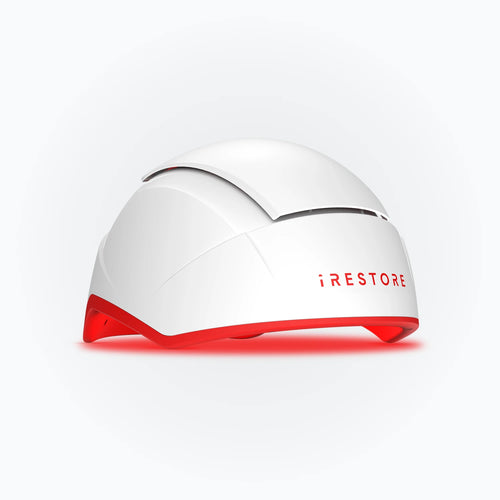
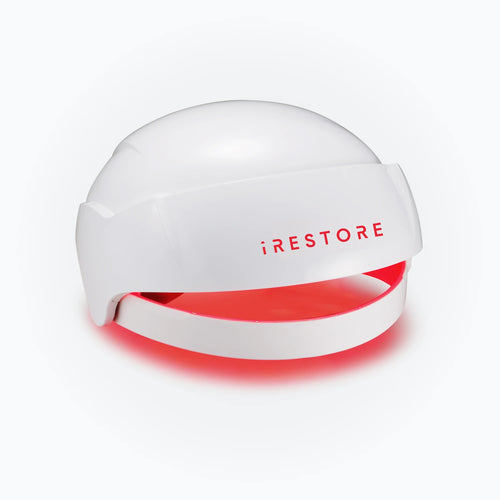
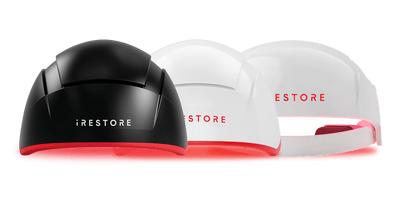
Trusted by more than 600,000 customers, iRESTORE offers at-home hair-growth devices, including the iRESTORE Elite, iRESTORE Professional, and iRESTORE Essential. A dermatologist can help determine whether your pattern of thinning is consistent with androgenetic alopecia.
Real People, Real Experiences
Many iRESTORE users report noticing small but meaningful changes like reduced shedding, early baby hairs, or improved density around the hairline within their first 8–12 weeks of consistent use.
Others share that sticking to the every-other-day routine helped them rebuild confidence after years of gradual thinning.

Must Read: iRESTORE Essential Vs Professional: Complete Comparison Guide
What Does the Evidence Mean for You?
The latest research is reassuring for people taking a standard daily dose of creatine, but it cannot answer every question about longer-term use or every population. Hair loss that begins during supplementation should be assessed by its pattern, timing, and other possible causes rather than attributed to creatine automatically.
Explore the iRESTORE Hair Hub to learn more about androgenetic alopecia, hair-growth research, and at-home LLLT options.
Key Takeaways
|
Frequently Asked Questions
Q1. Will hair grow back after stopping creatine?
A1. Stopping creatine does not guarantee hair regrowth because research has not established creatine as a cause of hair loss. Recovery depends on the underlying condition. Temporary shedding may improve once its trigger resolves, while androgenetic alopecia usually requires targeted treatment.
Q2. Can reducing the creatine dose help with hair shedding?
A2. No clinical research shows that lowering a creatine dose reduces hair shedding. Someone who changes their dose should avoid changing several other supplements or hair treatments simultaneously, as this makes it harder to assess what affected the shedding.
Q3. Can you take creatine while using minoxidil or finasteride?
A3. No specific interaction between creatine and minoxidil or finasteride has been established. However, their combined use has not been specifically studied for creatine-related hair concerns. Discuss your medications, supplements, and possible side effects with your prescribing clinician.
Q4. Can creatine affect the results of a hair transplant?
A4. There is no clinical evidence showing that creatine damages transplanted follicles or reduces hair-transplant success. Follow the transplant surgeon’s instructions on supplements before and after the procedure, as recommendations may depend on healing, medications, and your medical history.
Q5. Is creatine monohydrate worse for hair than other forms?
A5. No evidence shows that creatine monohydrate poses a greater hair-loss risk than other forms. It appears more often in research because it is the most extensively studied type. Alternative forms have not been shown to offer a lower DHT or hair-loss risk.
Disclaimer: The iRESTORE blog is for informational purposes only and is not intended to replace professional medical advice or treatment. Please do not ignore professional guidance because of information you’ve read here. If you have concerns about your hair, skin, pain, or overall health, we encourage you to consult a qualified healthcare professional.