

Hair shedding is the natural, daily release of hairs that have completed their growth cycle, and losing about 50 to 100 hairs per day is considered normal. Hair loss is different because it can involve disrupted growth or progressive follicular changes that reduce density over time.
The clearest difference between hair shedding and hair loss is not simply how much hair you see in the shower or on your brush. Changes in scalp coverage, thinning patterns, and density over time often provide more useful clues.
What Is Normal Hair Shedding?
Hair does not grow continuously. Each strand moves through a natural cycle that includes growth, transition, rest, and eventual shedding. At any given time, most scalp hairs are actively growing, while a smaller proportion are approaching the end of their cycle.
The main phases are:
-
Anagen: the active growth phase, which can last several years.
-
Catagen: a short transition phase when active growth slows.
-
Telogen: the resting phase that ends when the hair is naturally released.
Normal shedding should not cause a progressive loss of scalp coverage. If your overall density remains stable, the hairs you notice during washing or brushing may simply reflect normal hair-cycle turnover.
What Is the Difference Between Hair Shedding and Hair Loss?
Hair shedding and hair loss can look similar at first, but they are not the same process. Shedding describes hairs leaving the scalp as part of the growth cycle, while hair loss refers to a condition that reduces density, alters growth, or prevents hairs from returning at their previous thickness.
Normal Hair Shedding
Normal shedding does not usually reduce overall density because follicles continue cycling and producing replacement hairs.
Excessive Hair Shedding
Telogen effluvium is excessive, usually diffuse hair shedding that occurs when more follicles than usual enter the resting phase of the hair cycle at the same time. Common triggers include childbirth, major illness, surgery, marked weight loss, or severe stress. The increased shedding often becomes noticeable a few months after the trigger rather than immediately.
Telogen effluvium is usually diffuse, meaning the extra shedding occurs across the scalp rather than in one distinct pattern. It is often temporary, but persistent or unexplained shedding should be assessed by a healthcare professional.
Treatment for excessive hair shedding depends on the cause. Acute telogen effluvium often improves after the underlying trigger resolves, while persistent or unexplained shedding should be evaluated to determine whether another condition is contributing.
Progressive Pattern Hair Loss
Androgenetic alopecia (AGA) develops differently. Instead of causing only a temporary increase in shed hairs, it gradually changes how affected follicles produce hair. Affected follicles gradually miniaturize, causing new hairs to become finer and shorter over successive growth cycles.
Common signs include a widening part, thinning at the crown, receding temples, or gradually increasing scalp visibility. These changes may develop slowly enough that the number of hairs falling out is less noticeable than the change in density itself.
This is why the amount of hair you see in the shower is only one clue. Where the change is happening, how your density looks over time, and whether the pattern is progressing can tell you more than the appearance of shed hairs alone.
What Does Normal Hair Shedding Look Like?
The appearance of a shed strand can offer clues, but it cannot confirm the cause of hair loss on its own. The overall pattern, density changes, and progression over time are more useful.
|
What You Notice |
What It May Mean |
|
A full-length hair with a small white or clear club-shaped end |
A telogen-type shed hair; this can occur with normal shedding or excessive telogen shedding |
|
Short pieces or hairs of uneven length |
Possible hair-shaft breakage rather than shedding from the follicle |
|
Increasing numbers of noticeably finer or shorter hairs in one area |
Possible follicular miniaturization, which can occur with androgenetic alopecia |
|
A widening part, receding hairline, or increasing scalp visibility |
More consistent with progressive thinning than routine shedding |
A small white or clear end on a shed hair does not mean the entire follicle has come out. The follicle remains within the scalp and can continue producing hair.
A white club-shaped end can identify a telogen-type shed hair, but it cannot tell you on its own whether the shedding is normal or excessive. The overall pattern and changes in density remain more informative.
The Self-Check: How to Tell If You Are Shedding or Thinning
You do not need to count every strand to notice a meaningful change. A better self-check is to look at your usual shedding pattern, scalp density, and any changes that have developed over time.
1. Compare Shedding With Your Normal Baseline
Start by asking whether you are consistently seeing more hair than usual during washing, brushing, or throughout the day.
Rather than counting every strand, look for a sustained change from your usual baseline over several weeks. One unusually heavy wash or brushing session is less informative.
2. Look at Where the Change Is Happening
Pay attention to your center part, crown, temples, frontal hairline, and overall scalp coverage.
Diffuse shedding across the scalp can occur with telogen effluvium. Gradual widening of the part, crown thinning, or recession around the temples may be more consistent with androgenetic alopecia. These patterns are clues, not a diagnosis.
3. Check for Changes in Density
Focus on changes in scalp coverage and density, not only on the amount of hair you see falling.
Ask yourself:
-
Is more scalp visible than before?
-
Does your part look wider?
-
Does your ponytail feel noticeably thinner?
-
Are some areas producing finer or shorter hairs?
Short hairs alone do not always mean regrowth. They can also reflect breakage or follicular miniaturization, so the surrounding pattern matters.
4. Compare Photos Over Time
Photos can reveal gradual thinning that is difficult to notice day to day. Take clear images of your hairline, part, temples, and crown, then compare them with older photos if you have them.
For future comparisons, try to use similar lighting, camera angles, hairstyles, and hair conditions. Changes in coverage over several months are more informative than small differences between daily photos.
5. Think Back for a Possible Trigger
Consider whether a major physical or emotional stressor occurred a few months before the increased shedding. Common triggers can include childbirth, significant illness, surgery, marked weight loss, or severe stress.
A recent trigger combined with sudden, diffuse shedding can be consistent with excessive hair shedding such as telogen effluvium. Persistent shedding, progressive thinning, or changes without a clear explanation should still be assessed by a healthcare professional.
When Should You See a Dermatologist About Hair Shedding or Hair Loss?
Some changes can be monitored at home, while others deserve professional evaluation. A dermatologist can help identify the cause and rule out conditions that may look similar at first.
|
What You Notice |
What It Could Suggest |
What to Do Next |
|
Routine shedding with stable scalp density |
Normal hair cycling |
Continue monitoring without focusing on individual shed hairs |
|
Sudden diffuse shedding after childbirth, illness, surgery, major stress, or another trigger |
Possible telogen effluvium |
Monitor the pattern and seek medical advice if shedding is severe, persistent, or unexplained |
|
Gradual widening of the part, crown thinning, temple recession, or declining density |
Possible androgenetic alopecia |
See a dermatologist for diagnosis and treatment options |
|
Possible alopecia areata or another alopecia |
Arrange a dermatologic evaluation |
|
|
Hair changes with fatigue, unexplained weight changes, or other health symptoms |
Possible underlying medical contributor |
Discuss the symptoms with a healthcare professional |
|
Pain, burning, marked itching, redness, scaling, or scarring |
Possible scalp or inflammatory condition |
Seek dermatologic assessment |
You should also consider an evaluation if shedding does not improve after a known trigger or if scalp coverage continues to decline. You do not need to wait until thinning becomes severe before seeking an assessment, especially when the cause is unclear.
What If the Thinning Is Androgenetic Alopecia?
If your thinning follows a gradual, recognizable pattern, a dermatologist can help determine whether androgenetic alopecia is the cause. AGA is progressive, so identifying it early can give you more time to discuss appropriate treatment options.
Treatment depends on the diagnosis, medical history, and individual goals. For confirmed androgenetic alopecia, options may include medication and low-level light therapy.
LLLT is intended for pattern hair loss rather than temporary shedding such as telogen effluvium.
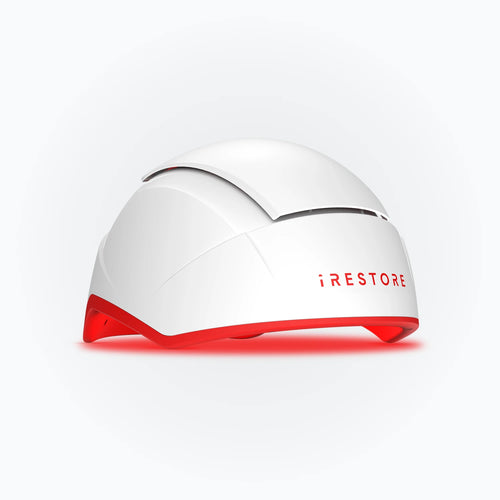
For people diagnosed with androgenetic alopecia, iRESTORE offers FDA-cleared hair-growth devices designed for at-home use. The Essential and Professional systems use 655 nm red light, while the Elite combines 625, 655, and 680 nm wavelengths.
The appropriate device or treatment plan should be selected based on your individual needs rather than the amount of hair you happen to shed on a given day.
What Real Users Are Saying
Thousands of users have shared their iRESTORE results. Here are a few verified reviews.


iRESTORE is loved by 600,000+ customers worldwide.
Key Takeaways
|
Frequently Asked Questions
Q1. Can you have telogen effluvium and androgenetic alopecia at the same time?
A1. Yes. Telogen effluvium and androgenetic alopecia are separate processes, but they can occur together. A sudden shedding episode may also make underlying pattern thinning more noticeable.
Q2. How do I know if my hair loss is permanent?
A2. You cannot determine permanence from shed hairs alone. Progressive patterned thinning, scarring, or areas that remain without regrowth can warrant assessment, but a dermatologist needs to identify the cause before predicting whether hair is likely to regrow.
Q3. Can excessive hair shedding make your hair look thinner?
A3. Yes. Significant diffuse shedding can temporarily reduce overall density even when the follicles are still capable of producing new hair. The cause and duration of the shedding determine how fully density may recover.
Q4. Can hair shedding stop and start again?
A4. Yes. Shedding can recur if another trigger occurs or if an underlying contributor has not resolved. Repeated or persistent episodes should be evaluated rather than assumed to be normal.
Disclaimer: The iRESTORE blog is for informational purposes only and is not intended to replace professional medical advice or treatment. Please do not ignore professional guidance because of information you have read here. If you have concerns about your hair or scalp health, consult a qualified healthcare professional