

Smile lines (nasolabial folds) cannot be fully prevented, but they can be softened with treatments ranging from retinoids to dermal fillers, depending on depth.
Everyone has nasolabial folds. They are a normal anatomical feature, although they become more visible in some people as the skin and underlying facial structures change with age. In younger skin, they may appear mainly while smiling or speaking. With time, the creases can remain visible when the face is relaxed.
Smile lines cannot always be removed completely, but many can become less noticeable with the right treatment. The most suitable approach depends on whether the lines are caused primarily by facial movement, collagen loss, or changes in facial volume.
What Are Smile Lines?
Smile lines are the folds between the cheeks and upper lip. The medical term is nasolabial folds, although they are also called laugh lines.
The fold itself is a normal part of facial anatomy. It helps define the boundary between the mobile tissues around the mouth and the fuller cheek area.
Smile lines are often confused with other wrinkles around the mouth. They are different from:
-
Marionette lines, which extend from the corners of the mouth toward the chin.
-
Lip lines, which are usually short vertical lines above or around the lips.
-
Crow’s feet, which form near the outer corners of the eyes.
These distinctions matter because each type of line can have different causes and treatment options.
Dynamic vs. Static Smile Lines
Not all smile lines develop the same way. Some appear only when the face is moving, while others remain visible even when the face is relaxed. Understanding the difference can help explain why smile lines change over time and which treatments are generally better suited to each type.
|
Feature |
Dynamic Smile Lines |
Static Smile Lines |
|
When they appear |
Only during facial expressions such as smiling or laughing |
Visible even when the face is at rest |
|
Main cause |
Repeated facial muscle movement |
Collagen loss, reduced skin elasticity, and facial volume changes |
|
Common age |
Can occur at any age |
More common with age, although they can appear earlier |
|
Treatment approach |
Often respond well to preventive skincare and collagen-supporting treatments |
May require more targeted treatments depending on their depth |
What Causes Smile Lines?
Smile lines become more noticeable when the skin gradually loses the structures that keep it firm and resilient. Although aging is the most common reason, several internal and external factors influence when these lines appear and how quickly they deepen. In most cases, no single factor is responsible. Instead, smile lines develop as a result of multiple changes occurring over time.
a) Natural Collagen and Elastin Loss
Collagen provides strength, while elastin allows the skin to stretch and return to its original shape after facial movements. As these proteins gradually decline with age, the skin becomes thinner, less elastic, and less able to recover from repeated folding.
This is one of the primary reasons temporary expression lines can become permanent.
b) Changes in Facial Volume
The cheeks contain natural fat pads that support the middle of the face. With age, these fat pads gradually lose volume and shift downward. As facial support changes, the crease between the cheeks and the upper lip becomes more pronounced, making smile lines appear deeper.
c) Repeated Facial Expressions
Smiling, laughing, talking, and chewing repeatedly fold the skin around the mouth. These natural movements are not harmful, but over many years they can contribute to visible lines as the skin becomes less resilient.
d) Sun Exposure
Ultraviolet (UV) radiation is one of the leading external causes of premature skin aging. Long-term sun exposure breaks down collagen and elastin, reducing the skin's ability to maintain its firmness and making smile lines more noticeable over time.
e) Genetics
Some people naturally develop smile lines earlier than others because of inherited differences in facial structure, skin thickness, and collagen production. Genetics cannot be changed, but healthy skincare habits can help reduce the impact of environmental factors.
f) Lifestyle Habits
Smoking is strongly associated with premature skin aging and collagen breakdown. A balanced diet, adequate sleep, and other healthy lifestyle habits support overall skin health, although they cannot prevent smile lines on their own.
g) Weight Changes and Skin Hydration
Significant weight loss can reduce facial volume, making existing smile lines more visible. On the other hand, dehydrated skin may temporarily appear less plump, causing fine lines and creases to stand out more, although dehydration does not create permanent smile lines.
|
Quick Take: Smile lines rarely develop because of a single cause. They usually become more noticeable as natural aging, facial movement, genetics, sun exposure, and lifestyle factors gradually reduce the skin's structural support. |
Can Smile Lines Go Away? What to Realistically Expect
Once smile lines remain visible when the face is at rest, they usually do not disappear completely. However, many treatments can soften their appearance and improve overall skin quality.
The results depend on the depth of the folds, their underlying cause, and the treatment chosen.
|
Stage |
What You Can Realistically Expect |
|
Dynamic smile lines |
Early intervention may help maintain smoother-looking skin and delay permanent creases. |
|
Early static smile lines |
Consistent treatment may soften the appearance of lines and improve skin texture over time. |
|
Moderate smile lines |
Skin treatments may improve the appearance of the fold, while fillers can restore lost facial volume. |
|
Deep smile lines |
Significant correction often requires dermal fillers or surgical procedures that address structural changes beneath the skin. |
Non-invasive treatments improve skin quality but do not replace lost facial volume. For deeper nasolabial folds, procedures such as dermal fillers or surgery generally produce more noticeable correction.
How to Get Rid of Smile Lines
There is no single treatment that works for everyone. The best option depends on the depth of your smile lines, your skin quality, your treatment goals, and how much downtime you are willing to accept. Some treatments help preserve collagen, while others improve skin texture or restore facial volume.
Treatment Comparison
|
Treatment |
Best For |
How It Works |
Downtime |
|
Daily sunscreen |
Prevention |
Helps protect collagen from UV damage |
None |
|
Retinoids |
Early smile lines |
Support skin renewal and collagen production |
Mild irritation may occur |
|
Hyaluronic acid skincare |
Dry or dehydrated skin |
Improves hydration and temporarily smooths the skin |
None |
|
Red light therapy (such as the iRESTORE Illumina Face Mask) |
Early to moderate smile lines |
Supports collagen production through photobiomodulation |
No required downtime |
|
Early to moderate static smile lines |
Stimulates collagen through controlled micro-injuries |
Mild redness for 1–3 days |
|
|
Dermal fillers |
Moderate to deep smile lines |
Restores lost facial volume beneath the fold |
Mild swelling or bruising |
|
Laser resurfacing |
Skin texture and fine lines |
Stimulates collagen while resurfacing the skin |
Varies by laser type |
|
Facelift surgery |
Advanced skin laxity |
Repositions facial tissues |
Several weeks |
Which Treatment Is Right for You?
The most appropriate treatment depends on what you are trying to improve.
|
If your smile lines are... |
A reasonable place to start |
|
Visible only when smiling |
Daily sun protection, retinoids, and a consistent skincare routine |
|
Beginning to remain visible at rest |
Retinoids, red light therapy, or professional treatments such as microneedling |
|
Moderate and becoming more noticeable |
A consultation with a dermatologist to discuss microneedling or dermal fillers |
|
Deep and well established |
Dermal fillers or surgical procedures, depending on facial anatomy and treatment goals |
Every treatment has benefits and limitations. A dermatologist or qualified aesthetic practitioner can recommend the most appropriate option based on your skin type, medical history, and expectations.
Botox for Smile Lines
Botox® is not usually the first choice for treating smile lines. Unlike forehead lines or crow's feet, nasolabial folds are primarily caused by changes in facial volume and skin support rather than muscle activity. For this reason, dermal fillers are generally more effective for improving moderate to deep smile lines.
In some cases, Botox may be used alongside fillers or other cosmetic procedures as part of a personalized treatment plan. A qualified provider can determine whether this combination is appropriate for your facial anatomy and treatment goals.
Results Timeline
Most treatments for smile lines require consistency and patience. While some procedures provide immediate improvement, others work gradually as the skin repairs and remodels itself.
|
Treatment |
Typical Time to Notice Results |
|
Daily sunscreen |
Helps prevent future UV-related skin damage with consistent use |
|
Retinoids |
Around 3–6 months |
|
Hyaluronic acid skincare |
Immediately after application, temporary effect |
|
Red light therapy |
Around 8–12 weeks with regular use |
|
Microneedling |
Around 4–8 weeks, with continued improvement after multiple sessions |
|
Dermal fillers |
Immediate improvement, with final results visible after swelling subsides |
|
Laser resurfacing |
Several weeks to several months |
|
Facelift surgery |
Initial improvement after healing, with final results developing over several months |
No treatment can permanently stop the natural aging process. Long-term skin health depends on consistent sun protection, an appropriate skincare routine, and maintenance care when needed.
Suggested Read: Benefits Of Red Light Therapy Masks For Skin
How Red Light Therapy May Help Reduce Smile Lines
Red light therapy offers a different approach from treatments that restore lost facial volume. Instead of filling the crease, it supports the skin's natural repair processes by encouraging collagen production.
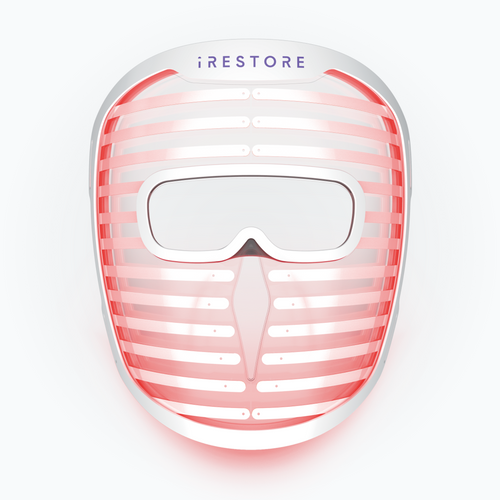
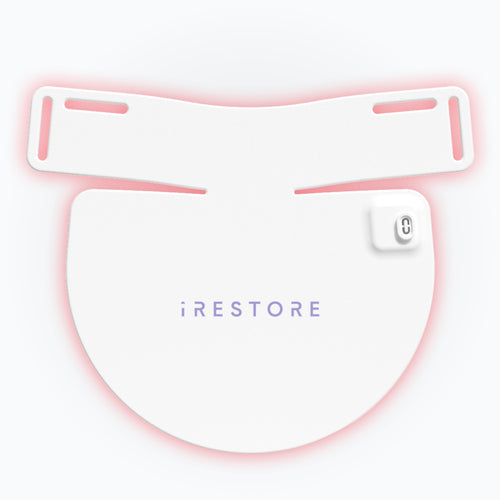
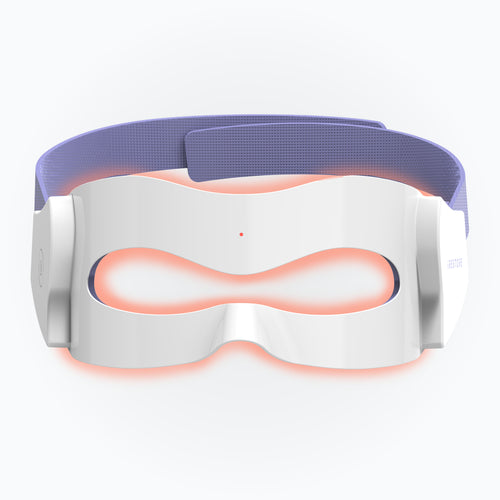
Among at-home options, the iRESTORE Illumina Face Mask combines red (635 nm), infrared (830 nm), and blue (415 nm) light in a full-face device designed to improve the appearance of skin. Unlike treatments that restore facial volume, it supports skin quality by using wavelengths that have been widely studied in photobiomodulation research.
Explore more evidence-based skin treatments in the iRESTORE Skin Hub.
Why Is Red Light Therapy Different?
Smile lines become more noticeable as the skin loses collagen, elastin, and structural support. While treatments such as dermal fillers restore volume beneath the fold, red light therapy focuses on improving the skin's quality.
This makes it a suitable option for people looking for a non-invasive treatment that can be incorporated into a long-term skincare routine.
How Does Red Light Therapy Work
Red light therapy uses visible red light, typically between 630 and 660 nanometers (nm), to reach the skin's deeper layers. These wavelengths interact with skin cells, including fibroblasts, which play an important role in producing collagen and maintaining skin structure.
This process is known as photobiomodulation (PBM). During photobiomodulation, light energy supports normal cellular activity, helping fibroblasts function more efficiently. Over time, this may improve collagen density and overall skin quality.
What Does the Research Say?
Research suggests that red light therapy may improve signs of skin aging, including skin texture and collagen density.
In a randomized controlled trial by Wunsch and Matuschka, blinded evaluators rated wrinkles as improved in 69% of participants receiving red light therapy after 30 sessions, compared with 4% of untreated controls. The red light group also showed significant improvements in skin roughness and intradermal collagen density.
It is equally important to understand its limitations. Red light therapy does not remove deep smile lines or replace lost facial volume. Results develop gradually and vary depending on factors such as age, skin condition, treatment consistency, and the depth of the smile lines.
Who May Benefit Most?
Red light therapy may be a suitable option if you:
-
Have early to moderate smile lines.
-
Prefer a non-invasive treatment with no downtime.
-
Want to support long-term collagen production and skin quality.
-
Are willing to use the device consistently over several weeks.
-
Understand that improvements develop gradually rather than immediately.
Red Light Therapy at a Glance
|
Feature |
What to Expect |
|
Best suited for |
Early to moderate smile lines |
|
Treatment type |
Non-invasive, at-home or in-clinic |
|
Downtime |
None |
|
Typical timeline |
Around 8 to 12 weeks with consistent use* |
|
Primary goal |
Support collagen production and improve overall skin quality |
*Individual results vary depending on skin condition, treatment frequency, and other lifestyle factors.
The iRESTORE Illumina Face Mask uses 360 LEDs to deliver 635 nm red light, 830 nm infrared light, and 415 nm blue light across the face. The device is trusted by more than 600,000 customers worldwide and is designed to improve the appearance of skin and help it look younger and healthier.
According to iRESTORE, treatments take 10 minutes and are recommended three to five times per week. Because the mask covers the entire face, it reaches the cheeks and the nasolabial fold region during each session.
Over time, consistency is what leads to visible skin changes, and many iRESTORE users testify to visible positive results in the long term.

If your smile lines are beginning to bother you, start by identifying whether they are dynamic or static. Daily sun protection, evidence-based skincare, and healthy lifestyle habits remain the foundation of long-term skin health.
For people who want a non-invasive option, the iRESTORE Illumina Face Mask offers an at-home approach that may support collagen production and overall skin quality when used consistently.
Key Takeaways
|
Frequently Asked Questions
Q1. Does face yoga reduce smile lines?
A1. Evidence supporting face yoga for smile lines remains limited. Facial exercises may affect muscle tone, but they cannot restore lost cheek volume or reliably remove established nasolabial folds. Repeated facial movement could also make some expression lines more noticeable.
Q2. What causes dark smile lines?
A2. Dark smile lines may result from shadows within a deep fold, increased pigmentation, dryness, irritation, or sun damage around the mouth. Treating discoloration will not correct a structural fold, so the underlying cause should be identified first.
Q3. What is the best filler for smile lines?
A3. No single filler is best for everyone. Hyaluronic acid fillers are commonly considered, but the appropriate product, placement, and amount depend on cheek support, fold depth, skin quality, and facial anatomy. Treatment should be planned by a qualified medical provider.
Q4. How long do smile line fillers last?
A4. Hyaluronic acid fillers used for nasolabial folds may last several months to more than a year. Duration varies by filler formulation, injection area, treatment amount, metabolism, and facial movement. Maintenance treatment may be needed as the filler gradually breaks down.
Q5. Why is one smile line deeper than the other?
A5. Mild facial asymmetry is normal. Differences in cheek volume, facial structure, muscle movement, sleeping habits, and dental alignment may make one fold more visible. Seek medical attention if the asymmetry appears suddenly or occurs with facial weakness.
Disclaimer: The iRESTORE blog is for informational purposes only and is not intended to replace professional medical advice or treatment. Please do not ignore professional guidance because of information you’ve read here. If you have concerns about your hair, skin, pain, or overall health, we encourage you to consult a qualified healthcare professional.