

Crow's feet are the fine lines that fan out from the outer corners of your eyes. They form from repeated smiling and squinting, sun exposure, and age-related collagen loss. Red light therapy may help soften their look over time. It won't stop the lines you make when you smile.
Below, you'll find why crow's feet form, how to tell smile lines from lines at rest, what the research says about red light, and how it compares with sunscreen, retinoids, and Botox.
Key Takeaways
|
What Are Crow's Feet and What Causes Them?
Crow's feet are fine lines and wrinkles at the outer corners of the eyes. Dermatologists also call them lateral canthal lines. They are a normal part of aging, not a medical problem.
Crow's feet come from several factors working together:
-
Repeated muscle movement. The muscle just beneath the skin tightens every time you smile or squint. Combined with age-related skin laxity, this creates lines.
-
Sun exposure. UV radiation causes photodamage, which contributes to fine lines, wrinkles, and dark spots.
-
Collagen loss. As collagen declines with age, skin bounces back less after each expression, so lines stay.
-
Smoking and genetics. These affect wrinkles anywhere on the face.
Why do you get crow's feet when you smile?
Smiling and squinting contract the muscle around your eyes. When skin is young, the lines fade quickly. As collagen declines, they linger. Smile lines are a normal result of expression, not a sign that something is wrong.
At what age do crow's feet start?
There's no set age. Many people notice them from their mid-30s into their early 50s. Genetics, sun exposure, and habits can move that timeline earlier or later.
Do You Have Smile Lines or Lines at Rest?
The answer decides which options fit best. Look in the mirror with a relaxed face. If the lines disappear, they're expression-driven. If they stay, they've set in. Many people have both.
|
Aspects |
Smile lines (dynamic) |
Lines at rest (static) |
|
When you see them |
Only when smiling or squinting |
Even when your face is relaxed |
|
Main driver |
Muscle movement |
Sun damage, collagen loss, time |
|
Options that fit best |
Sunscreen and sunglasses to keep them from deepening; Botox relaxes the muscle |
Retinoids, red light therapy, in-office resurfacing |
A clinician can tell the two apart. Botulinum toxin may suit lines driven mainly by expression, while fractional laser may address texture and resting lines.
Can Red Light Therapy Help Crow's Feet?
With consistent use, red light therapy may help soften the look of fine lines around the eyes. It doesn't relax the muscles that create smile lines.
What the research shows:
-
A randomized, placebo-controlled, double-blind, split-face study of 76 patients with facial wrinkles tested 830 nm light, 633 nm light, both together, or a sham light, twice a week for four weeks. The researchers concluded that 633- and 830-nm LED phototherapy effectively rejuvenated the skin and reported no adverse effects.
-
A five-week LED trial found the periorbital region (around the eyes) responded better than the nasolabial region. At the 12-week follow-up, 91% of subjects reported improved skin tone and 82% reported smoother skin. The authors described the sample as modest and noted that larger trials are needed.
-
A randomized controlled trial of 136 volunteers found that after 30 sessions, treated subjects had improved complexion, smoother skin, and higher collagen density.
These studies used devices different from iRESTORE's masks. At-home devices use less energy than clinic devices, so results tend to be subtler and require consistent use. Results vary.
How Do You Use Red Light Therapy Around Your Eyes Safely?
Short-term use of red light devices is generally considered low risk, and reported side effects in studies are mild. Around the eyes, start with eye protection. Follow your mask's manual, and never look directly into the lights. If you have an eye condition, ask your doctor first. Our guide covers whether red light therapy face masks are safe for your eyes.
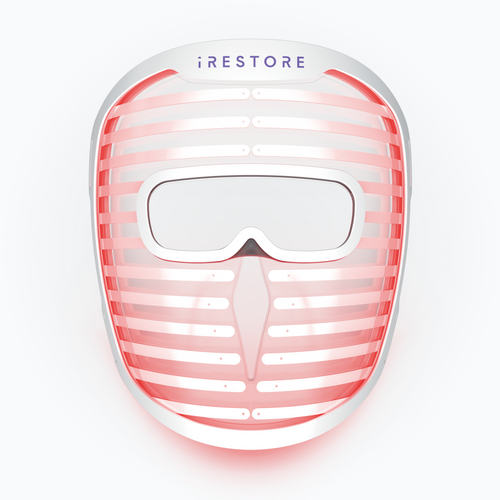
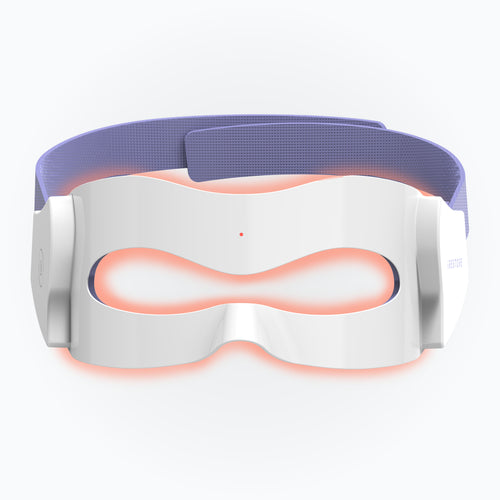
Here is how our masks cover the eye area:
|
Mask |
Light sources |
Session |
Notes |
|
180 LEDs: 633 nm red, 830 nm infrared; 32 mW/cm² across all three modes |
5 minutes |
Three modes: full eye area, the sides and under-eye, or the browline |
|
|
360 LEDs; Red & Infrared mode at 35 mW/cm² |
10 minutes, 3 to 5 times a week |
Full-face coverage, integrated eye shields |
|
|
800 lasers and LEDs; Anti-Aging mode at 70 mW/cm² |
10 minutes, 3 to 5 times a week |
Full-face coverage. Follow the manual’s eye-protection instructions and avoid direct eye exposure |
More isn't better. Light therapy follows a biphasic dose response, so don't extend sessions beyond what your manual says. For routines and schedules, read how often to use an LED face mask. To compare masks, see the best LED face mask guide.
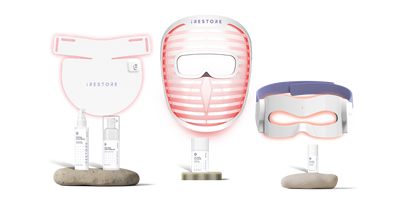
Want to cover your eyes, face, and neck? The Laser LED Trio Pro includes the Laser Face Mask Pro, Neck & Chest Mask, and Eye Mask. Many are HSA/FSA eligible. Not sure which fits? Take the skin quiz.
How Do You Get Rid of Crow's Feet Without Botox?
No option makes crow's feet disappear. The goal is to soften their appearance. Here's how common options compare.
|
Option |
What it does |
Best for |
|
Daily sunscreen, SPF 30+ |
Protects against more sun damage |
Preventing lines from deepening |
|
Retinoids |
Support collagen and may soften fine lines. They can irritate the eye area, so introduce slowly |
Lines at rest |
|
Moisturizers and hyaluronic acid |
Hydrate and help lines look softer |
Both types |
|
Red light therapy |
May soften the look of fine lines over weeks |
Lines at rest |
|
In-office resurfacing |
Fractional laser and similar options address texture and lines at rest |
Lines at rest |
|
Botox Cosmetic |
Relaxes the muscle behind smile lines |
Smile lines |
Using retinol? See our guide to retinol with an LED mask.
What About Botox for Crow's Feet?
Botox Cosmetic is an FDA-approved prescription drug that temporarily improves the appearance of moderate to severe lateral canthal lines in adults. The FDA approved it in 2013, based on two studies of 833 adults. Eyelid swelling was the most common side effect.
A licensed provider injects it, and its effects are temporary. Ask a qualified provider whether it's right for you.
Light therapy works differently. It supports the skin itself and doesn't relax muscle movement. Masks aren't drugs, so "approved" doesn't apply to them.
How Can You Prevent Crow's Feet?
You can't, and shouldn't, stop smiling. You can slow what deepens the lines:
-
Apply sunscreen daily. Use broad-spectrum SPF 30+ around the eyes.
-
Wear sunglasses. They cut squinting in bright light, and squinting contributes to lines.
-
Moisturize. Keep the eye area hydrated.
-
Don't smoke. Smoking worsens facial wrinkles.
-
Go easy on rubbing. Gentle care protects thin skin.
How Long Does Red Light Take to Work on Crow's Feet?
Plan on weeks, not days. iRESTORE lists a 6-to-12-week window for the Illumina Face Mask and at least 8 to 12 weeks of consistent use for the Laser Face Mask Pro. Individual results vary.
Take baseline photos in the same lighting and at the same angle, once smiling and once relaxed. For real user photos, see LED face mask before-and-after and our skin before-and-afters.
Conclusion
Crow's feet come with a life of smiling. You can't stop them, but you can protect the skin around your eyes and soften how the lines look.
Ready to add light therapy? Shop the Illumina Eye Mask, the Illumina Face Mask, or the Laser Face Mask Pro. Or see how red light therapy works for skin and take the skin quiz. Lines on your neck too? Read about red light therapy for neck wrinkles.
Loved by 600,000+ customers worldwide.
Frequently Asked Questions
Q. Can you get crow's feet in your 20s?
A. Yes. Fine lines can appear early, especially with genetics or heavy sun exposure. They often appear only when you smile. A dermatologist can help if they bother you.
Q. Are crow's feet a bad thing?
A. No. Crow's feet are associated with expressions of joy and empathy. Some people choose to soften them, and others don't.
Q. What should I look for in an eye cream for crow's feet?
A. Dermatologists suggest ingredients that support collagen while moisturizing, such as retinol, plus a mineral sunscreen with zinc oxide. Patch test first, and stop if your skin gets irritated.
Q. Can I use red light therapy after Botox or fillers?
A. Timing depends on your procedure. Ask the provider who did it before using any light device on the area.
Q. Do men get crow's feet too?
A. Yes. The causes apply to everyone. For masks, fit matters. The Laser Face Mask Pro is designed for men and women, with a roomier unisex fit.
Q. Should I apply eye cream or sunscreen before my mask session?
A. Use the mask on clean, dry skin, then apply eye cream, serums, and sunscreen afterward. For ingredient timing, see vitamin C with red light therapy.
Disclaimer: The iRESTORE blog is for informational purposes only and is not intended to replace professional medical advice or treatment. Please do not ignore professional guidance because of information you've read here. If you have concerns about your hair or skin health, we encourage you to consult a qualified healthcare professional.