

Lip lines are the vertical wrinkles on your lips and the skin just above them. They come from years of puckering, plus collagen loss from age, sun exposure, and smoking. You can soften them, but you can't erase them for good.
Below, you'll learn why they form, how to tell whether Botox will work for you, what each option realistically does, and where red light therapy fits.
Key Takeaways
|
What Are Lip Lines?
Lip lines are vertical wrinkles that appear on the lips and on the skin above the upper lip. They range from fine, subtle lines to deep creases. You may also hear them called smoker's lines, lipstick lines, barcode lines, or perioral wrinkles.
How do lip lines differ from marionette lines and nasolabial folds?
|
Lip lines |
Nasolabial folds |
Marionette lines |
|
|
Where |
On and above the lips |
From the sides of the nose to the mouth corners |
From the mouth corners down to the chin |
|
Also called |
Smoker's lines, lipstick lines |
Melomental folds |
Lip lines and smile lines aren't the same thing. If the lines at the corners of your mouth bother you more, read our guide to marionette lines.
Why Do Lip Lines Form?
The root cause is the muscle that circles your mouth. It gets more active over time, and every pucker creases the skin a little more. Other contributors:
-
Aging. Everyone loses collagen and elastin, the proteins that keep skin smooth and hydrated.
-
Repetitive movement. Pursing your lips and sipping through straws.
-
Smoking.
-
Sun damage.
-
Genetics. Your parents or grandparents had pronounced lip lines.
-
Alcohol and poor sleep. Both show up on the Cleveland Clinic's list.
If you've ever wondered why your lips seem to have so many lines, it's usually several of these stacking up.
Do non-smokers get smoker's lines?
Yes. Smoking speeds them up, but the lines also come from aging, straws, sun, and a lifetime of talking and kissing. Dermatologists note that "smoker's lines" is a nickname, not a diagnosis.
At what age do lip lines start?
Usually around your 40s. You might see them earlier if you smoke or have sun-damaged skin. Lipstick can make them look more pronounced.
Are Your Lip Lines Dynamic or Static?
Do a quick test. Relax your face and look in the mirror, then pucker like you're about to use a straw.
|
Dynamic lines |
Static lines |
|
|
When you see them |
Only when you pucker or talk |
Even when your face is relaxed |
|
Main driver |
Muscle movement |
Collagen loss, sun damage, time |
|
Options that fit best |
Muscle-relaxing injections |
Resurfacing, fillers, skincare |
Most people have a mix. Providers also rate severity: mild lines are shallow, moderate lines are deeper, and severe lines are thick creases. That rating helps decide what makes sense.
What Actually Smooths Lip Lines?
The best option varies by person. It depends on how severe your lines are, your health, and what you want. Here's how the main ones compare.
|
Option |
What it does |
Best for |
What to expect |
|
Daily SPF 30 and lip balm |
Protects against sun damage |
Everyone |
Slows lines from worsening. Won't remove existing ones. |
|
Retinoids |
Support collagen. Tretinoin is the strongest and is prescription-only |
Fine, early lines |
Gradual. Can irritate. |
|
Hyaluronic acid skincare |
Hydrates and plumps so lines look softer |
Fine lines |
Modest compared with clinic options |
|
Red light therapy |
May support skin quality and the look of fine lines |
Fine lines, alongside other care |
Gradual. No lip-specific studies. |
|
Peels, dermabrasion, laser resurfacing, microneedling |
Resurface the skin or stimulate collagen |
Lines at rest |
Temporary. Repeat sessions needed. |
|
Botox or lip flip |
Relaxes the muscle that purses your lips |
Dynamic lines |
Up to about six months |
|
Lip fillers |
Add volume |
Lines at rest, with volume loss |
Up to about 12 months |
|
Fat transfer or lip implants |
Surgical options |
Longer-lasting change |
May be less effective for lines above the lips |
Does Botox work for lip lines?
For the lines you make when you pucker, it can. The muscle that purses your lips also creates vertical lip lines, and a lip flip can soften them. Botox may last up to six months.
Deep lines at rest are different. Dermatologists describe a multi-step approach that may include lasers, with results appearing in about six months. Ask what each product is approved for, since approved uses vary.
Do fillers work for smoker's lines?
Fillers can help, and they can also backfire if overused. Relying on filler alone to soften vertical lines can look overdone, unnatural, even rubbery. Too much can also lengthen the upper lip, which is something an aging lip already does.
Most filler side effects, like swelling and bruising, appear soon after injection and fade within days to weeks. Rarely, problems appear weeks, months, or years later. Choose an experienced provider and ask which product they use.
Is laser resurfacing worth it for lip lines?
Resurfacing is one of several no-incision options providers use, alongside peels, dermabrasion, and microneedling. Ask which laser they use, how many sessions you'd need, and what recovery looks like.
How Do You Get Rid of Vertical Lip Lines Naturally?
Honestly, habits slow lines down more than they erase them. What helps:
-
Wear SPF 30 every day, and use lip balm.
-
Cut back on straws and lip pursing when you can.
-
Quit smoking, and limit alcohol.
-
Sleep enough and stay hydrated.
-
Follow a steady skincare routine.
None of this fills a deep crease. It protects what you have and helps keep lines from worsening.
Can Red Light Therapy Help Lip Lines?
It may support skin quality and the look of fine lines over time. No study has looked at lip lines specifically, so the evidence comes from research on skin aging in general.
A randomized, placebo-controlled, split-face study of 76 patients tested 633 nm and 830 nm LED light twice a week for four weeks and concluded it was an effective approach to skin rejuvenation.
Another trial (Baez & Reilly 2007) found that response varied by facial area, with the area around the eyes responding better than the nasolabial region. So results in one spot don't automatically carry to another.
Light can't restore lost volume or relax a muscle. To understand how it works in the skin, read what photobiomodulation is and whether red light therapy tightens skin.
What to look for in a mask for lines around the mouth
The skin above your upper lip is a small target, so fit matters. Check how a mask sits around your mouth and chin.
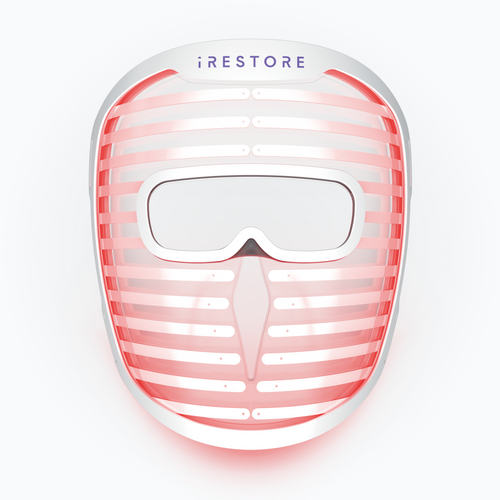
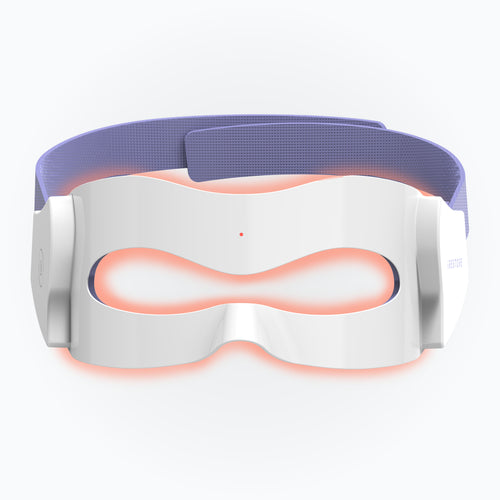
The iRESTORE Laser Face Mask Pro has a roomier, unisex fit that covers the chin and jawline. It combines lasers and LEDs across 8 wavelengths, and its Anti-Aging mode delivers 70 mW/cm² in a 10-minute session, 3 to 5 times a week. The Illumina Face Mask uses only LEDs, with 3 wavelengths and a standard fit.
-
Choose the Laser Face Mask Pro if you want laser and LED light, more wavelengths, and a roomier fit.
-
Choose the Illumina Face Mask for a simpler red and near-infrared routine. Both come with a 100-day money-back guarantee for qualifying direct US purchases (terms apply).
Follow your manual's eye-protection instructions and avoid direct eye exposure, especially with a laser mask. See how often to use an LED face mask and whether LED face masks are safe for your eyes.
Can Lip Lines Be Removed Permanently?
No. Lip lines don't go away on their own. Procedures can reduce them or temporarily improve them, but without treatment and sun protection, the lines tend to worsen with age.
Fat transfer and lip implants last longer, but they may not eliminate every line, especially above the lips. Dermatologists agree the goal is to soften them, not remove them.
Conclusion
You can't get rid of lip lines for good, but you can slow them down and soften their appearance. Sunscreen and good habits do the heavy lifting, and a provider can help if you want more.
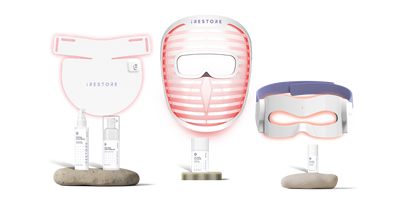
If you'd like to add light therapy to your routine, consider the iRESTORE Laser Face Mask Pro (laser + LED, 8 wavelengths, roomier fit) or the Illumina Face Mask (LED-only, 3 wavelengths).
Many are HSA/FSA eligible. Not sure which suits you? Take the skin quiz or see how red light therapy works for skin.
Loved by 600,000+ customers worldwide.
Frequently Asked Questions
Q. Will quitting smoking make my lip lines go away?
A. No. The lines you already have stay. Quitting stops them from getting worse and is good for your skin overall.
Q. What should I ask a provider about lip lines?
A. Cleveland Clinic suggests asking: How severe are my lines? What are the best treatments? What are the benefits and risks of each? How often will I need them? Which skin creams could help?
Q. Can I use red light therapy after lip filler or Botox?
A. Timing depends on your procedure. Ask the provider who did it before using any light device on the area.
Q. Does a lip flip make it hard to drink through a straw?
A. It can. When Botox weakens the upper lip muscle, drinking through a straw may feel harder for a while. The effect fades as the Botox wears off.
Q. Is it safe to buy lip filler online?
A. No. The FDA says not to buy dermal fillers sold directly to the public. They may be fake, contaminated, or not approved for use in the U.S.
Disclaimer: The iRESTORE blog is for informational purposes only and is not intended to replace professional medical advice or treatment. Please do not ignore professional guidance because of information you've read here. If you have concerns about your hair or skin health, consult a qualified healthcare professional.