

A big forehead is a naturally occurring facial proportion where the hairline sits higher than average but stays stable over time. A receding hairline actively moves backward, usually starting at the temples, the crown, or both, because of androgenetic alopecia or other causes of progressive hair follicle miniaturization.
If you have spent time in the mirror pushing your hair back and wondering which one you have, you are not alone. Plenty of people with naturally high hairlines assume they are losing hair when their face was simply built that way.
This article shows you how to tell the two apart. You will learn the early signs of recession, what causes each one, and what your options are if your hairline really is moving.
What Is a Naturally Big Forehead?
A forehead is generally considered large when it takes up more than one third of your vertical face length, measured from your hairline down to your chin. That is a proportion, not a problem. Facial features simply vary from person to person.
The key word here is stable. A naturally big forehead has been there since you finished growing, usually by your late teens or early twenties. It does not creep backward month after month. If you looked the same at 19 as you do now, you are almost certainly looking at genetics rather than hair loss.
The shape of the hairline also gives you a clue. A naturally high hairline tends to run fairly evenly across the forehead. It does not carve out deep corners at the temples, and it does not form the sharp "M" shape that people associate with hair loss. The line may sit high, but it sits straight.
Here is the simplest test: pull up photos of yourself from one, three, and five years ago. If your hairline looks essentially the same in all of them, you have a big forehead. Large foreheads are also common across many ethnic backgrounds and face shapes. They are a feature, not a warning sign.
What Is a Receding Hairline?
A receding hairline is different in one crucial way. It moves. The line where your hair starts today is not the line where it started two years ago, and it will not be the line where it starts two years from now if nothing changes.
The most common pattern is called temporal recession. This means the hairline pulls back at the corners, above the temples, faster than it does in the middle. Over time, that creates the classic M shape. Doctors track this progression using the Norwood Scale, a staging system developed by dermatologists to describe how far male pattern hair loss has advanced. Early temporal recession usually falls around Norwood Type II or III.
Recession at the front often does not travel alone. Many men also notice thinning at the crown, the swirl of hair at the back of the head. When both happen together, clinicians call it Norwood Type III Vertex.
What causes it?
The main driver is androgenetic alopecia, which is the medical name for genetic pattern hair loss. It affects both men and women, and it is far more common than most people realize. Research shows androgenetic alopecia affects roughly 50% of men over the age of 50, and it can begin much earlier than that.
Here is how it works in plain terms. A hormone called DHT (dihydrotestosterone) binds to hair follicles in genetically sensitive areas of the scalp. Over repeated growth cycles, those follicles shrink. This shrinking process is called hair follicle miniaturization.
Each new hair that grows from a miniaturized follicle comes in a little finer, a little shorter, and a little lighter than the one before it. Eventually, the follicle stops producing visible hair at all.
Genetics load the gun here. If your father, grandfather, or maternal relatives had receding hairlines, your follicles are more likely to be DHT sensitive too.
Other possible causes
Androgenetic alopecia is the usual culprit, but not the only one:
-
Traction alopecia, caused by tight ponytails, braids, buns, or extensions pulling on the hairline over years
-
Alopecia areata, an autoimmune condition that causes sudden, patchy hair loss rather than gradual recession
-
Hormonal changes, including pregnancy, menopause, thyroid conditions, or stopping hormonal birth control
These conditions follow different patterns from genetic recession, which is one reason a professional assessment matters if you are unsure. A dermatologist or trichologist can tell them apart quickly.
Now that you know what each one actually is, the next step is learning to spot the difference on your own head.
Big Forehead vs. Receding Hairline: Key Differences
The fastest way to sort this out is to compare the two side by side. Most people can place themselves in one column within a minute.
|
Feature |
Big Forehead |
Receding Hairline |
|
Hairline position |
High, but stable |
Actively moving backward over months or years |
|
Temple area |
Even, no pronounced M-shape |
Recession at the temples is usually the first sign |
|
Hair density at hairline |
Normal, full density |
Finer, thinner hairs along the hairline edge |
|
Progression |
No change over time |
Measurable change in photos taken 1 to 2 years apart |
|
Age of onset |
Present since early adulthood |
Often begins in the late teens to 30s in men, varies in women |
|
Family history |
Not necessarily relevant |
Strong genetic link, check both sides of your family |
|
Scalp visibility |
Not visible through hair |
Scalp may show at the temples or crown |
One row matters more than the rest: progression. A big forehead stays put. A receding hairline does not. Everything else in this table is a supporting clue.
Early Signs of a Receding Hairline: What to Look For?
Recession rarely announces itself. It creeps. That is exactly why people miss it for years, and why early signs are worth learning.
Here is what to watch for:
-
Temple recession. Your hairline pulls back further at the corners than in the center, creating a subtle M or V shape. This is usually the first visible change.
-
Miniaturized hairs at the hairline edge. Look closely at the front row of hair. If those hairs are noticeably finer, shorter, or lighter than the hair further back, your follicles may be shrinking.
-
Increased shedding. Everyone sheds. Dermatologists note that losing 50 to 100 hairs per day is completely normal. The signal is a clear increase from your own baseline, more hair on the pillow, in the shower drain, or in your brush than you used to see.
-
Scalp visibility. Your scalp starts showing through at the temples or the crown, especially under direct overhead light or in photos. Our guide on whether it is normal to see your scalp through your hair covers where the line sits between natural density and early thinning.
-
A widening part. Your center or side part looks broader than it did a year ago. This is often the earliest sign in women, who tend to thin diffusely rather than recede in an M shape.
-
The old photo test. Comparing photos from 12 to 24 months ago is the single most reliable early indicator, and it costs nothing.
However, one bad-lighting selfie proves nothing. What you are looking for is a pattern across time, not a single unflattering angle.
How to Tell If Your Hairline Is Receding: The Self-Assessment
If you are still asking yourself "is my hairline receding, or do I just have a big forehead," this is how you find out. Give it ten minutes.
-
Photograph your hairline today. Use natural daylight near a window. Take three shots: front-facing, left profile, and right profile. Pull your hair back so the hairline is fully visible.
-
Find a photo from 1 to 2 years ago. Match the conditions as closely as you can. Similar lighting, similar hairstyle, similar angle. A photo where your hair was styled forward will not help you.
-
Compare the temple corners first. This is where recession shows up earliest. Has the M-shape deepened? Have the corners moved back while the center stayed put?
-
Check the density along the hairline edge. Are the front hairs finer or shorter than the hair an inch behind them? Uneven density at the front line is a sign of miniaturization.
-
Look at the crown separately. Take an overhead photo or ask someone to shoot the back of your head. Is more scalp visible than before?
-
Rule out the obvious. Tight ponytails, buns, or braids can pull the hairline back over time. So can recent illness, major stress, or a change in medication. These follow different patterns from genetic recession.
Hairline shape also differs between men and women, and our guide on male vs female hairline patterns explains what is normal for each.
How to read your results?
If your hairline looks the same in both photos and the density is even across the front, you have a naturally high hairline. If the corners have moved and the front hairs are finer, your hairline is likely receding.
Therefore, if the photos point toward recession, the next question is not whether to worry. It is what to do about it, and how soon. Early follicle changes respond far better than late ones, which is where the timing matters most.
What to Do If Your Hairline Is Receding?
Timing matters more than anything else here. Follicle miniaturisation is progressive, which means the window for action narrows as time passes. A miniaturised follicle can still be stimulated. A follicle that has fully closed cannot. That is the whole reason dermatologists push people to act at the first sign rather than the fifth year.
Put simply, it is easier to keep the hair you have than to bring back hair you have already lost.
Start with a professional assessment
Before you buy anything, get a diagnosis. A dermatologist or trichologist can examine your scalp under magnification and tell you whether you are dealing with androgenetic alopecia, traction alopecia, or something hormonal. Each one responds to different treatment. Guessing wastes months you cannot get back.
Consider an FDA-cleared at-home device
Low-level laser therapy (LLLT), also called photobiomodulation (PBM), uses specific wavelengths of red light to stimulate activity in weakened hair follicles. The light does not cut or heat the scalp. Instead, it encourages energy production inside the follicle cells, which supports a healthier growth cycle.
The clinical evidence is real. In a randomized controlled trial, participants using LLLT saw a 39% increase in hair growth over 16 weeks compared to those using a sham device. Broader clinical reviews confirm LLLT is a safe and effective option for both men and women with androgenetic alopecia.
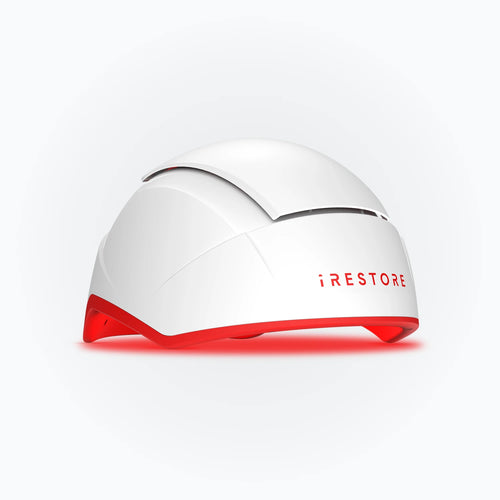
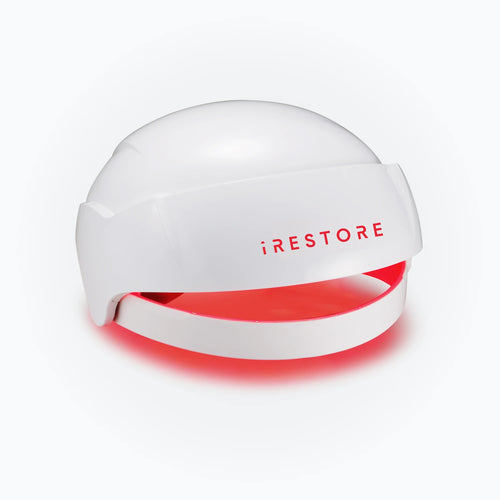
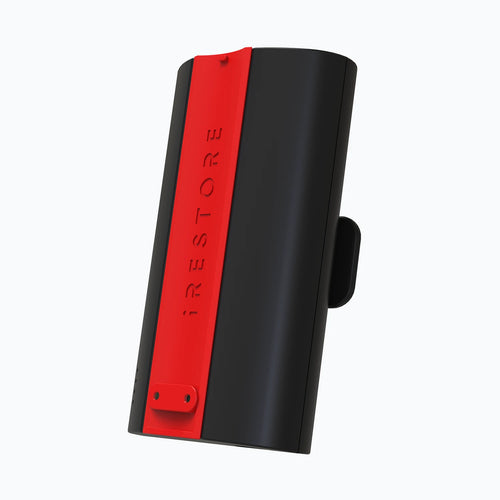
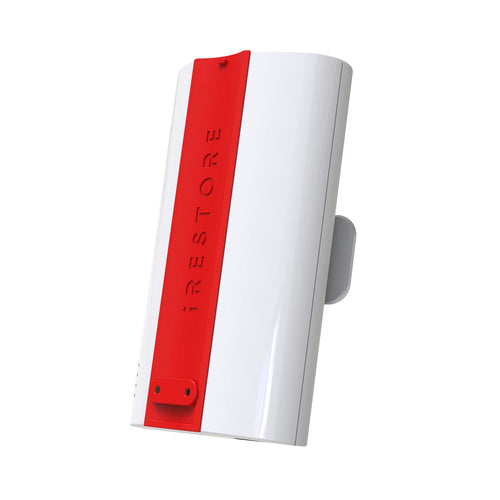
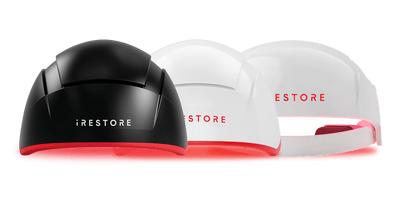
The iRESTORE Elite is FDA 510(k) cleared for androgenetic alopecia in men and women, and uses VIXO® laser technology for full-scalp coverage. The iRESTORE Professional and iRESTORE Essential are FDA registered devices designed for the same at-home routine. All three run on consistent 25-minute sessions, which you can do while reading or watching something.
Consistency is the entire game. Clinical results in these trials came from steady use across 16 to 26 weeks, not from occasional sessions. If shedding is part of what brought you here, our guide on how red light therapy can help you stop hair shedding explains what a full treatment cycle looks like.
Know your other options
LLLT is not the only approach, and it works alongside others rather than replacing them. Topical minoxidil is widely available and clinically studied. Prescription oral medications exist for men, and platelet-rich plasma (PRP) treatments are offered in clinics. Your dermatologist is the right person to walk you through which of these fit your situation, since some require a prescription and a medical evaluation.
You can use an iRESTORE device alongside medical treatment. Many people do exactly that.
Key Takeaways
Movement is the deciding factor. A naturally large forehead has been part of your face since early adulthood and stays exactly where it is. A receding hairline travels backward over time.
Recession starts at the corners. Temporal recession pulls the hairline back at the temples first, forming an M shape, while the hairs along the front edge grow finer and shorter.
Photos settle it faster than the mirror. Compare a current picture in natural light against one from 12 to 24 months ago. Look at the temple corners, the density at the front line, and the crown.
Androgenetic alopecia is the usual cause. It is genetic, it affects both men and women, and it is not something you did wrong.
Early attention is what works. Follicles that are shrinking can still respond. Follicles that are gone cannot.
Get a diagnosis, then decide. If your photos suggest movement, book an assessment with a dermatologist or trichologist. To begin at home while you do, explore iRESTORE hair growth devices, clinically supported and trusted by over 600,000 customers worldwide.
Frequently Asked Questions
How can I tell if I have a big forehead or a receding hairline?
Compare photos. A big forehead stays in the same place year after year, while a receding hairline moves backward over time. Take a current photo in natural light and hold it against one from 12 to 24 months ago. Focus on the temple corners and the density of the hairs along the front edge.
What are the first signs of a receding hairline in men?
The earliest sign is usually recession at the temple corners, which creates a subtle M shape. Alongside that, you may notice finer or shorter hairs at the hairline edge, more shedding than your normal baseline, and scalp becoming visible under direct light.
What does a receding hairline look like compared to a naturally high forehead?
A naturally high hairline runs fairly evenly across the forehead with full density right up to the front line. A receding hairline has uneven corners, thinner hairs at the edge, and a scalp that starts showing through. The shape is the giveaway.
Can you have a big forehead without hair loss?
Yes, and it is common. A large forehead is a facial proportion, not a symptom. If your hairline has looked the same since your late teens or early twenties, it is simply how your face is built.
Is my hairline receding or just naturally high?
If it has not changed in five years, it is naturally high. If the corners have pulled back and the front hairs feel finer than the hair behind them, it is likely receding. Photos settle this faster than the mirror does.
At what age does a receding hairline start?
In men, it often begins between the late teens and the 30s, though it can start later. In women, thinning tends to appear gradually and is more common after hormonal shifts such as menopause. Onset age varies widely and is heavily influenced by genetics.
What causes a receding hairline in your 20s?
The most common cause is androgenetic alopecia, where DHT gradually shrinks genetically sensitive follicles. Tight hairstyles, significant stress, illness, or hormonal changes can also contribute. A dermatologist can identify which one applies to you.
Can a receding hairline grow back?
It depends on the state of the follicles. Miniaturized follicles that are still producing fine hair can often be stimulated to grow thicker again. Follicles that have fully closed cannot regrow hair, which is why early intervention matters so much.
Does red light therapy help a receding hairline?
Low-level laser therapy is clinically supported for androgenetic alopecia, with randomized trials showing increases in hair density and count over 16 to 26 weeks of consistent use. The iRESTORE Elite is FDA 510(k) cleared for this purpose. Results depend on regular sessions and on treating early.
What is the difference between a widow's peak and a receding hairline?
A widow's peak is a V-shaped point of hair in the center of the forehead, and it is an inherited hairline shape that stays stable. A receding hairline can look similar as the temples pull back, but the difference is progression. A widow's peak does not move. Recession does.
What Our Customers Say
"I thought there was nothing I could do about my hair. I was wrong. After just 3 months of usage, I am blown away!"
Bienvenido A., 58 — Receding hairline
"I had terrible hair breakage and thinning. This product seems to help my hair issues. Now I can pull it back."
Eva P., 32 — Thinning at temples
"Confidence booster! Delighted with my thicker hair. The iRESTORE is a reliable solution for receding hairlines."
Rick L., 58 — Receding hairline
Related reading:
Male vs. Female Hairline: What's Normal and When to Worry
Is It Normal to See Your Scalp Through Your Hair?
Disclaimer: This article is for informational purposes only and is not intended as medical advice. It is not a substitute for professional diagnosis or treatment. Always consult a qualified dermatologist, trichologist, or healthcare provider regarding any hair loss concerns or before beginning any new treatment. Individual results may vary. iRESTORE devices are intended to support hair growth in individuals with androgenetic alopecia and are not a cure for hair loss.