The iRESTORE Blog
Confidence Starts Here


65 Results

5 Minoxidil Side Effects in Women: What to Watch For (and What to Do)
From unexpected shedding to unwanted facial hair, are the side effects really worth the promise of regrowth?
Read More
How to Detangle Hair Without Damaging It
Are you detangling the right way? Start at the ends and work up, use a slip-boosting product, and choose the right tool for your hair type.
Read More
Does Hair Dye Cause Hair Loss? The Truth About Color & Thinning Hair
You dye your hair, and a few days later, you notice more strands in the shower. It is easy to assume the color caused your hair loss.
Read More
10 Bad Hair Product Ingredients to Avoid (That Could Be Causing Your Hair Loss)
Most people focus on how a hair product makes their hair look, not what it contains. However, the ingredients inside your shampoo, conditioner, and styling products affect your scalp every single day.
Read More
Male vs. Female Hairline: What's Normal and When to Worry
Many people worry about their hairline without knowing what is normal. A small change can feel stressful, especially when online images show perfect hairlines everywhere.
Read More
Can Wearing Your Hair Up Cause Hair Loss?
If you wear your hair in a ponytail or bun most days, you may wonder, can wearing your hair up cause hair loss. It sounds harmless, but some styling habits place steady stress on your hairline.
Read More
Is It Normal to See Your Scalp Through Your Hair? What’s Normal vs. Warning Signs
Noticing your scalp through your hair can be concerning, especially if it happens suddenly or under bright lighting. Many people experience this at some point, particularly after washing their hair or when their hair is parted in a certain way. This often leads to a common question: is visible scalp normal, or does it indicate early hair thinning?In many cases, some scalp visibility is completely normal and does not mean you are losing hair. The key is understanding what level of visibility is expected and when it may signal a change in hair density. With the right information, you can better assess whether any action is needed or if there is no cause for concern. When Seeing Your Scalp Is Normal vs. Not? Seeing your scalp can feel alarming, but it is often harmless. Hair type, lighting, and styling all affect how much scalp shows. What matters most is whether anything has changed over time. What’s Considered Normal Scalp Visibility? Some scalp visibility is part of normal hair. Fine hair, straight hair, or low density hair often shows more scalp. This is especially true under bathroom lights or direct sunlight. You may also notice more scalp when your hair is wet. Wet strands stick together and lie flat. Once your hair dries, volume usually returns. If this pattern has stayed the same for years, it is likely your natural baseline. A good way to check is to compare how your hair looks today with older photos. If the amount of visible scalp looks similar, that is a reassuring sign. You can also explore related signs of hair health in this guide on healthy vs unhealthy hair. Warning Signs of Abnormal Thinning Changes over time matter more than a single bad hair day. If your part looks wider than it did months ago, thinning may be starting. New areas of visible scalp can also signal a problem. Another sign is excess shedding. Cleveland clinic notes that most people shed about 50 to 150 hairs per day, which is considered normal. Consistently losing much more than that can point to active thinning. Family history also plays a role. If close relatives have pattern hair loss and you see increasing scalp visibility, early action can help slow progression. Common Reasons Your Scalp Is Showing Through Scalp visibility usually happens because of differences in hair density, hair structure, or temporary changes in the hair growth cycle. In many cases, it does not indicate permanent hair loss, but understanding the underlying reason helps determine whether treatment is needed. Natural hair density and texture:Hair density varies widely between individuals. People with fewer follicles, finer strands, or flatter hair may see more scalp even when hair is healthy. Hair and scalp color contrast:High contrast, such as dark hair on a lighter scalp, makes the scalp more noticeable under normal lighting, especially along the part. Temporary styling and lifestyle factors:Heavy products, tight hairstyles, and frequent pulling or flattening of hair can separate strands and expose more scalp. Short-term shedding and health triggers:Seasonal shedding, stress, illness, or nutrient deficiencies like low iron or vitamin D can cause temporary thinning that usually reverses once corrected. Progressive hair loss conditions:Conditions such as androgenetic alopecia, alopecia areata, or thyroid disorders can lead to ongoing thinning and increased scalp visibility, particularly at the crown or part, and require medical evaluation. Why You Can See Your Scalp More Than Before? You may see your scalp more than before due to gradual changes in hair thickness, growth cycles, or external factors that affect hair coverage over time. These changes are often subtle at first but become noticeable as they accumulate. Age-related thinning:As you age, individual hair strands often become finer and spend less time in the growth phase, leading to reduced overall coverage. Shortened hair growth cycles:Hair may shed more frequently and regrow more slowly, which can increase scalp visibility even without active hair loss. Hair damage from styling and treatments:Repeated coloring, bleaching, or heat styling can weaken the hair shaft, causing breakage and a thinner appearance. Environmental and water-related factors:Sun exposure and mineral buildup from hard water can dry out hair, weigh it down, and make the scalp more visible. Hormonal or medical influences: Hormonal shifts, certain medications, and conditions like thyroid disorders or PCOS can disrupt hair growth patterns and increase scalp visibility. How to Tell If It’s Just Your Part or Actual Thinning? You can tell the difference between a normal hair part and actual thinning by looking for consistent changes over time rather than a single observation. Natural parts tend to remain stable, while thinning shows gradual, measurable shifts. Quick checklist to assess thinning at home: Compare recent photos with images from one or two years ago taken under similar lighting to see if the part looks wider. Check hair texture along the part; thinning hair often feels finer or shorter near the scalp. Notice how your hair responds to styling; natural parts usually appear fuller with added volume, while thinning areas do not. Observe whether the part width stays consistent or slowly increases over several months. Pay attention to overall strand thickness; healthy hair feels uniform, while thinning hair feels softer and weaker near the roots. If multiple changes appear gradually rather than suddenly, it may indicate early thinning and is worth monitoring or addressing early. Can iRESTORE Red Light Therapy Help If I’m Seeing More Scalp? Yes, iRESTORE red light therapy can help when increased scalp visibility is due to early or moderate thinning rather than a cosmetic part. The FDA-cleared technology delivers low-level red light to stimulate still-active follicles, support cellular energy, and improve scalp circulation. This matters because follicles that are weakened but not inactive respond best to early intervention, which is why noticing scalp changes sooner often leads to better outcomes. iRESTORE’s approach is built on more than 20 years of laser technology experience and is backed by clinical research conducted under dermatology supervision. In controlled studies, consistent use led to meaningful increases in hair count within a few months, without drugs or surgery. Today, iRESTORE is trusted by over 600,000 customers worldwide and is frequently recommended by doctors as a non-invasive option for managing thinning and maintaining existing hair. When to See a Dermatologist? You should see a dermatologist if scalp visibility is sudden, worsening, or accompanied by other symptoms. Rapid or patchy hair loss, along with pain, burning, itching, or redness on the scalp, often needs medical evaluation because it can indicate inflammation, infection, or autoimmune conditions. Hair loss that extends beyond the scalp, such as thinning eyebrows or body hair, is also a sign to seek professional help. If noticeable thinning begins soon after starting a new medication or medical treatment, a dermatologist can help identify whether it is the trigger. Many dermatologists now recommend FDA-cleared red light therapy as a low-risk option, either on its own or alongside other treatments, with usage frequency tailored to the individual cause and stage of hair thinning. Conclusion Seeing your scalp through your hair can feel scary, but it is not always a sign of hair loss. For many people, it comes down to hair type, lighting, or normal aging. If the visibility has stayed the same over time, it is often nothing to worry about. However, progressive changes deserve attention. Widening parts, finer strands, and increased shedding are signals to act early. Early care gives you more options and better outcomes. If thinning is present, non-invasive solutions now exist. iRESTORE Hair Growth System offers a science-backed way to support hair growth without drugs or surgery. Understanding your hair today helps protect it for the future. FAQs About Scalp Visibility and Hair Thinning Is it normal to see my scalp through my hair when it is wet? Yes. Wet hair clumps together and lies flat, which reduces volume. Once dry, scalp visibility should decrease again. My hair is so thin I can see my scalp. Am I balding? Not always. Natural hair density varies. If this look is new or worsening, it may signal early thinning. Comparing older photos helps clarify changes. Is visible scalp through hair more common in women? Yes. Visible scalp through hair in females is often noticed along the center part. Also, longer hair can make scalp visibility more noticeable. Female pattern hair loss usually shows as widening parts, not bald patches. If I can see my scalp under bright lights, am I balding? Harsh lighting shows more scalp for almost everyone. What matters is whether this look is new compared to past years. Can stress make my scalp more visible? Yes. Stress can push hair into a shedding phase months later. This is often temporary, and growth usually returns with time. How soon can treatments help if thinning is starting? Results take patience. Hair grows slowly. Many people notice less shedding within weeks, with visible improvement after a few months of consistent care. Disclaimer: The iRESTORE blog is for informational purposes only and is not intended to replace professional medical advice or treatment. Please do not ignore professional guidance because of information you’ve read here. If you have concerns about your hair or skin health, we encourage you to consult a qualified healthcare professional.
Read More
What Is Folliculitis on the Scalp? Symptoms, Causes, and When to See a Dermatologist
If you have persistent itchy, red bumps on your scalp, they may not be dandruff or acne. In some cases, these symptoms can indicate folliculitis, a common scalp condition that is often misunderstood. Scalp folliculitis can cause itching, soreness, and small bumps that look like pimples. In some cases, it can even lead to hair shedding if ignored. Many people search for answers online before seeing a doctor, especially when they worry about hair loss. Recognizing these signs early helps you protect your scalp, prevent flare-ups, and reduce the risk of long-term hair damage. What Is Folliculitis? Folliculitis is inflammation or infection of the hair follicles. Hair follicles are the tiny openings in your skin where each hair grows. When these follicles get irritated or infected, small bumps can form. Folliculitis often starts when bacteria enter damaged follicles. Fungi, viruses, or even friction can also trigger it. This is why folliculitis is considered a common skin condition across all age groups. When folliculitis affects the scalp, it often shows up as itchy or tender bumps near the hairline. Mild cases may clear in a few days. However, repeated or deep infections can damage follicles and raise the risk of scarring or hair loss. If you are unsure whether changes in your hair are normal, you may find it helpful to compare signs using this guide on Signs of Healthy vs Unhealthy Hair. Types of folliculitis include: Superficial folliculitis, which affects the upper part of the follicle Deep folliculitis, which involves the whole follicle and can be more painful What Are the Main Symptoms of Folliculitis? Folliculitis often starts with small changes that are easy to miss. Many people mistake early symptoms for simple scalp acne or irritation. Common symptoms include: Small red bumps clustered around hair follicles White or yellow tips filled with pus Itching or tenderness on the scalp Light crusting around affected areas In some cases, symptoms become more uncomfortable over time. Untreated folliculitis can spread to nearby follicles, making bumps larger and more painful. You may also notice burning, soreness, or increased hair shedding in the affected areas. For example, someone who wears a tight helmet daily may see bumps spread along pressure points. If symptoms worsen or keep returning, this often signals the need for medical care. What Does Folliculitis Look Like? Scalp folliculitis has a few clear visual signs. Most people notice small red or pink bumps around individual hair follicles. Some bumps have white or yellow centers filled with pus. The skin around them often looks swollen or irritated. Folliculitis usually starts in one area, such as the hairline or crown. It does not spread evenly across the scalp like flakes do. Mild cases may show only a few bumps. Severe cases can cause oozing, scabbing, and visible hair thinning. If you already see changes in hair density, learning about New Hair Growth vs Breakage can help you tell whether shedding is temporary or related to scalp damage. Difference Between Folliculitis vs Acne vs Ingrown Hair These conditions look similar, but they have different causes and treatments. Knowing the difference helps you avoid using the wrong products. Folliculitis always starts in hair follicles. It often appears in clusters and feels itchy or tender. Acne forms when pores clog with oil and dead skin. It usually affects the face, chest, or back more than the scalp. Ingrown hairs happen when a hair curls back into the skin. They often appear after shaving and usually show one trapped hair in a single bump. According to the Indiana University Bloomington, folliculitis often flares after friction, sweating, or shaving. Acne does not follow this pattern. If scalp bumps appear after tight headwear or workouts, folliculitis is more likely. What Causes Folliculitis? Damage to hair follicles: Folliculitis begins when hair follicles become damaged, allowing germs or irritation to cause inflammation. Bacterial infections: Bacteria, most commonly Staphylococcus, normally live on the skin without causing harm. When they enter irritated follicles, an infection can develop. Fungal overgrowth: Yeast and other fungi can overgrow on the scalp and trigger folliculitis, especially in warm or sweaty conditions. Non-infectious irritation: Tight hairstyles, heavy hair oils, frequent shaving, and excessive sweating can irritate follicles and lead to flare-ups. Lifestyle-related triggers: Habits like wearing helmets or headgear daily without proper scalp cleansing can cause repeated irritation and outbreaks. Underlying health factors: Conditions such as diabetes, a weakened immune system, or long-term steroid use can increase the risk of developing folliculitis. How to Prevent Folliculitis Flare Ups? Maintain regular scalp hygiene: Keep your scalp clean to reduce oil, sweat, and product buildup that can irritate hair follicles. Wash regularly, especially after workouts or heavy sweating. Limit heavy hair products: Avoid thick oils, pomades, and styling creams on the scalp, as they can trap sweat and bacteria and worsen irritation. Be mindful with headwear: Clean helmets and hats frequently, and avoid wearing them for long periods to reduce heat and moisture buildup. Follow gentle shaving practices: If you shave your head, use an electric razor, avoid shaving too close, and allow your skin time to recover between sessions. Consider water quality: Hard water and mineral buildup can irritate sensitive scalps over time. If you notice dryness or itching after washing, this guide on Does Hard Water Cause Hair Loss? explains how water quality affects scalp health. When to See a Dermatologist? As per Mayoclinic, you should see a dermatologist if bumps spread, become painful, or do not improve after a few days of home care. Oozing sores, bald patches, or frequent flare ups also need professional attention. A dermatologist will examine your scalp closely. In some cases, they may take a small sample to rule out conditions like psoriasis or fungal infections. Early treatment lowers the risk of scarring and permanent hair loss. If hair thinning becomes ongoing, learning why hair growth slows can be helpful. This article on Why Your Hair Stops Growing explains how scalp health affects long-term growth. At Home Treatment Options Before Seeing a Doctor For mild cases, home care can ease symptoms and support healing. The first step is removing triggers. Stop shaving, avoid tight headwear, and pause irritating hair products. Warm compresses can calm itching and swelling. Apply them to affected areas for ten minutes, a few times a day. Avoid scratching, since broken skin can spread infection. Over the counter options may help in early stages. Medicated shampoos with antifungal ingredients can reduce yeast overgrowth. Gentle antibiotic ointments may help small areas, but avoid overuse. According to Mayoclinic, if symptoms do not improve within a few days, prescription treatment may be needed. Worsening pain, spreading redness, or fever should always prompt a doctor visit. Conclusion Scalp folliculitis can feel frustrating, especially when bumps itch, hurt, or raise concerns about hair loss. The good news is that most cases are manageable when you recognize the signs early and take the right steps. Paying attention to changes like spreading bumps, pain, or shedding makes a real difference. Mild cases often improve with simple care, but persistent or severe symptoms should not be ignored. Early treatment lowers the risk of scarring and long-term damage to hair follicles, and some people choose supportive tools like iRESTORE red light therapy to help maintain hair density once the scalp has healed. FAQs Is folliculitis contagious? Folliculitis is usually not very contagious. Most forms do not spread from person to person through casual contact. However, bacteria like staph can spread through shared towels, razors, or poorly cleaned hair tools. Good hygiene lowers this risk. How long does folliculitis last? Mild folliculitis often clears within seven to ten days once the trigger is removed. More severe cases may last longer and need medical treatment. Recovery time depends on the cause and how early treatment begins. Can folliculitis cause permanent hair loss? Yes, severe or untreated folliculitis can damage hair follicles. This damage may lead to scarring and permanent hair loss in affected areas. Early care greatly reduces this risk. What is the difference between folliculitis and dandruff? Dandruff causes flaky skin without inflamed follicles. Folliculitis causes red, often pus filled bumps around individual hairs. Dandruff usually responds to basic anti dandruff shampoos, while folliculitis may need targeted treatment. Can I wash my hair if I have folliculitis? Yes, washing your hair is important. Use lukewarm water and gentle shampoos. Avoid harsh scrubbing and very hot water, since these can irritate the scalp further. Will folliculitis go away on its own? Some mild cases resolve without treatment once irritation stops. If bumps spread, become painful, or keep coming back, medical care is needed to prevent complications. Can stress cause folliculitis? Stress does not directly cause folliculitis, but it can weaken your immune response. This makes infections more likely and may worsen existing scalp issues. Is it safe to color or treat hair during folliculitis? It is best to wait until the scalp heals. Hair dyes and chemical treatments can irritate inflamed follicles and slow recovery. A dermatologist can guide you on safe timing. Disclaimer: The iRESTORE blog is for informational purposes only and is not intended to replace professional medical advice or treatment. Please do not ignore professional guidance because of information you’ve read here. If you have concerns about your hair or skin health, we encourage you to consult a qualified healthcare professional.
Read More
Is Hair Loss From Stress Reversible? Yes, Here's the Timeline and What to Do
Good news: stress-related hair loss (telogen effluvium) is almost always reversible. Most people see regrowth within 3–6 months. Here's what speeds up recovery.
Read More
How to Use the iRESTORE Helmet Correctly: A Step-by-Step Guide
If you’ve just purchased an iRESTORE Laser Hair Growth System, it’s normal to have a few immediate questions: How do I use it correctly? How often should I wear it? And how long will it take before I notice results? The iRESTORE helmet is designed to be used for 25 minutes every other day, on a consistent schedule, for at least 16 weeks. This routine allows its low-level light therapy (LLLT) to work with your natural hair growth cycle. Most users begin seeing early improvements like reduced shedding or subtle thickening within 3 to 6 months of steady use. This guide walks you through how to use the iRESTORE helmet step by step, what to expect over time, and the essential safety guidelines to keep in mind so you can get the most out of your treatment. What Is the iRESTORE Laser Hair Growth System? Before learning how to use an iRESTORE helmet step by step, it helps to understand what the device is and how it works. The iRESTORE Laser Hair Growth System is an FDA-cleared, at-home red light therapy helmet designed to help men and women experiencing androgenetic alopecia (pattern hair loss). It’s engineered to deliver consistent, therapeutic light energy to your follicles helping support regrowth when you follow the recommended routine on how to use an iRESTORE helmet correctly and consistently. The system includes: A combination of medical-grade lasers and LEDs that deliver red light in the 640–665 nm range, a wavelength studied for hair-growth benefits. FDA 510(k) clearance for treating specific levels of pattern hair loss in: Men with Norwood–Hamilton IIa to V Women with Ludwig–Savin I to II Individuals with Fitzpatrick skin types I–IV Newer models (Elite, Professional, Essential) featuring LumiTech™ technology for broader scalp coverage and higher light density ensuring light reaches where hair thinning is most common. How to Use the iRESTORE Helmet Here is the full routine as outlined in the user manual: Step 1: Prepare Your Hair and Scalp Start with clean, dry hair. Avoid using the helmet on wet hair (important for safety and efficacy). Step 2: Set Up the Device Insert the power adapter pin into the controller. Plug the adapter into a wall outlet. Step 3: Position the Helmet Place it comfortably on your head, ensuring it sits securely and doesn’t cover your eyes. Step 4: Turn on the Device Press the POWER button. If you don’t press START within a minute, the device will shut off automatically. Step 5: Start the Session Press START to begin the 25-minute session. A short beep signals the start; a long beep signals the end. Step 6: Pause if Needed Press START again to pause. You can resume within 5 minutes. After 5 minutes of inactivity, the device shuts off. Step 7: End the Session Hold POWER for 3 seconds to turn off. Unplug the adapter from the outlet (don’t pull the cord). How Often Should You Use the iRESTORE Helmet? The recommended iRestore schedule is 25 minutes every other day. This is the only frequency that has been clinically tested, FDA-cleared, and shown to support hair growth safely and effectively. Low-level light therapy works by delivering controlled light energy to your follicles. Using the helmet more often than recommended won’t speed up results, your follicles need recovery time between sessions. For a deeper dive into treatment frequency, you can read our guide on how often to use red light therapy for hair growth Why Every Other Day? Allows follicles time to respond to the light stimulation Matches the protocol used in clinical studies Helps minimize irritation or sensitivity Supports steady, sustainable improvements in hair density over time What If You Miss a Session? Don’t double your time or run multiple sessions to “catch up.” Simply resume your regular every-other-day routine. Consistency over months, not perfection, is what matters. How Does the iRESTORE Helmet Support Hair Growth? The iRESTORE Laser Hair Growth System uses low-level light therapy (LLLT), a non-invasive, research-backed technology that delivers red light in a precise wavelength range shown to support healthier hair growth. When used on the recommended schedule this light energy interacts with your follicles at a cellular level. Here’s a simple breakdown of how does iRESTORE work: 1. It supports cellular energy inside hair follicles: LLLT helps energize the mitochondria. Higher cellular energy can support stronger, more active follicles especially in areas experiencing early thinning. 2. It improves better blood flow in the scalp: Improved microcirculation means more oxygen and nutrients reach each follicle, creating a healthier environment for hair to grow. 3. It helps calm inflammation around follicles: Chronic, low-level inflammation can weaken follicles over time. Red light therapy may help reduce these signals, creating conditions that support the growth phase. 4. It encourages follicles to stay in the growth phase longer: Pattern hair loss shortens the anagen (growth) stage. LLLT helps counter this by encouraging longer, healthier growth cycles. How Should the Helmet Fit on Your Head? Positioning matters for both comfort and effectiveness. When learning how to use iRESTORE helmet, make sure the device sits correctly: Place the helmet upright on your head so it fits like a cap. Ensure the front edge does not cover your eyes. Adjust the foam cushions/headband so the interior rests comfortably against your scalp. The built-in safety sensor automatically pauses the session if the device is lifted or positioned incorrectly so you always get proper coverage. Safety Guidelines to Follow Before Using Your iRESTORE Helmet Even though the iRESTORE Laser Hair Growth System is iRESTORE FDA approved and cleared for home use, it’s still a medical device and using it safely is just as important as learning how to use an iRESTORE helmet correctly. 1. General safety rules to follow To stay safe while following the routine on how to use iRESTORE helmet: Don’t stare directly into the lasers or use magnifying devices to view the light Don’t use the device near water (tub, pool, sink) Keep the helmet and cord away from hot surfaces Store it out of reach of children and pets Stop using it and contact a doctor if you notice persistent redness, itching, or discomfort lasting more than an hour after treatment Used as directed, with these simple safety rules in mind, the iRESTORE system is designed to be a safe, at-home tool to support your long-term hair growth plan. 2. Who should avoid using iRESTORE? Do not use the helmet if: You’re under 18 years old You have cancer on the scalp You take medications or have conditions that cause photosensitivity (skin becomes extra sensitive to light) You’ve had unusual reactions to red light in the past (severe redness, burning, or rash) 3. Can you use iRESTORE on wet hair? The answer is no. You should always use the helmet on clean, dry hair. Using it on wet hair: Can interfere with proper light delivery Increases the risk of electrical issues Goes against the official safety instructions A Simple Hair Growth Routine Using iRESTORE If you’re following how to use an iRESTORE helmet correctly, building a simple routine around it can help support healthier, fuller-looking hair over time. Use the iRESTORE helmet for 25 minutes every other day – this is the only recommended schedule. Follow a gentle wash routine 2–3 times per week – a mild, growth-supporting shampoo and conditioner help keep the scalp clean. Apply a daily hair serum – choose one that supports scalp and follicle health from the outside. Consider a nutritional supplement if advised by your doctor – this can be helpful if thinning is linked to stress, diet, or deficiencies. Stay consistent with this simple routine – clean, nourished scalp plus regular red light exposure work together to support fuller, healthier-looking hair over time. What Does a Realistic 16-Week iRESTORE Plan Look Like? Weeks 1–4: You will mainly be getting used to how to use the iRESTORE helmet (25 minutes every other day), with minimal visible change but an important foundation of consistency. Weeks 5–8: Some users notice mild shedding as weaker hairs reset, while others notice new hair growth over breakage. Weeks 9–12: Hair may begin to look a bit fuller or denser in thinning areas, especially if you’ve stayed consistent with the recommended iRESTORE helmet and how often to use the red light therapy schedule. Weeks 13–16: Many users report clearer improvements in volume, coverage, and shedding this is usually when the routine starts to feel like a long-term habit rather than a new treatment. Real People, Real Experiences Many iRESTORE users report noticing small but meaningful changes like reduced shedding, early baby hairs, or improved density around the hairline within their first 8–12 weeks of consistent use. Others share that sticking to the every-other-day routine helped them rebuild confidence after years of gradual thinning. Conclusion Using the device as directed is the core of how to use an iRESTORE helmet for real, long-term results. You don’t need to use iRESTORE every day; you just need to be consistent with the schedule it was designed and tested for. If you’re ready to get started, commit to your first 16-week iRESTORE plan, follow the every-other-day schedule, and give your hair a fair chance to respond before you judge your results. FAQs 1. Can I combine iRESTORE with other hair-loss treatments? Yes. Many users pair iRESTORE with minoxidil, serums, supplements, or doctor-recommended treatments for enhanced results. 2. Do I need to keep using iRESTORE after I see results? Yes. Continuing the every-other-day schedule helps maintain progress, since stopping treatment may allow hereditary thinning to return. 3. Does iRESTORE work for all types of hair loss? iRESTORE is designed for androgenetic alopecia (genetic thinning); it may not be effective for scarring alopecia or sudden, patchy hair loss. 4. Can You Use iRESTORE Every Day? No. Daily use or running back-to-back sessions is not advised. More exposure does not equal faster results and may cause temporary scalp discomfort. Disclaimer: The information in this article is for educational purposes only and is not intended as medical advice, diagnosis, or treatment. Hair and scalp conditions vary from person to person. If you have concerns about persistent shedding, irritation, or sudden changes in hair or scalp health, we recommend consulting a qualified healthcare professional.
Read More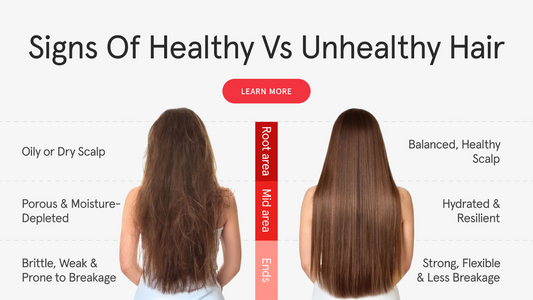
Signs of Healthy vs Unhealthy Hair: How to Tell the Difference
Is your hair healthy or damaged? Here are the key signs to look for and what they reveal about your hair's true condition.
Read More
New Hair Growth vs Breakage: How to Tell the Difference
Noticing short, fine hairs around your hairline or crown and wondering if they’re signs of new hair growth or breakage? You’re not alone. Many people mistake regrowth for damage or vice versa which can lead to using the wrong products or treatments. The truth is, those tiny strands could mean your follicles are bouncing back… or that your hair is snapping under stress. Understanding the difference is the first step to supporting stronger, healthier strands. With consistent scalp care and science-backed solutions like scalp massage for hair growth, you can help protect new growth, reduce breakage, and improve your hair’s long-term resilience. What’s the Difference Between New Hair Growth and Breakage? Telling the difference between new hair growth and hair breakage comes down to how those short strands look, feel, and grow over time. New hair growth starts at the scalp and appears as fine, soft baby hairs usually around the hairline, temples, or crown. These new strands are typically uniform in length, smooth to the touch, and grow steadily longer as your hair recovers its natural density. Hair breakage, on the other hand, happens when existing strands snap mid-shaft due to weakness or damage. Broken hairs tend to be uneven in length, coarse or frizzy at the ends, and may feel dry or brittle. You’ll often see them sticking up around the crown or part line without showing signs of growth. If you notice uneven patches of short hairs that never seem to get longer, it’s likely breakage, not regrowth. But if those fine, baby-like hairs are increasing in number and thickness, it’s a sign your follicles are actively producing new growth and responding well to scalp stimulation and proper care. How to Identify New Hair Growth Spotting new hair growth can be encouraging, it’s a sign your scalp and follicles are recovering. But real regrowth has a few distinct traits that set it apart from breakage. You’re likely seeing new growth if: The hairs are soft, fine, and tapered at the ends — not blunt or frayed. They grow uniformly around the hairline, temples, or crown. The strands feel smooth and flexible, not coarse or dry. You notice gradual lengthening over several weeks instead of a static patch of short hairs. These new strands often start as thin “baby hairs” before maturing into thicker, stronger strands as your hair cycle stabilizes. Signs You’re Dealing with Hair Breakage If those short strands feel rough, uneven, or never seem to grow longer, you’re likely seeing hair breakage rather than new growth. Breakage happens when the hair shaft weakens and snaps before it completes its full growth cycle — often due to external stress or internal imbalance. Common signs include: Uneven length: Some pieces are much shorter than surrounding hair. Dry, brittle texture: Strands feel coarse or straw-like, especially at the ends. Frizz and flyaways: Short broken hairs stick up around the crown or hairline. Split or frayed ends: Damaged fibers separate instead of staying smooth. Frequent heat styling, tight ponytails, rough brushing, or chemical treatments can all cause breakage over time. Even stress or nutritional deficiencies can weaken hair’s structure from within. If you’re noticing these signs, focus on repair and protection, hydrate the hair, minimize tension, and strengthen follicles with red light therapy to restore scalp health and support long-term resilience. Common Causes of Breakage Hair breakage is often a sign that your strands are stressed, dehydrated, or lacking the nutrients similar to what happens in seasonal hair shedding and they need to stay strong. Over time, these small cracks in the hair shaft lead to visible thinning and dullness even if your scalp is still producing new hair. Heat Damage: Frequent blow-drying, straightening, or curling breaks down keratin bonds. Tight Hairstyles: Constant tension from ponytails, braids, or clips strains the roots and weakens the shaft. Chemical Treatments: Bleaching, coloring, or relaxing can make strands porous and fragile. Poor Nutrition: Low intake of protein, iron, and zinc affects the hair’s structural strength. Environmental Stress: UV rays, pollution, and hard water can erode the protective cuticle layer. How to Prevent Breakage Be gentle: Use a wide-tooth comb and detangle only when hair is damp, not soaking wet. Avoid harsh products: Switch to sulfate-free shampoos and nourishing conditioners. Protect from heat: Always apply a heat protectant before styling. Support scalp health: Regular massage promotes circulation and nutrient delivery. Try red light therapy: iRESTORE’s FDA-cleared red light system energizes follicles, strengthens hair at the root, and helps reduce breakage by improving scalp blood flow. How Red Light Therapy Strengthens Weak or Breaking Hair Red light therapy, or Low-Level Laser Therapy (LLLT), is clinically proven to help reduce breakage and strengthen weak hair from the root. It works by delivering safe wavelengths of red light (around 650–680 nm) to the scalp, where it penetrates the skin and energizes follicle cells. This light energy increases ATP production, the cellular fuel that powers growth and repair. As a result, blood flow and oxygen delivery to the scalp improve, helping nourish follicles that are under stress. Over time, hair strands become thicker, more resilient, and less prone to snapping. Studies show that regular use of LLLT can extend the hair’s growth phase and strengthen the cuticle layer, which helps prevent further breakage. For at-home use, iRESTORE’s FDA-cleared red light therapy system makes it easy to support follicle health and reduce shedding safely and effectively. When to Seek Professional Help If hair breakage or thinning continues despite home care, professional guidance can help. See a dermatologist or trichologist if: Breakage persists or worsens after several months. You notice increased shedding or scalp irritation. Short hairs appear uneven or brittle across multiple areas. A specialist may: Perform scalp imaging or trichoscopy to check follicle health. Order blood tests to detect hormonal or nutrient imbalances. Recommend a customized plan from topical care to supplements. Conclusion Understanding the difference between new hair growth and breakage helps you take action early before small issues become major setbacks. Healthy regrowth appears soft, fine, and uniform, while breakage feels rough and uneven. By improving scalp circulation, maintaining hydration, and using iRESTORE’s FDA-cleared red light therapy, you can strengthen your strands and protect new growth as it develops. Small, consistent care habits from gentle styling to regular light therapy go a long way toward keeping your hair stronger, shinier, and more resilient every day. FAQs How do I know if the short hairs on my scalp are new growth or breakage? New growth feels soft, fine, and tapers at the end, while breakage feels rough, frayed, and uneven. Watch how the strands behave, regrowth lengthens over time, breakage does not.Can new hair growth and breakage happen at the same time? Yes. It’s common to see new hairs growing while older ones are breaking. The key is to protect existing strands while stimulating healthy regrowth through gentle care and scalp treatments. How can I reduce hair breakage naturally? Use sulfate-free products, avoid excessive heat, nourish your scalp, and include more protein and vitamins in your diet. Gentle brushing and red light therapy also help strengthen roots. Disclaimer: The iRESTORE blog is for informational purposes only and is not intended to replace professional medical advice or treatment. Please do not ignore professional guidance because of information you’ve read here. If you have concerns about your hair or skin health, we encourage you to consult a qualified healthcare professional.
Read More